
Every March the Academy of Nutrition and Dietetics observes National Nutrition Month to promote balanced eating and healthy lifestyles. This year the Academy invites everyone to “Bite Into A Healthy Lifestyle.”
I started C it Nutritionally to cut through the noise surrounding nutrition, share evidence-based information, and post healthy recipes for fun. Blogging quickly became one of my favorite ways to spend free time, and my career in nutrition remains central to my life. I want to share my journey into this rewarding and diverse field.
So what is a Registered Dietitian? Why am I pursuing those letters after my name? What will I do once I finish school?
(Don’t worry, Mom — the answers are below.)
The volume of opinions about nutrition can be overwhelming. Anyone can claim expertise, which is one reason I created C it Nutritionally: to offer information grounded in education and evidence-based research. When people make scientific claims without solid evidence, it only adds to the confusion.
Dr. David Katz captured it well when he compared people who have an opinion about nutrition to passengers who think they know how to fly a plane. He wrote that nutrition is an area where “not only does everyone have an opinion, but everyone seems to think theirs is an expert opinion.”
#truth
In honor of National Nutrition Month, I’m celebrating the professionals I hope to join soon. All month I’ll share more about this career alongside practical nutrition tips, helpful hints, and tasty recipes.
Many people don’t fully understand what a Registered Dietitian (RD) does, how one earns the title, or the breadth of the profession — I certainly didn’t before I got into it. This is a good place to start.
The Academy of Nutrition and Dietetics, the professional organization for dietitians, dietetic technicians, and students, defines RDs as
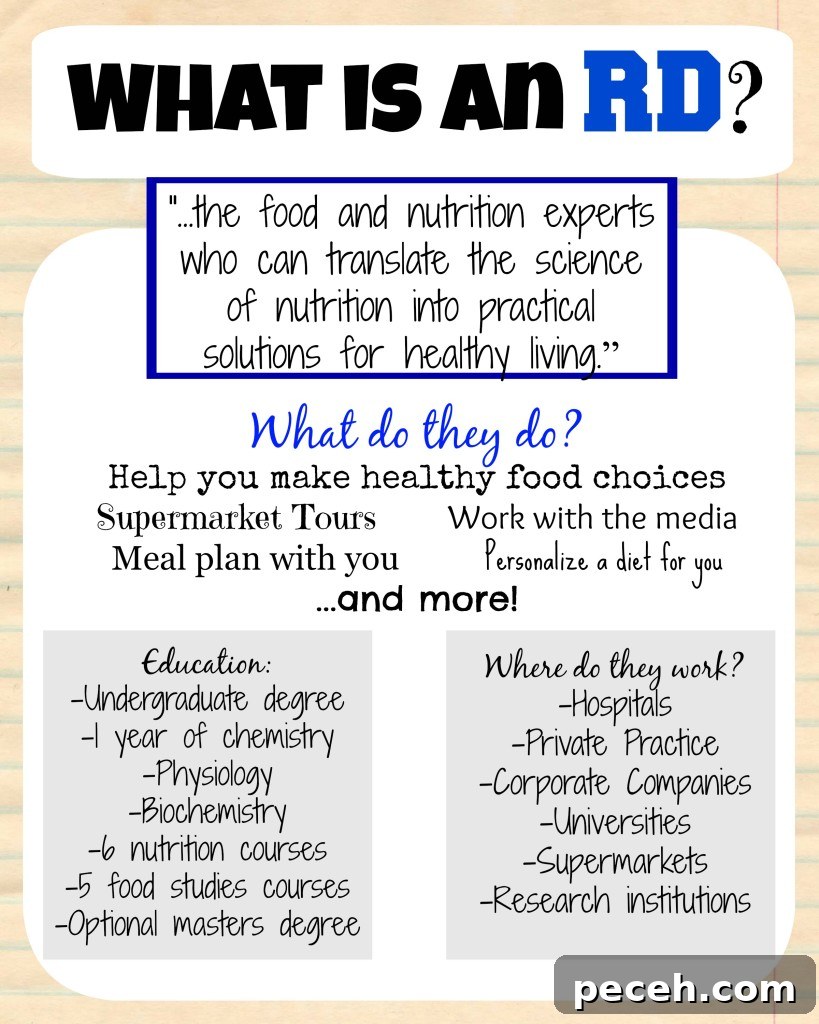
“the food and nutrition experts who can translate the science of nutrition into practical solutions for healthy living.”
What’s the difference between an RD and a nutritionist or health coach?
Briefly: not all nutritionists are RDs, though all RDs can be considered nutritionists. Registered Dietitians have completed rigorous academic and supervised training to earn the credential. I won’t rehash detailed comparisons here, but it’s important to recognize that the titles are not interchangeable.
To become a dietitian, individuals typically complete at least an undergraduate degree in nutrition from an accredited program. Coursework is science-heavy and usually includes:
- One year of chemistry (inorganic and organic)
- Biochemistry
- Physiology
- Psychology
- Microbiology
- Community nutrition
- Diet assessment
- Nutrition through the life cycle
- Clinical nutrition
- Food science and management courses
After coursework, aspiring RDs complete a supervised dietetic internship — comparable to a medical residency for dietetics — with about a year of hands-on training. Graduates then sit for the RD registration exam. Increasingly, many practicing RDs also obtain a master’s degree to deepen their expertise in areas such as advanced biochemistry, weight management, counseling, or maternal and child nutrition.
Because the curriculum is science-focused, dietetics relies on proven research. Dietitians don’t just tell you to eat more fiber — we understand why fiber is beneficial, how the body processes it, and which health outcomes it can influence, like reducing risks for diabetes and heart disease.
Dietitians can assess nutrient needs specific to an individual, calculate tube-feeding regimens, advise on nutrition for dialysis or insulin management, and identify how foods interact with medications. That practical, clinical knowledge is central to the profession.

Where do Registered Dietitians work?
RDs have diverse career options: hospitals, community centers, supermarkets, corporate wellness programs, universities, research institutions, and private practice. Dietitians also work in media, public health, school systems, foodservice and culinary fields, and on supermarket tours to teach label-reading and smart shopping.
The field keeps expanding
With rising rates of obesity and chronic disease, nutrition’s role is increasingly important. Dietitians are showing up in new places — from campus wellness programs to broadcast media — translating evidence-based nutrition into practical advice. Some combine culinary training with nutrition expertise to make healthier food both nutritious and delicious.
Dietitians provide valuable services for people navigating food allergies, chronic conditions, or specific medical diets. If you’re seeking professional help, consult qualified, credentialed RDs through recognized directories and professional organizations.
Happy National Nutrition Month!
XO