
This easy sourdough starter method for beginners will help you develop an active, bubbly starter quickly and with minimal fuss.
With just two ingredients—flour and water—and a little patience, you’ll be rewarded with the mild tang and airy crumb of homemade sourdough bread.

What is a sourdough starter
A sourdough starter is a simple mixture of flour and water that ferments naturally and provides the yeast and bacteria needed to leaven and flavor sourdough bread.
When you leave a mixture of flour and water at room temperature, wild yeasts and bacteria from the environment and the flour begin to colonize it. Over days of regular feedings, this community becomes stable and vigorous enough to raise bread.
In this guide you’ll learn to nurture that natural fermentation until you have a reliable starter ready for baking healthy sourdough loaves.
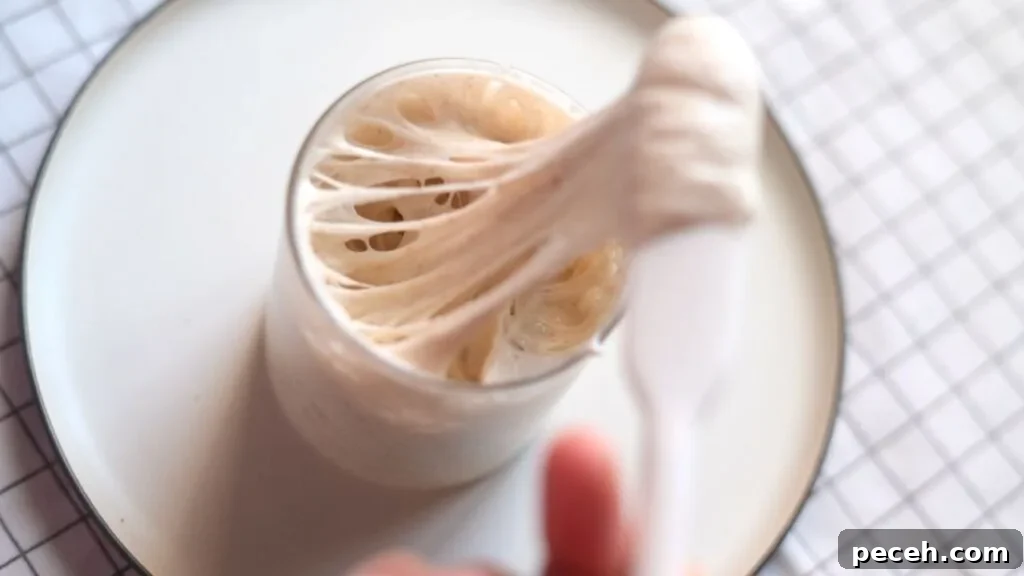
Ready to start baking with your own starter? It’s simple, rewarding, and surprisingly hands-off once you get the rhythm of feeding and observing your starter.
Sourdough Starter For Beginners : Step by step Video
Ingredients For making Sourdough Starter
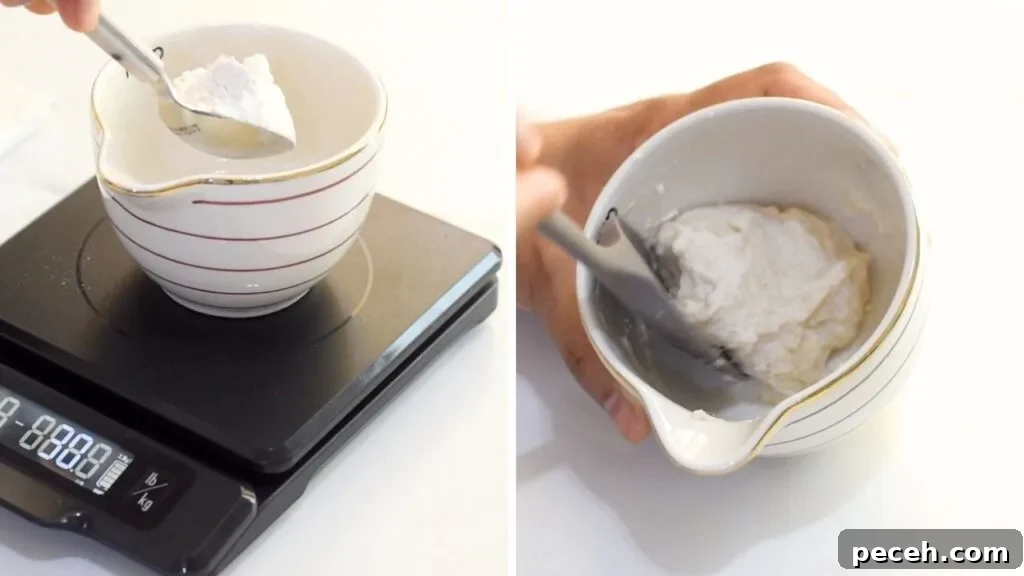
All you need is flour and water. Any flour will work, but using a mix of bread flour with some whole-grain flour (whole wheat, rye, or spelt) boosts fermentation and flavor.
My preferred ratio for starting is 250 g bread flour to 50 g whole wheat (a 5:1 bread-to-whole-grain ratio), but you can adjust to taste or availability.
Sourdough starter for beginners : Step-by-Step Guide
There are many valid ways to make a starter. You don’t need complicated techniques—just consistent feedings and attention to the starter’s behavior. Below is a straightforward schedule that works well for most kitchens.
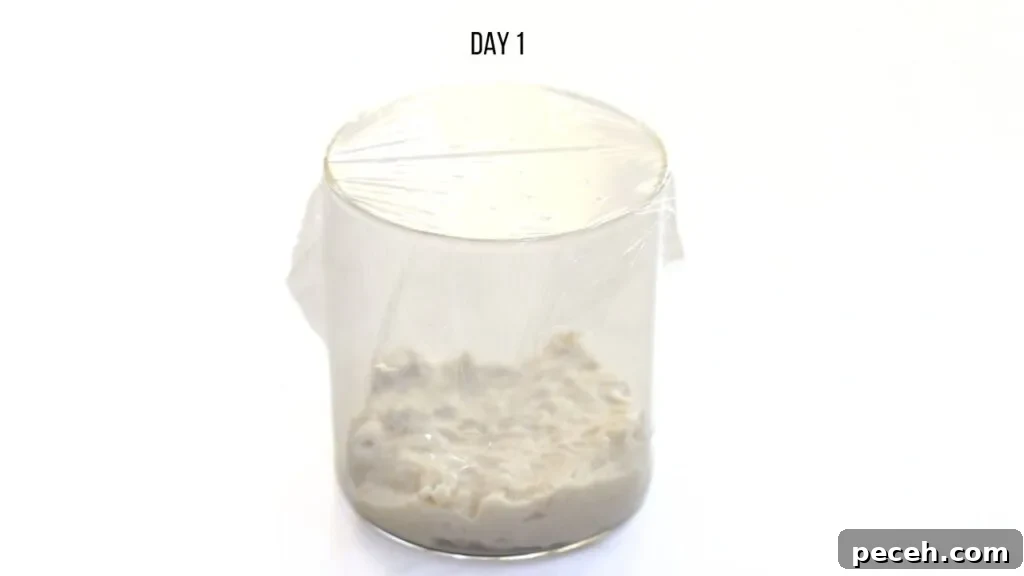
Day 1: Mixing Flour and Water
Combine equal parts flour and water in a bowl and stir until smooth. Transfer the mixture to a clean glass container and cover loosely—use a lid set slightly ajar or a piece of cling film with a few pinprick holes to allow air exchange.
Leave the jar at room temperature (around 70°F / 21°C is ideal) for 24 hours. This first rest allows microbes to begin colonizing the mix.
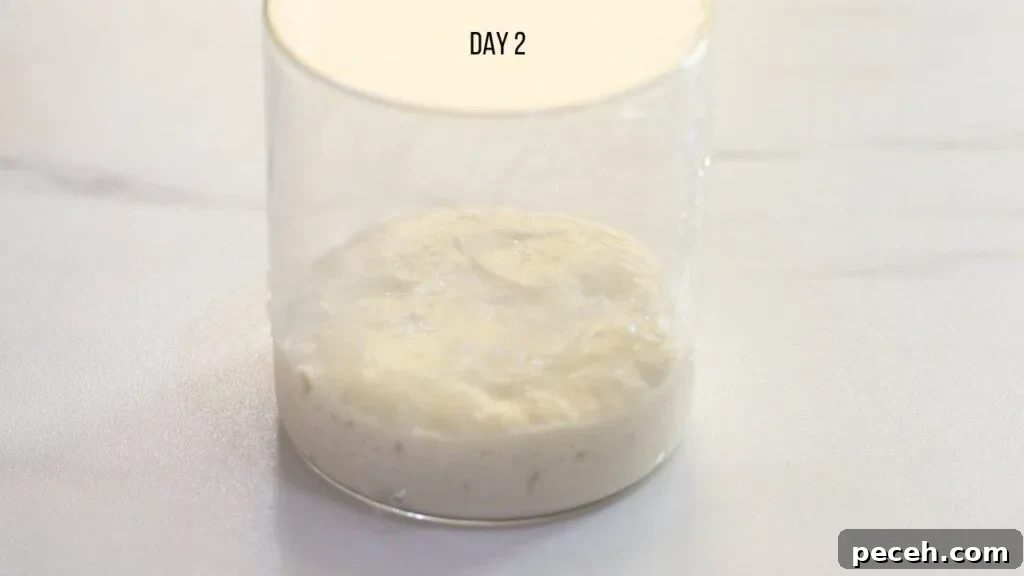
Day 2: Stir and Transfer
You may spot small bubbles by the second day—these are signs fermentation has started. Gently stir the mixture and transfer it to a clean jar if you prefer. Cover and return it to room temperature for another 24 hours.
Days 3–7: Daily Feedings
From day 3 onward, feed your starter every 24 hours using a 1:1:1 ratio by weight: starter : water : flour. For example, mix 30 g starter with 30 g water and 30 g flour. Stir, cover, and let rest at room temperature.
By day 3 you’ll often see larger bubbles and increased activity. Day 4 can be quieter—this is normal—so continue feeding and don’t discard the jar. From day 5 the starter should show consistent rise-and-fall patterns over each 24-hour period.
By the end of day 7 you will have a developing starter. It may still be weak; the next step is to increase feeding frequency as it strengthens.
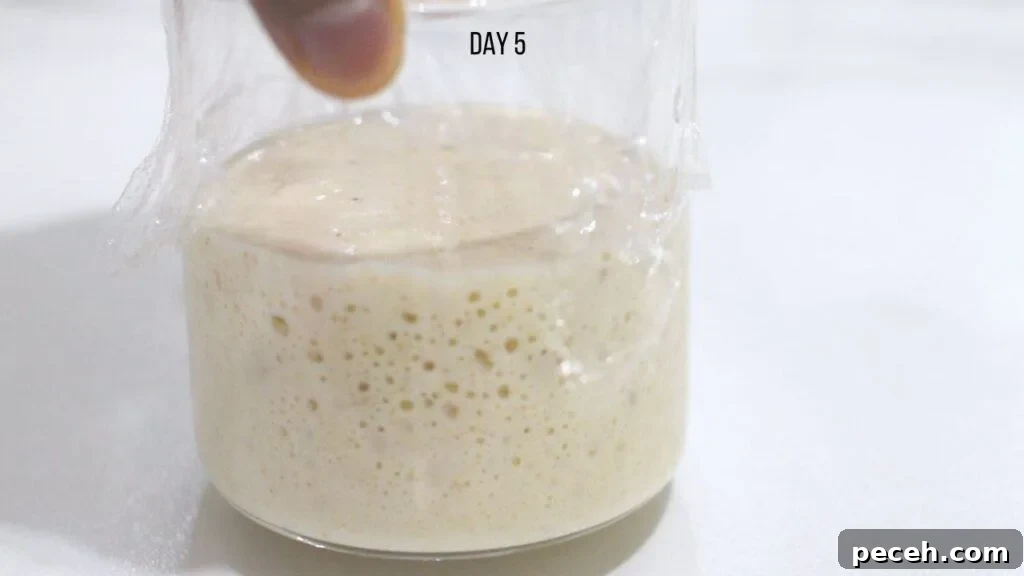
Days 8–10: Feed at Peak
From day 8, begin feeding your starter every time it reaches its peak height (the point of maximum rise). This frequent refresh keeps the yeast population vigorous.
By day 10 the starter should be lively: pleasantly yeasty with a mild sour aroma and lots of airy bubbles. To check readiness, spoon a bit of starter into a bowl of water—if it floats, it’s sufficiently buoyant and ready to leaven bread.
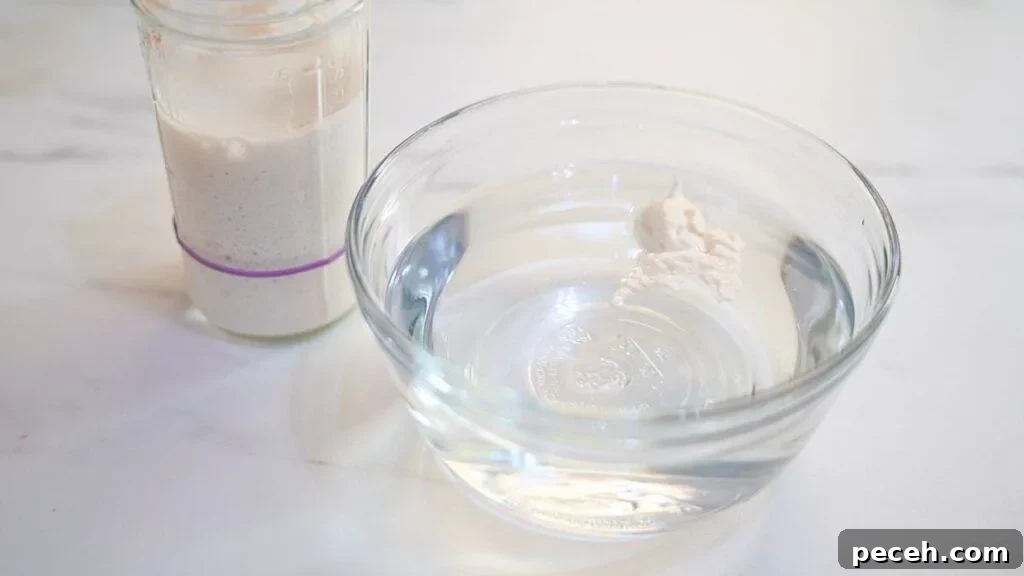
If your starter needs more time, continue feeding daily; it will strengthen over the following days.
Once established, experiment with different flours and hydration levels to shape flavor and performance. Sourdough baking blends science with craft—each starter is unique, and every loaf reflects the time and care you put in.
Gather your flour, add water, and enjoy the process—your sourdough adventure begins now.

Print Recipe
How to make Sourdough Starter For Beginners
2 mins
1 min
10 d
10 d 3 mins
how to make sourdough starter for beginners, step by step
1 Sourdough starter culture
Bincy Chris
Equipment
-
Straight-sided glass container
-
Spatula
Ingredients
- 250 g Bread flour
- 50 g Whole wheat flour (you can use rye or spelt instead)
Instructions
-
What is a sourdough starter
A sourdough starter is a fermented mix of flour and water used to make flavorful, naturally leavened bread.
-
Day 1: Mix
Combine equal parts flour and water, stir until smooth, place in a glass container, and cover loosely. Rest at room temperature (~70°F) for 24 hours.
-
Day 2: Stir
You may see small bubbles. Stir gently, transfer to a clean jar if desired, cover, and rest another 24 hours.
-
Days 3–7: Feed daily
Feed every 24 hours in a 1:1:1 ratio by weight (starter:water:flour). Example: 30 g starter + 30 g water + 30 g flour. Cover and rest.
-
Expect visible activity by day 3. Day 4 may be slower; continue feeding. From day 5 the starter should show clear rise-and-fall cycles.
-
Day 8–10: Feed at peak
Once the starter is more established, feed it each time it reaches its peak rise. By day 10 it should be bubbly, pleasantly sour, and aromatic.
-
To test readiness, drop a spoonful into water—if it floats, it’s ready to leaven bread. If not, continue regular feedings for a few more days.