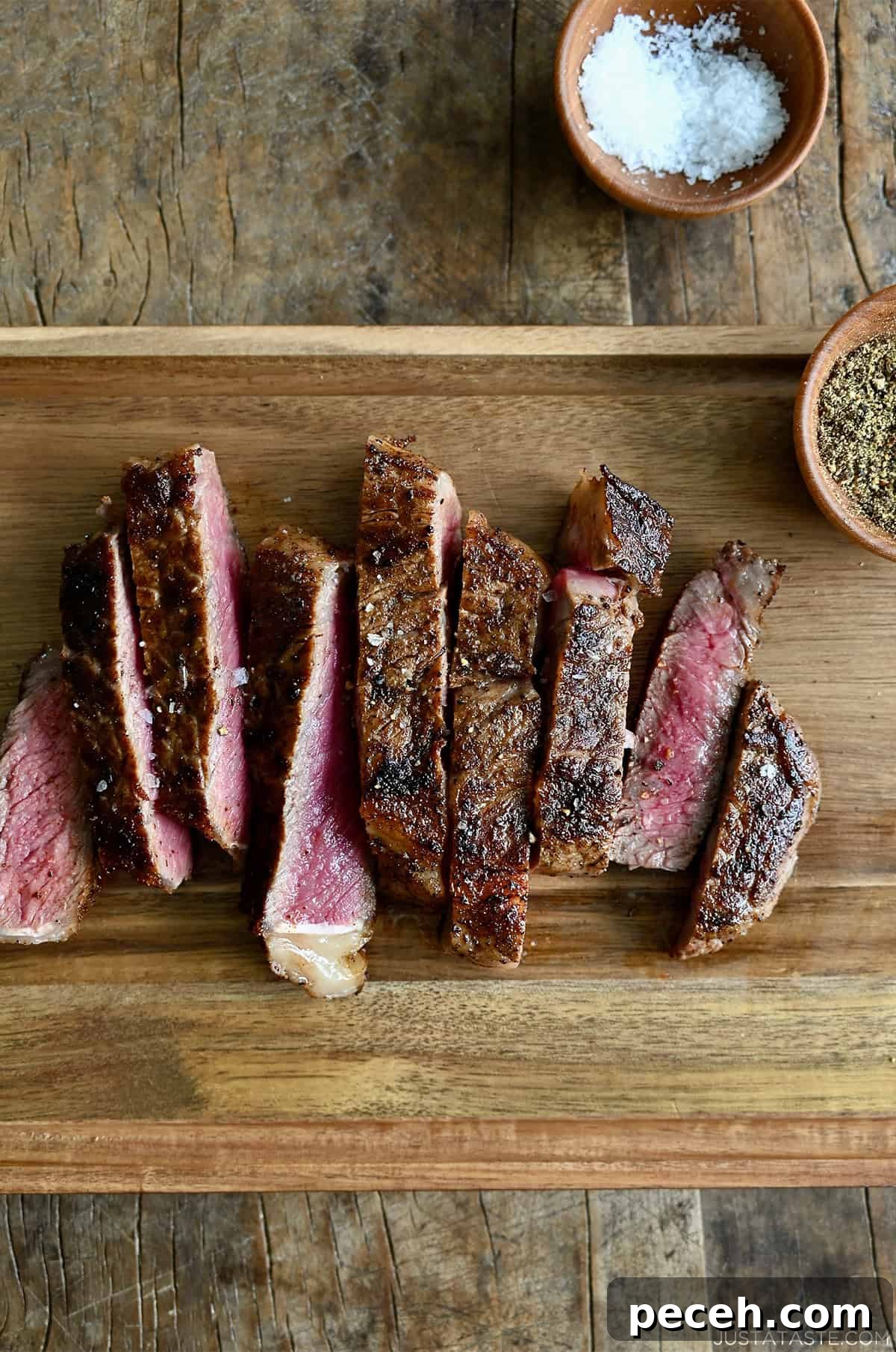
Pan-searing is the simplest way to cook a restaurant-quality steak at home. This guide walks you through choosing the right cut, seasoning, equipment, searing technique, temperature checks, and resting so you end up with a golden crust and a juicy center every time. No grill required — just a hot skillet, a handful of pantry staples, and a few chef-tested tips.
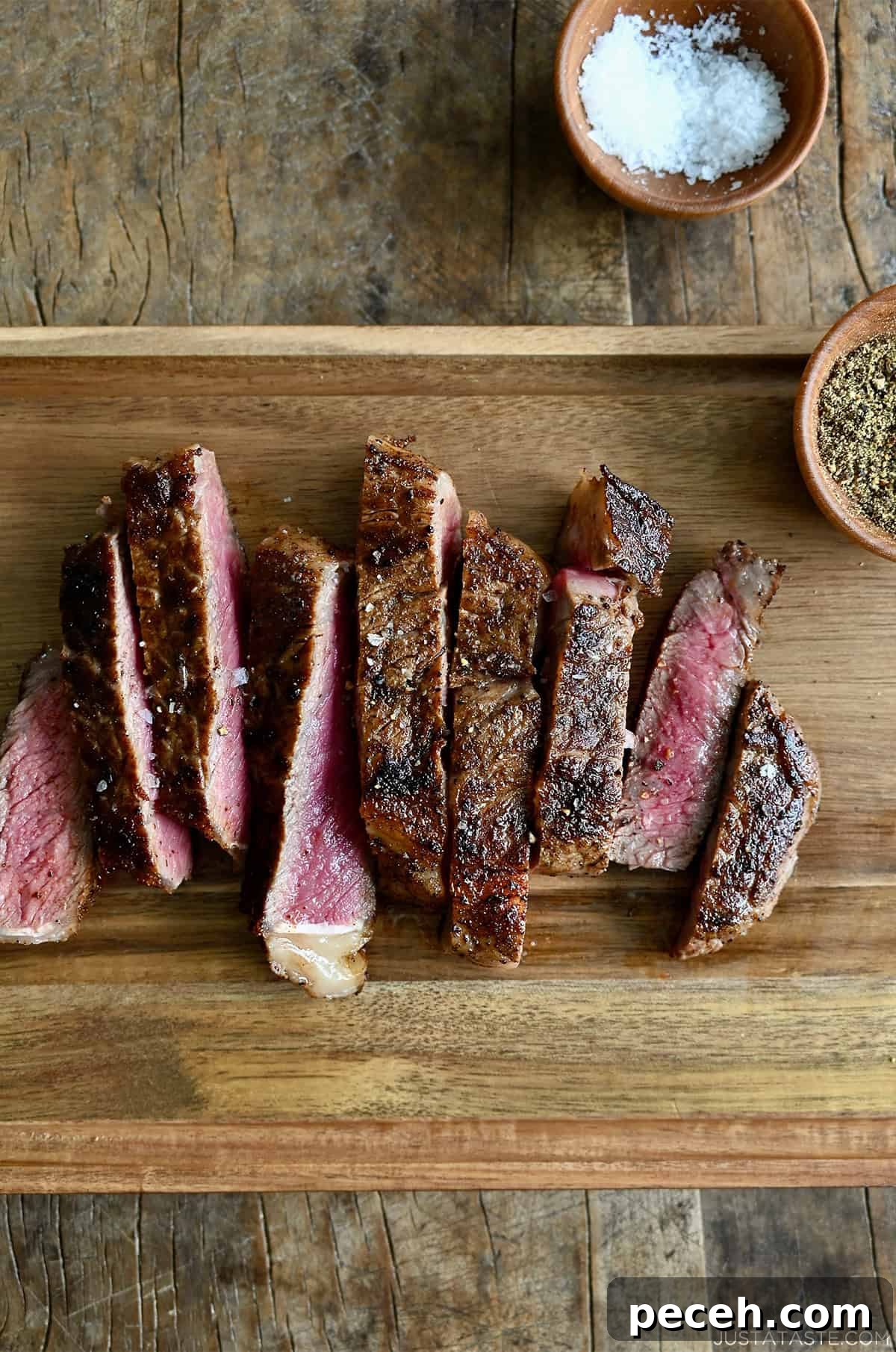
Table of Contents
- How do you cook the perfect steak?
- Best Steaks for Pan-Searing
- My Favorite Cuts for Pan-Searing
- What About Bone-In Steaks?
- Seasoning: Keep It Simple
- Preheated Pan = Perfect Crust
- Choosing the Right Fat
- Cook Your Steak Hot and Fast
- How to Tell When Your Steak Is Done
- Rest, Then Slice
- What to Serve with Steak
- Pan-Seared Steak Recipe
How do you cook the perfect steak?

There are many ways to cook steak, but my go-to for weeknights and dinner parties alike is a hot pan and a quick sear. This stovetop method delivers a crisp, flavorful crust and a tender interior without special equipment. Use a heavy skillet, steady high heat, and a few practical techniques learned in professional kitchens to get consistent results.
With just a cast-iron or stainless steel skillet, the right temperature, and proper seasoning, you can easily achieve steakhouse flavor at home.
Best Steaks for Pan-Searing
When choosing a steak for the stovetop, prioritize thickness and marbling. Those two factors have the biggest impact on texture and flavor.
- Thickness: 1 to 1½ inches works best. Thin cuts cook too quickly and can overcook before a good crust forms. Very thick cuts (over 2 inches) are better finished in the oven after searing to avoid burning the exterior while the interior comes up to temperature. Boneless steaks cook more evenly in a skillet.
- Marbling matters. Intramuscular fat melts during cooking, keeping the steak juicy and adding flavor. Look for visible marbling for the tastiest results; lean cuts will be firmer and less flavorful.
My Favorite Cuts for Pan-Searing
- New York Strip: A great balance of flavor and tenderness for stovetop cooking.
- Ribeye: Rich, juicy, and packed with beefy flavor.
- Filet Mignon: Extremely tender and ideal for special occasions.
- Top Sirloin: Budget-friendly and responds well to a hot sear.
- Bavette: A flavorful butcher’s cut with a loose grain that’s satisfying when sliced against the grain.
What About Bone-In Steaks?
You can pan-sear bone-in steaks, but bones slow heat transfer and can cause uneven cooking. For the most consistent stovetop results choose boneless cuts and reserve large bone-in steaks for the grill or a sear-then-oven method.
Seasoning: Keep It Simple
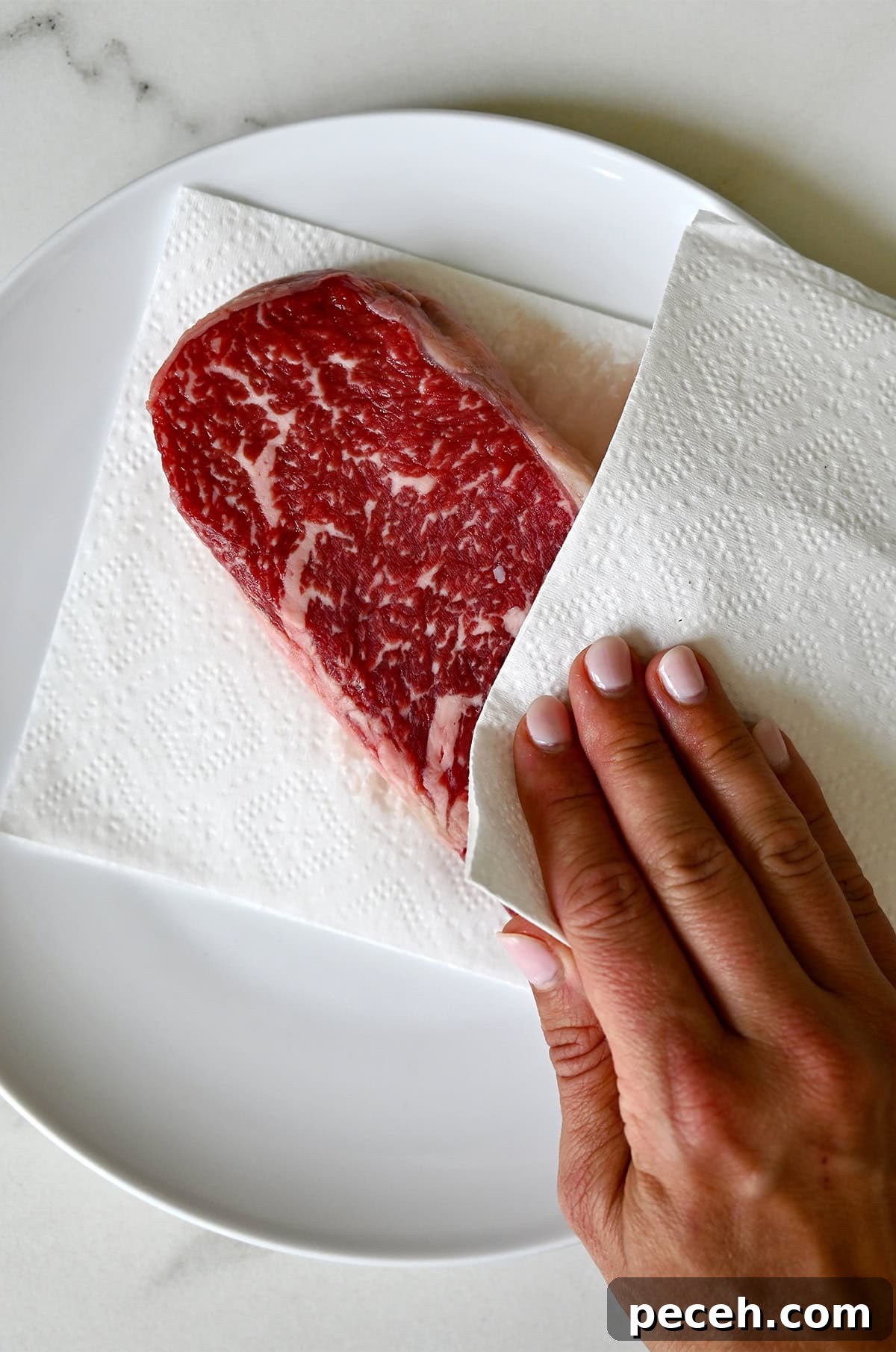
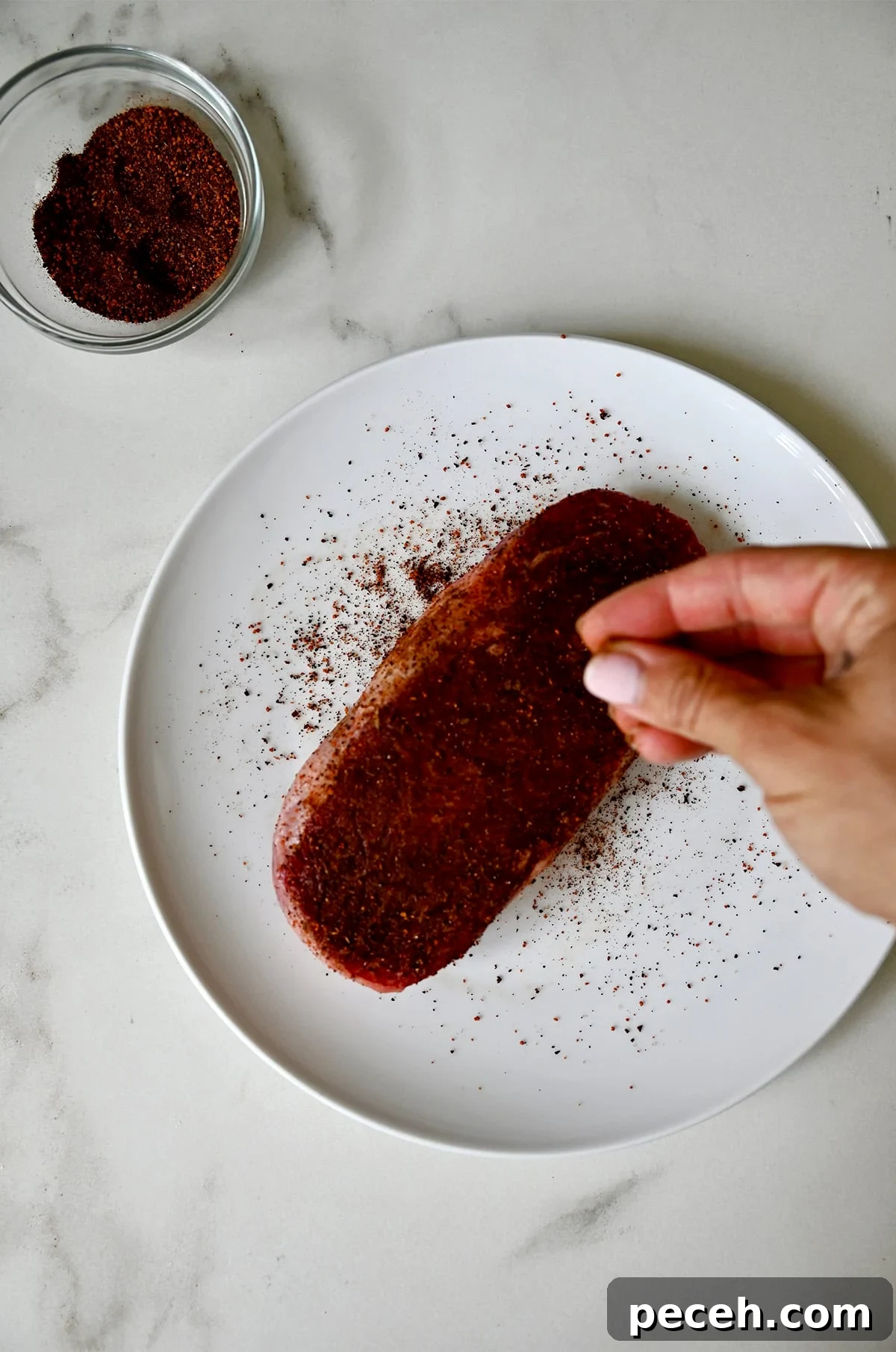
Bring steaks to room temperature for about 30 minutes before cooking, then pat them dry. Moisture prevents a good crust. Season generously with kosher salt and, if you like, freshly ground black pepper. High-quality beef needs little else, though you can experiment with rubs for variety.
Preheated Pan = Perfect Crust
The crust comes from the Maillard reaction — a high-heat chemical browning that produces that deep, savory flavor. To get it, preheat your pan thoroughly. Cast iron is my top choice because it holds heat well, but stainless steel also works. Avoid nonstick for searing; heavier pans allow the meat to stick briefly, form a crust, then release naturally.
Tip: Preheat the skillet over medium-high heat for a couple of minutes. If it seems hot enough, wait another minute.
Choosing the Right Fat
Coat the pan with a thin layer of oil that has a high smoke point so it won’t burn. Vegetable oil or avocado oil are good choices. Extra virgin olive oil smokes at lower temperatures and is best avoided for the initial sear. Save butter for finishing — it adds flavor but will brown and burn if used as the primary searing fat.
Cook Your Steak Hot and Fast
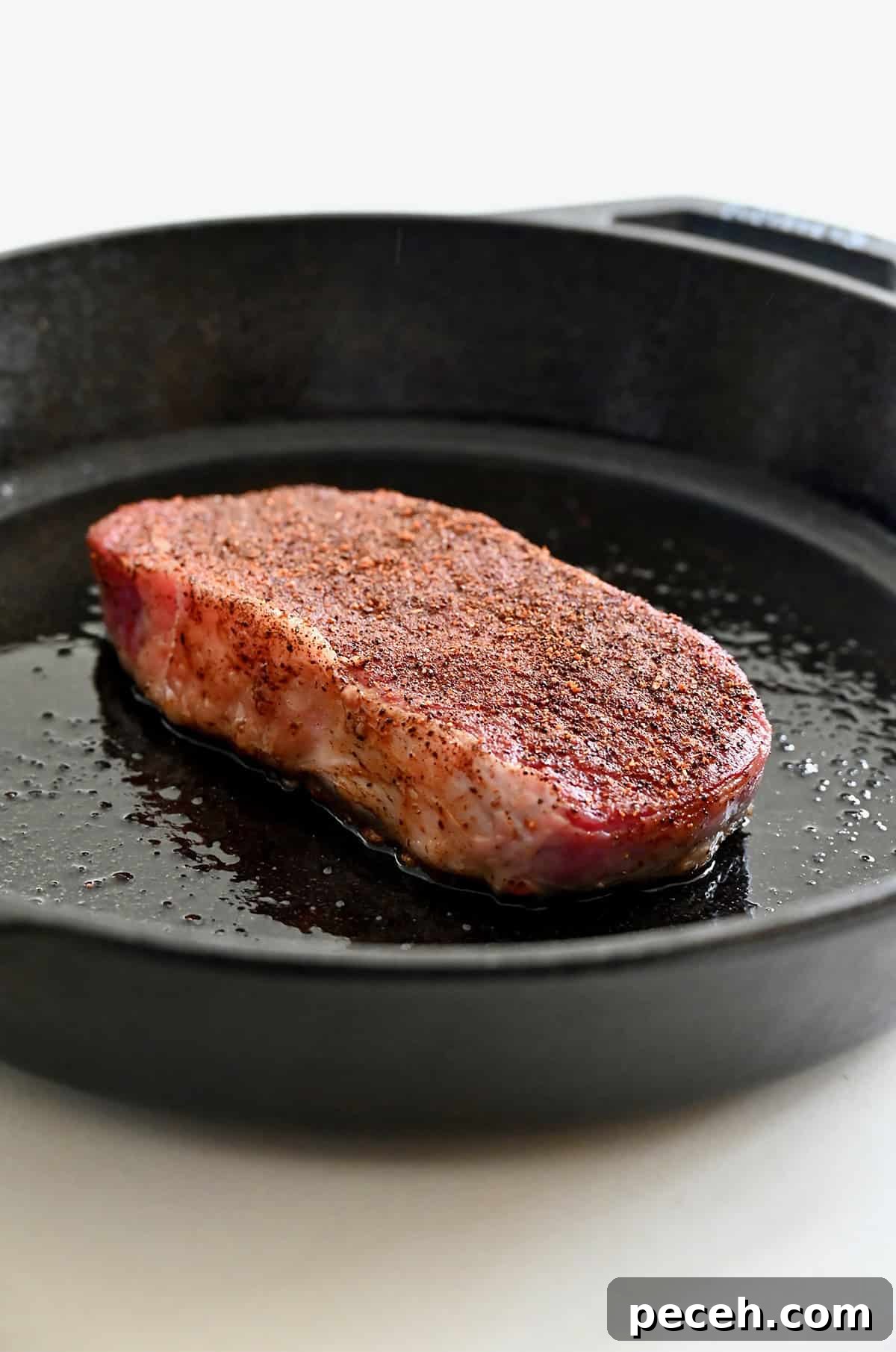
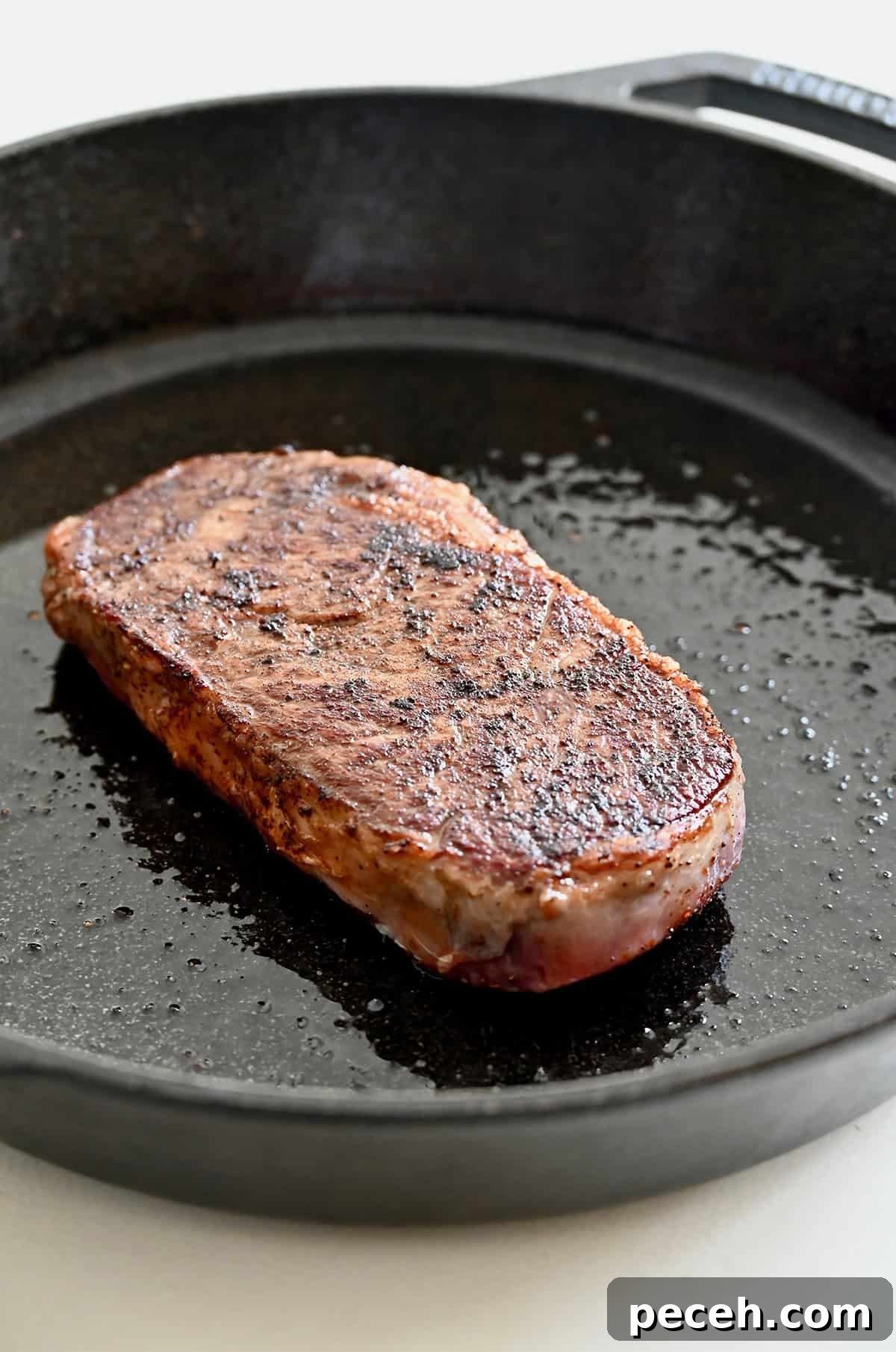
When the oil shimmers, add the steaks and leave them undisturbed. Resist flipping too soon — the steak will release from the pan when a good crust has formed, typically after 3 to 5 minutes depending on thickness. Flip once to sear the other side.
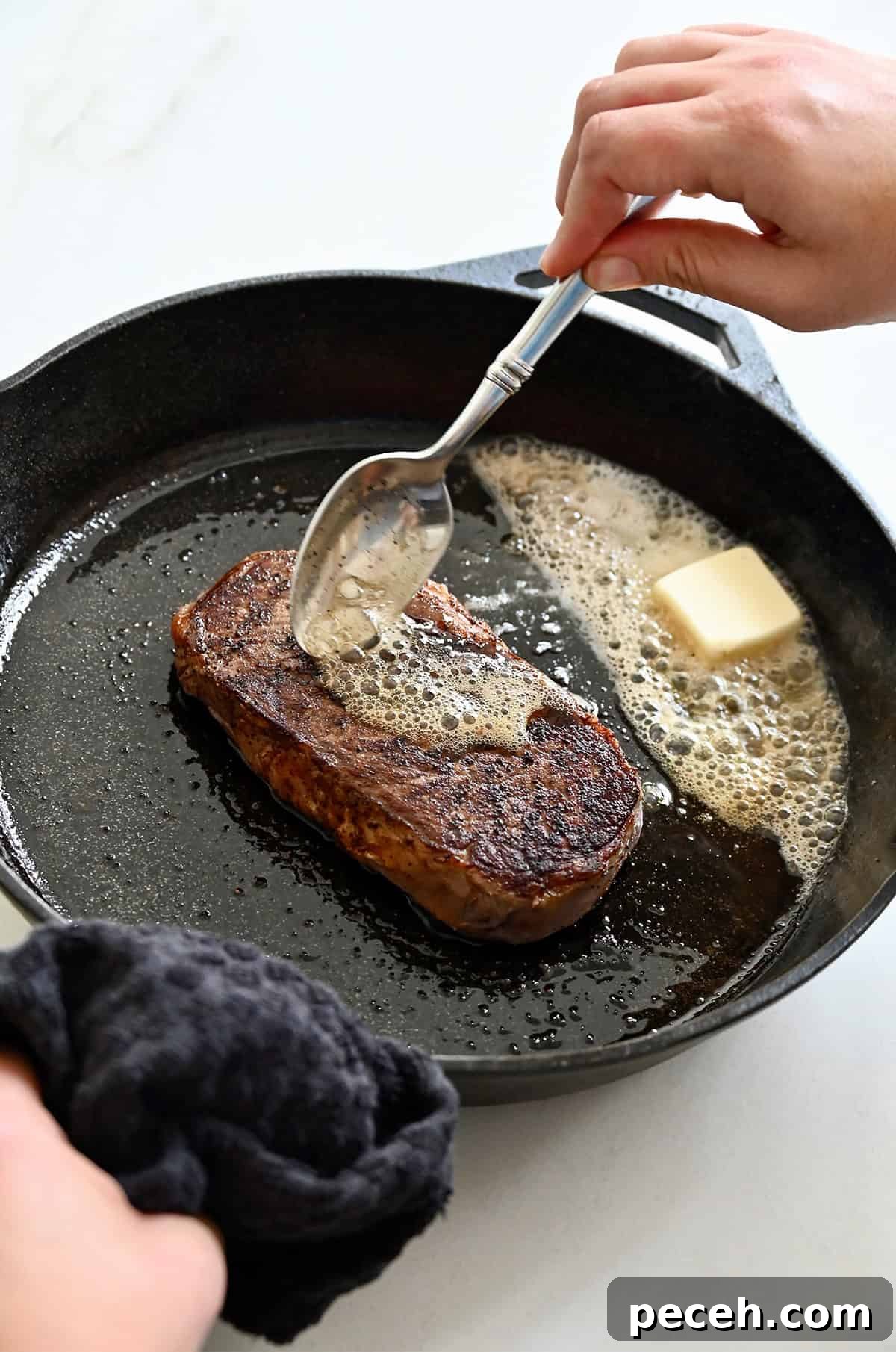
For extra flavor, add a knob of butter about halfway through cooking along with smashed garlic and fresh herbs if desired. Tilt the pan and spoon the melted butter over the steak repeatedly to baste; this enhances flavor and helps the crust finish while keeping the surface moist.
How to Tell When Your Steak Is Done
The most reliable method is a digital instant-read thermometer. Start checking temperature about halfway through cooking so you can estimate remaining time. Remember to remove the steak from the pan 5–10°F below your target because carryover cooking raises the internal temperature as the meat rests.
Tip: Pull steaks from the heat a few degrees shy of your desired doneness; the temperature will continue to rise while resting.
Internal temperature guide:
- Rare: final ~125°F (remove at 120–125°F)
- Medium Rare: final ~130–135°F (remove at 125–130°F)
- Medium: final ~140°F (remove at 135°F)
- Medium Well: final ~150°F (remove at 145°F)
- Well Done: final 160°F+ (remove at 155°F)
The USDA recommends cooking steaks to at least 145°F for safety, though many cooks prefer lower temps for optimal tenderness and flavor.
Rest, Then Slice
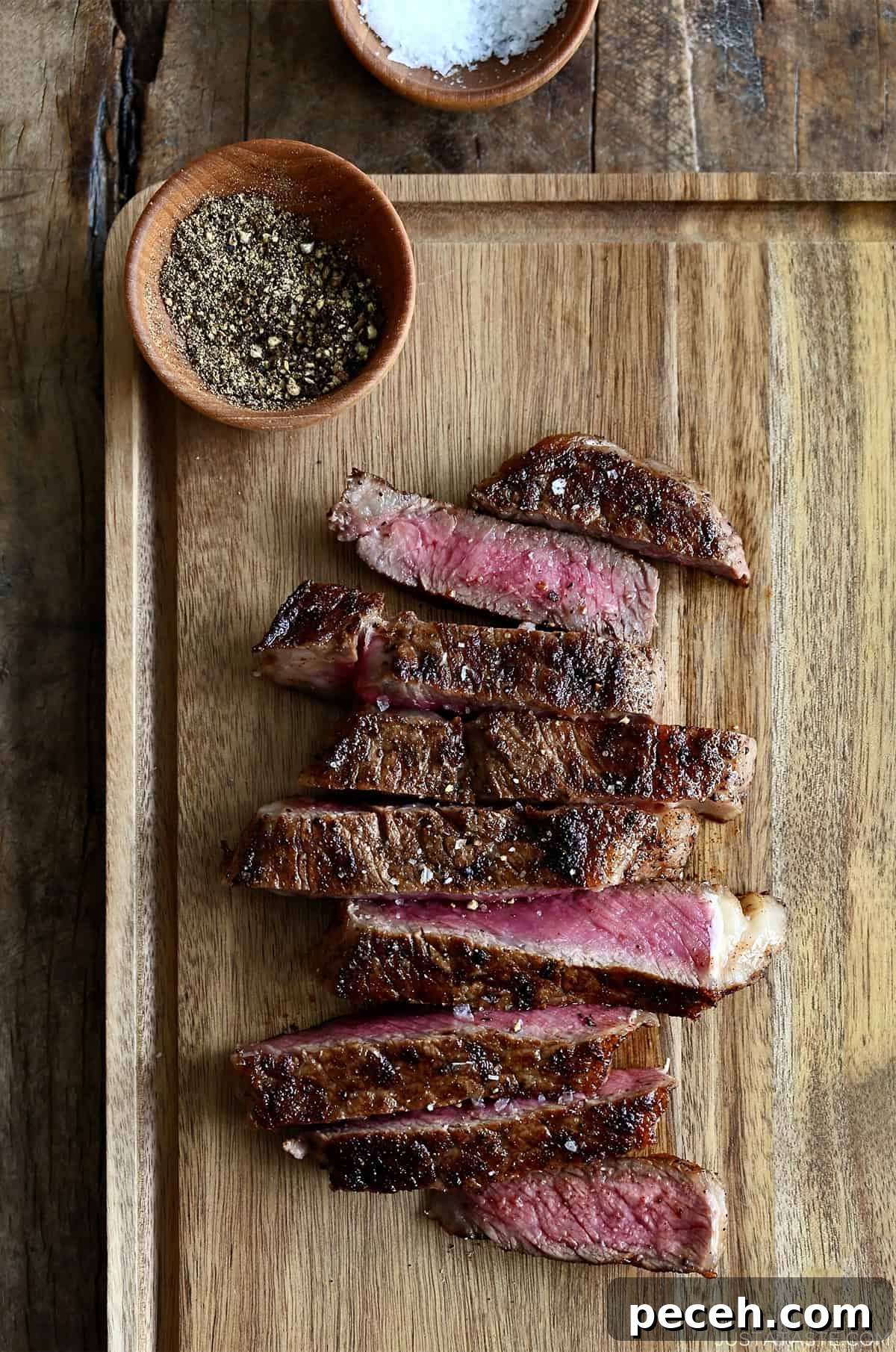
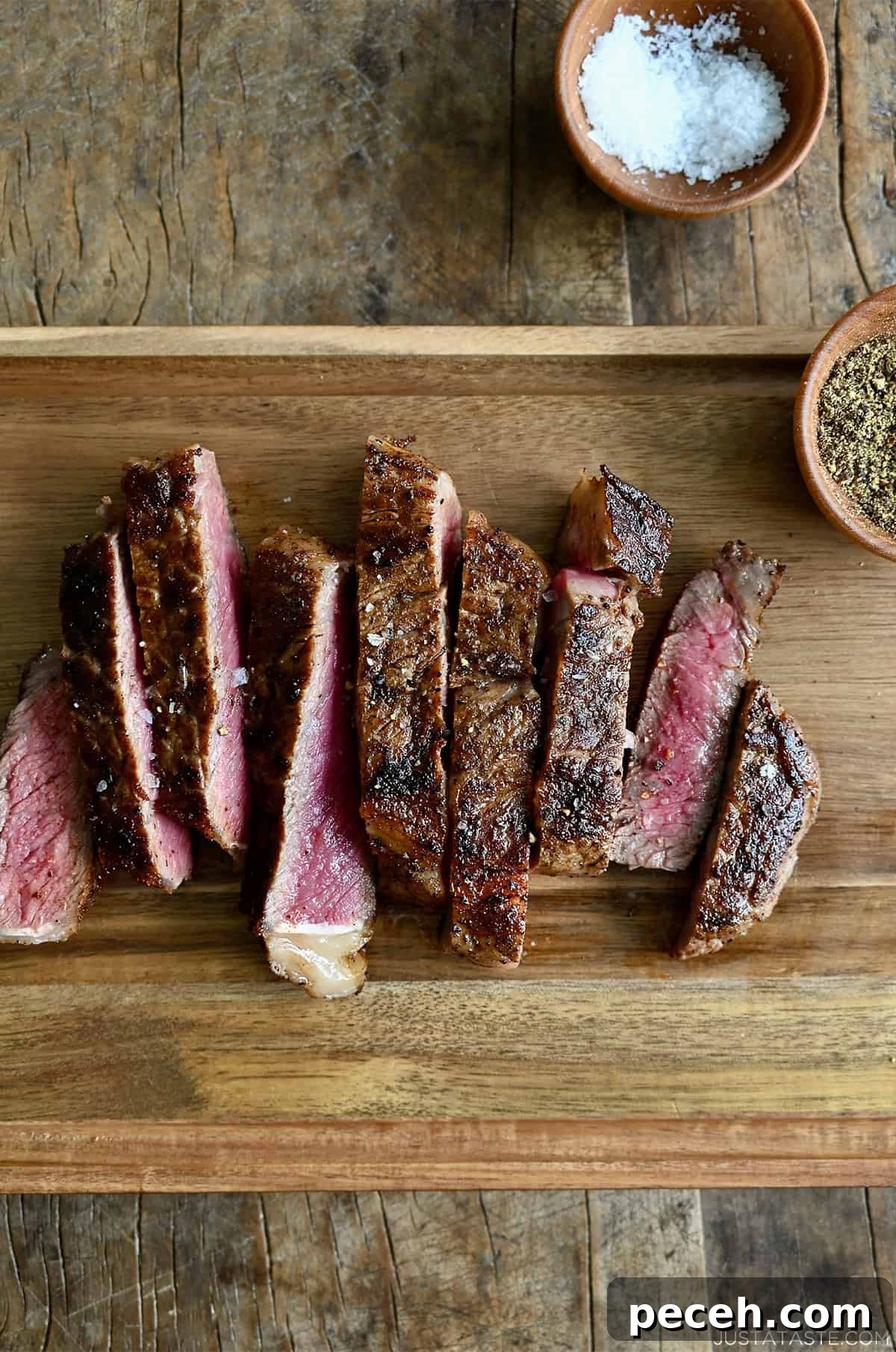
After reaching your desired temperature, move the steaks to a cutting board and tent loosely with foil. Rest for at least 5 minutes so the juices redistribute. Slice only when the steak has rested, and always cut against the grain to shorten muscle fibers and maximize tenderness.
Identify the grain by the direction of the visible muscle lines, then slice perpendicular to them for the best texture.
What to Serve with Steak
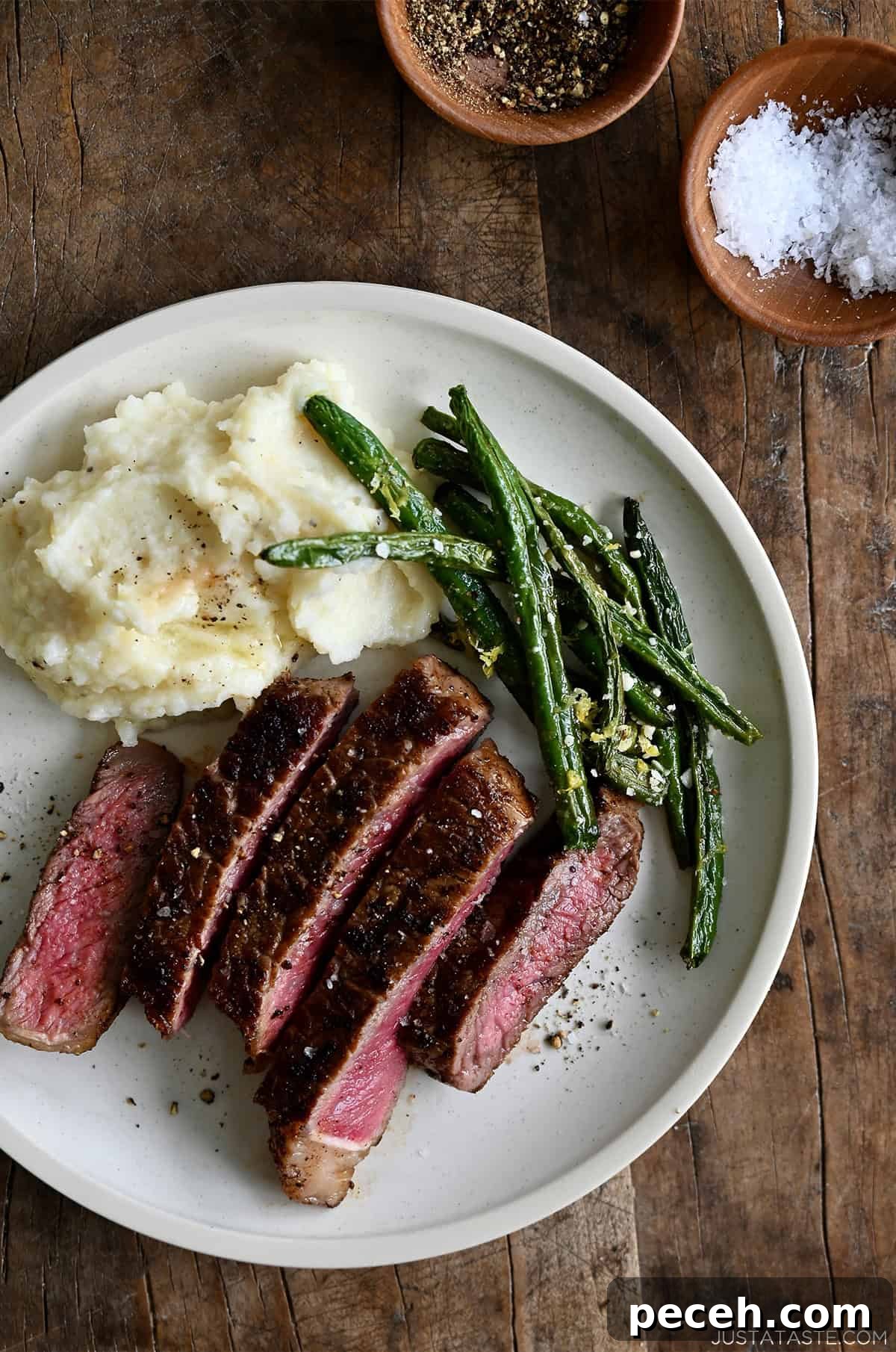
Stovetop steak pairs well with classic steakhouse sides, light salads, or more creative bowls. Some favorites include roasted green beans, Brussels sprouts, mashed potatoes, crispy fries, sautéed mushrooms, chimichurri, or a simple green salad. Serve sliced steak over greens for a hearty salad, or build rice bowls with roasted vegetables and a flavorful sauce.
- Veggie sides: roasted green beans, Brussels sprouts, or asparagus
- Comfort sides: mashed potatoes, biscuits, or mac and cheese
- Sauces: creamy mushroom sauce, chimichurri, or compound butter
- Serve sliced steak on a salad or in rice bowls for versatility
Pan-Seared Steak Recipe
Ingredients
- 4 steaks (New York strip, ribeye, filet mignon or bavette), 6 to 8 ounces each and about 1 to 1½ inches thick
- Kosher salt and freshly ground black pepper, to taste
- 2 Tablespoons vegetable or avocado oil
- 3 Tablespoons unsalted butter
- 3 garlic cloves, smashed (optional)
- 3 to 4 sprigs fresh thyme or rosemary (optional)
Instructions
-
Pat the steaks dry and season generously with salt and pepper.
-
Place a cast-iron or stainless steel skillet over medium-high heat. Add the oil and heat until shimmering.
-
Add the steaks and sear, undisturbed, until a crust forms and they naturally release from the pan, 3 to 5 minutes. Using tongs, flip the steaks once, and add the butter. If using garlic and herbs, add them now. As the butter melts, tilt the skillet and baste the steaks with the butter until they reach your desired doneness.
-
Transfer the steaks to a cutting board, tent loosely with foil, and rest 5 to 10 minutes. Slice against the grain and serve.
Kelly’s Notes
- Cook in batches: Sear only as many steaks as fit comfortably in your skillet so the pan stays hot and the meat sears instead of steams. Keep finished steaks loosely tented with foil while you finish the rest.
- Slicing: Always slice against the grain for more tender bites.
- Internal temperatures (pull 5–10°F before final temp):
- Rare: pull at 120–125°F → final ~125–130°F
- Medium-rare: pull at 125–130°F → final ~130–135°F
- Medium: pull at 135°F → final ~140–145°F
- Medium-well: pull at 145°F → final ~150–155°F
- Well-done: pull at 155°F → final ~160°F
- The USDA recommends cooking steaks to at least 145°F.
Nutrition
Did you try this recipe?
Leave a comment below with your star rating!