I’ll be honest — I ruined a dozen eggs before I figured this out.
For years my hard-boiled eggs came out with chalky green rings around the yolks, shells stuck to the whites, and that sulphuric aroma that made the kitchen smell like a science experiment gone wrong.
I tried every method I found online. Some worked sometimes. Others never worked at all.
Then I started testing. I cooked batch after batch, adjusting timing by 30 seconds, trying different starting temperatures, and comparing fresh eggs against older ones. After months of trial and error I landed on three methods that deliver perfect hard-boiled eggs every time.
This guide explains exactly how to make hard-boiled eggs easily, with step-by-step instructions for the stovetop, steamer basket, and pressure cooker. You’ll learn why the ice bath is essential, how to peel eggs without losing half the white, and what causes that ugly green ring so you never see it again.
Table of Contents
How to Make Hard Boiled Eggs Easy
I use three proven methods in my kitchen. Each has its strengths — choose the one that fits your equipment and the freshness of the eggs.
Method 1: Classic Stovetop Hot Start
Why it works: Starting with boiling water gives precise timing. The eggs cook from the outside in, removing guesswork and delivering consistent results.
- Bring a pot of water to a rolling boil. Use a pot large enough so eggs fit in a single layer with about two inches of water above them.
- Lower fridge-cold eggs into the boiling water carefully using a spider strainer or slotted spoon to avoid cracking.
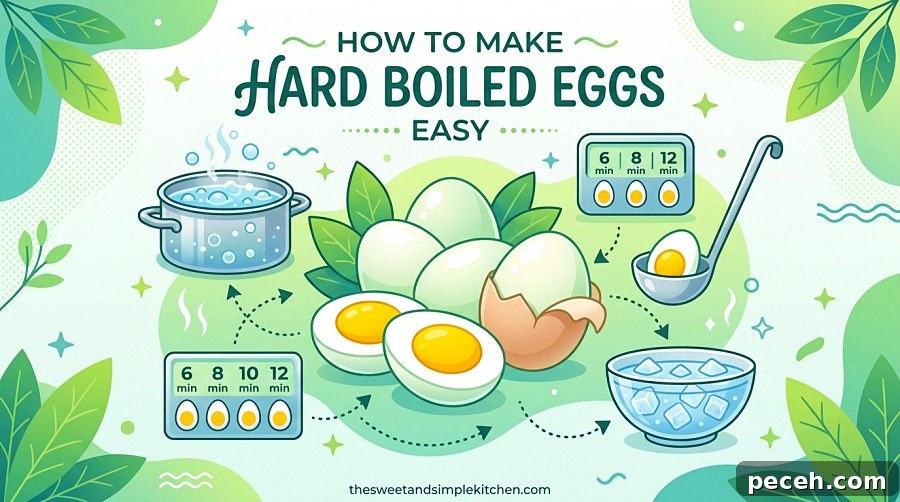
- Set a timer immediately. For creamy, fully set yolks cook 10 minutes. For firmer yolks, 11–12 minutes. Avoid going past 12 minutes.
- When the timer finishes, transfer eggs straight to an ice bath. Do not skip this step.
- Cool at least 10 minutes. Peel right away or store in the fridge for up to one week.
Tips:
- If an egg cracks while boiling, add a splash of white vinegar to help the white coagulate faster.
- Use a timer. One minute too long can produce the green ring.
- Eggs 7–10 days old peel more easily than very fresh eggs.
Troubleshooting:
- If shells crack on entry, let eggs sit at room temperature for 5 minutes before boiling to reduce shock.
- If yolks show a green ring, reduce cooking time to 10 minutes next time.
Method 2: Steamer Basket Method
Why it works: Steam cooks eggs gently and helps the membrane separate from the shell, making this the best choice for very fresh eggs.
- Pour about one inch of water into a pot and insert a steamer basket. Bring the water to a boil.
- Place eggs in the basket in a single layer, being careful of hot steam.
- Cover with a tight lid. Set a timer for 13 minutes for large eggs.
- Remove the pot from heat and transfer eggs immediately to an ice bath.
- Cool 10–15 minutes, then peel.
Tips:
- A simple collapsible steamer basket works fine and is inexpensive.
- At high altitude, add about 2 minutes to the timer.
Troubleshooting:
- If eggs are undercooked, add a minute next time.
- If shells crack, reduce the heat so steam is gentler.
Method 3: Instant Pot / Pressure Cooker Method
Why it works: Pressure cooking creates a consistent environment, cooks quickly, and usually yields eggs that peel easily — ideal for large batches.
- Pour 1 cup of water into the Instant Pot inner pot and place the metal trivet inside.
- Arrange eggs on the trivet in a single layer; you can stack if needed but avoid overcrowding.
- Seal the lid, set the valve to sealing, and cook on high pressure for 5 minutes.
- When the timer ends, let pressure release naturally for 5 minutes, then quick-release any remaining steam.
- Transfer eggs to an ice bath for 10 minutes before peeling.
Tips:
- The common 5-5-5 rule is 5 minutes pressure, 5 minutes natural release, 5 minutes ice bath — I prefer a 10-minute ice bath for best peeling.
- Timing works well for extra-large eggs too.
- If you stack eggs, those on top may cook slightly softer.
Troubleshooting:
- If yolks are overcooked, reduce pressure time by 1 minute.
- If shells crack in the Instant Pot, let eggs warm from the fridge for 5 minutes before cooking.
Ice Bath: Why It’s Critical
The ice bath is the secret to easy-peel hard-boiled eggs. When eggs cook, proteins in the white firm up and can bond to the inner membrane. Cooling slowly keeps that bond tight.
Plunging hot eggs into ice water shocks the proteins, causing them to contract and pull away from the shell. The cold also stops cooking instantly, preventing overcooking and preserving a bright yellow yolk instead of green-grey.
To make an ice bath, fill a large bowl halfway with ice, add cold water until about three-quarters full, fully submerge the eggs, and let them sit at least 10 minutes. If peeling immediately, crack shells gently under the water so it seeps between shell and membrane and the shell slips off.
Peeling Tips and Techniques
Peeling is where many fail. These steps actually work:
- Tap the egg on the counter to crack the shell all over, then roll gently so the shell fractures into small pieces.
- Peel under running water or while the egg is in the ice bath; water helps lift the shell away from the white.
- Start at the wide end where the air pocket sits — the shell is usually loosest there.
- Slide your thumb between shell and membrane and lift; with luck the shell comes off in large pieces.
Older eggs peel more easily because the pH of the albumen changes over time, reducing stickiness. For very fresh eggs, the steamer method compensates for the tight bond.
Common Mistakes to Avoid
Learn from the mistakes I made so you don’t repeat them.
Mistake 1: Starting with Cold Water
Putting eggs in cold water and bringing it to a boil is unpredictable. Timing changes with pot size, burner strength, and egg temperature, so some eggs may start cooking before the water boils. For consistent results, bring the water to a boil first, then add eggs.
Mistake 2: Overcooking
The green-grey ring around the yolk is a reaction between sulfur in the yolk and iron in the white from overcooking or slow cooling. The eggs are safe to eat but become chalky and sulphuric in flavor. Use a timer and shock eggs in ice immediately.
Mistake 3: Skipping the Ice Bath
Letting eggs cool slowly on the counter is tempting but wrong. Residual heat continues to cook the center, and the membrane remains glued to the shell. The ice bath is essential.
Mistake 4: Using the Wrong Pot Size
Crowding eggs into a small pot causes uneven cooking. Use a pot that allows eggs to sit in one layer with space between them.
Cooking Time Guide
Cooking time depends on method and yolk preference. Use these reference times:
| Method | Cooking Time | Release / Cool | Yolk Texture |
|---|---|---|---|
| Stovetop Hot Start | 10 minutes | Immediate ice bath | Creamy, fully set |
| Stovetop Hot Start | 11–12 minutes | Immediate ice bath | Firm, slightly dry |
| Steamer Basket | 13 minutes | Immediate ice bath | Creamy, fully set |
| Instant Pot | 5 minutes pressure | 5 min natural release | Fully set, creamy |
Use the shorter times for a creamy yolk, longer for a firmer center.
How to Store Hard Boiled Eggs
Peeled hard-boiled eggs keep in the refrigerator up to one week in an airtight container. Place a damp paper towel over them before sealing to prevent drying. Unpeeled eggs stay fresher longer because the shell protects the white.
If packing eggs for lunch or a picnic, use an insulated bag with an ice pack. Discard eggs left at room temperature more than two hours. Store at 40°F (4°C) or below for safety.
Serving Ideas and Recipes
Hard-boiled eggs are versatile: eat them plain with salt and pepper, slice them on avocado toast, chop them into egg salad, or make deviled eggs for potlucks. They complement Cobb salads, grain bowls, and ramen, and they make a quick protein-packed snack or breakfast paired with whole-grain toast and berries.
Frequently Asked Questions
What is the easiest way to hard boil eggs?
The hot-start stovetop method is the easiest: bring water to a rolling boil, lower the eggs in, cook 10–12 minutes, then move them to an ice bath for easy peeling.
What is the trick to boiling eggs so they peel easily?
The ice bath is the key. It shocks the proteins, causing the white to shrink away from the shell and making the membrane separate. Peel under running water for best results.
What is the 5-5-5 rule for boiling eggs?
For pressure cookers: 5 minutes at high pressure, 5 minutes natural release, then 5 minutes in an ice bath. Extending the ice bath to 10 minutes often improves peeling.
Why are my hard boiled eggs hard to peel?
Very fresh eggs have a lower albumen pH, which makes the membrane stick to the white. Eggs about a week old peel more easily. Skipping the ice bath also makes peeling difficult.
Can diabetics have hard-boiled eggs?
Yes. Hard-boiled eggs are low in carbohydrates and high in protein, making them a useful option for people managing blood sugar.
What causes the green ring around the yolk?
The green ring is a reaction between sulfur in the yolk and iron in the white from overcooking or slow cooling. An ice bath stops cooking immediately and prevents the ring.
How long do hard boiled eggs last in the refrigerator?
Peeled hard-boiled eggs last up to one week in an airtight container; unpeeled eggs last a bit longer. Keep them refrigerated at 40°F (4°C) or below.
Conclusion
Learning to make hard-boiled eggs reliably changed my routine. I batch-cook a dozen every Sunday and have protein ready for the week.
Whether you choose the classic stovetop method, the steamer for fresh eggs, or the Instant Pot for speed, the keys are the same: start with boiling water or steam, time precisely, and shock the eggs in an ice bath.
Do that, and you’ll get perfect hard-boiled eggs with bright yellow yolks and shells that slip off every time — no chalky texture, no green rings. Just simple, reliable eggs that make breakfast, snacks, and meal prep easier.