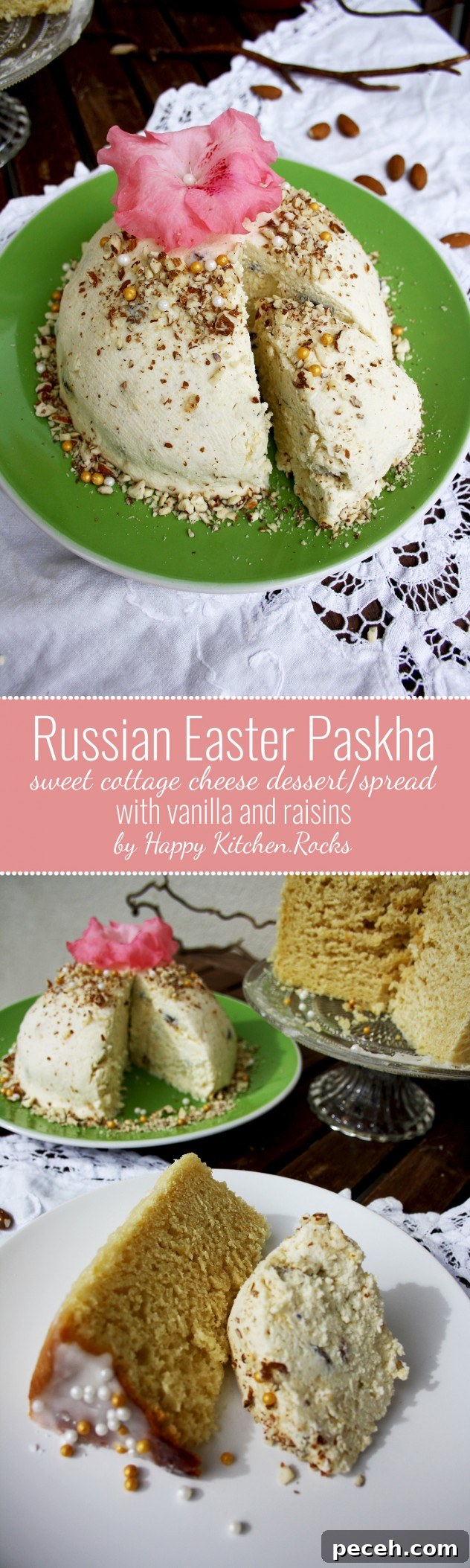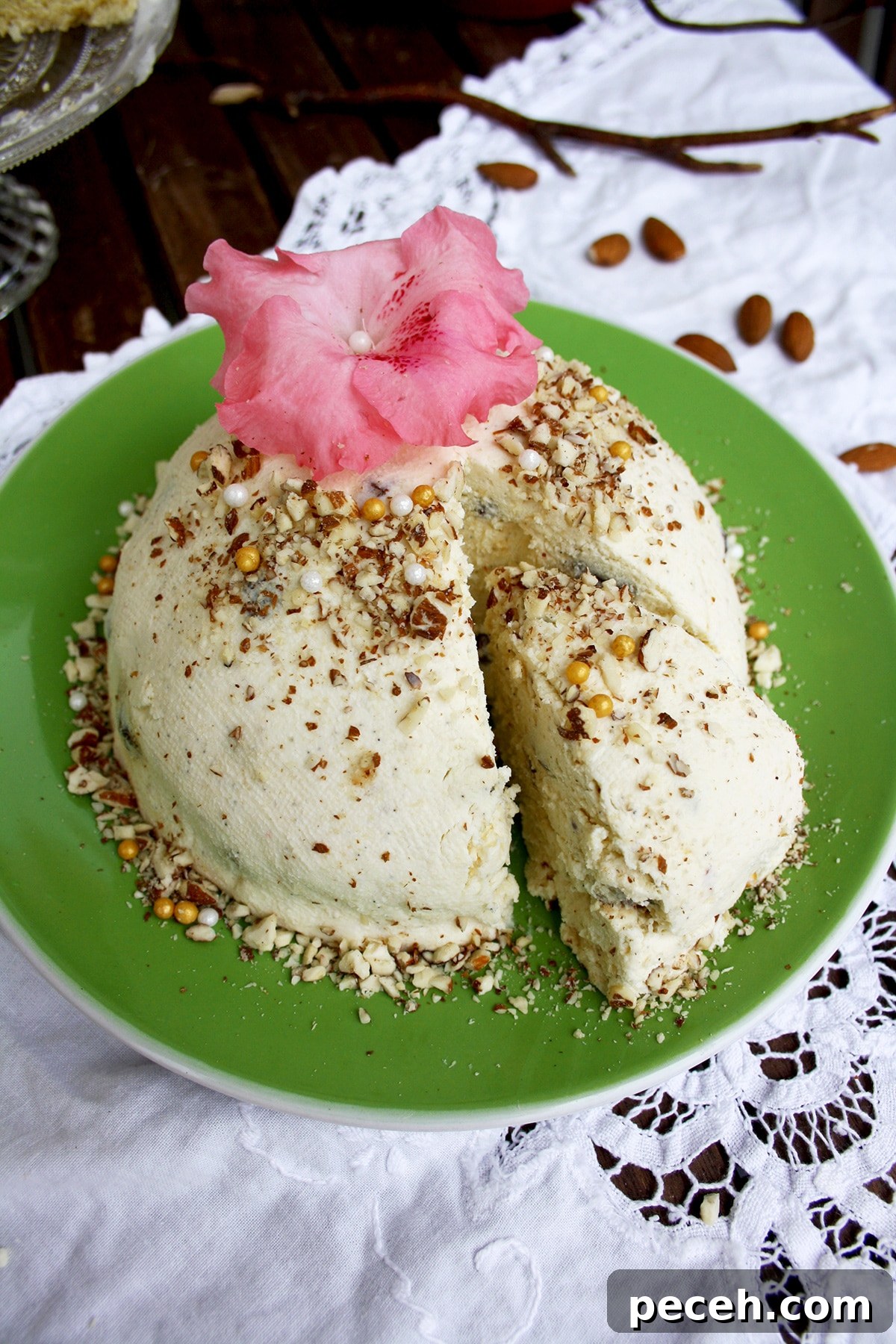
Traditional Russian Easter paskha—an indulgent yet lighter festive dish made with cottage cheese (tvorog), butter, dried fruits and vanilla. This version is healthier and incredibly flavorful. Serve it as a spread for sweet Easter bread (kulich) or as a dessert.
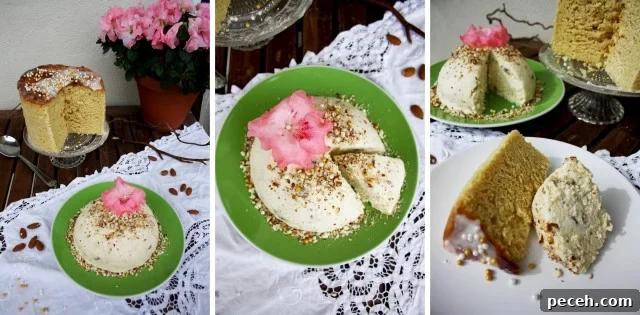
This is a treasured family recipe for Russian paskha—traditionally made from tvorog (cottage cheese), butter, dried fruit and vanilla. My grandmother made paskha every Easter, and its creamy, slightly tangy flavor always felt like a holiday. It pairs perfectly with kulich, the classic sweet Easter bread.
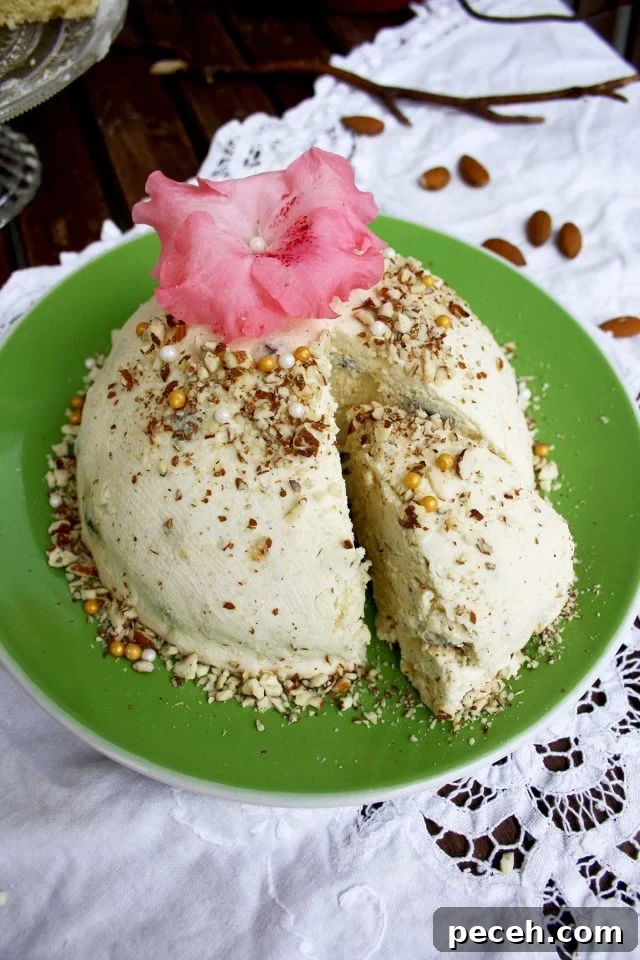
Russian Easter spreads are generous and festive. Classic items include deviled eggs, naturally dyed and decorated eggs, kulich and paskha. In the past, extravagant multi-course Easter feasts were common—sometimes dozens of courses after the long fast. Today the celebration is simpler but still focused on rich dairy dishes, eggs and colorful decorations.
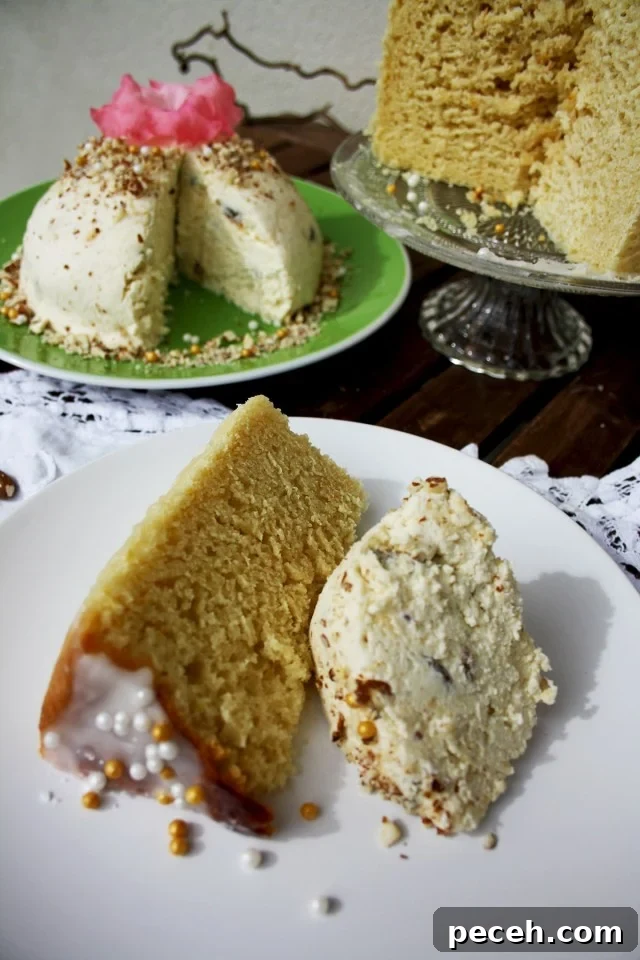
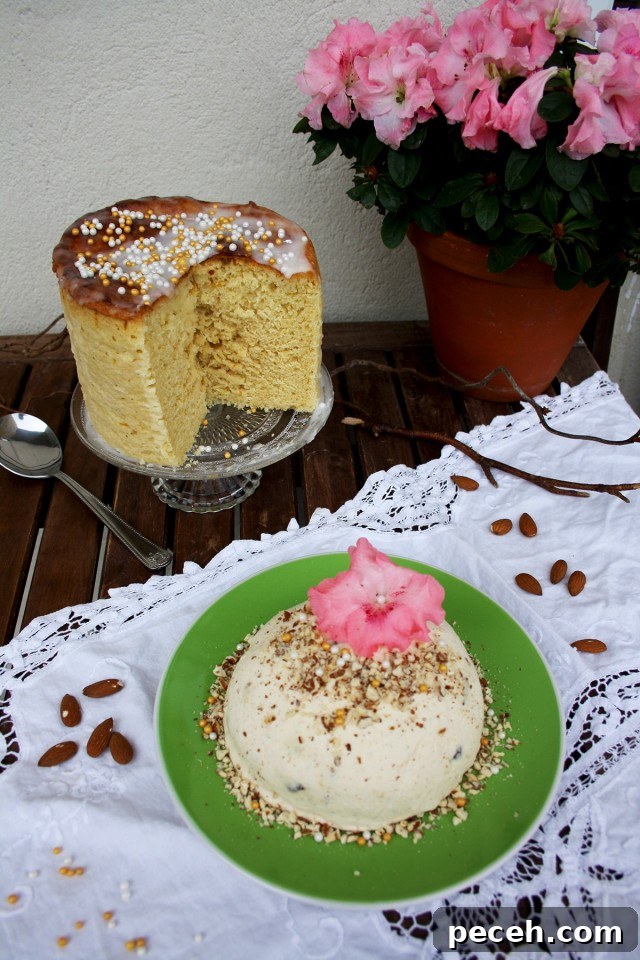
The word “paskha” means “Easter” and this dish is a staple on the holiday table. Paskha is traditionally molded into a pyramid to symbolize the tomb of Christ, but any shape works—I’ve made it round when a pyramid mold wasn’t available.
Flavour-wise it resembles a crustless cheesecake: rich, creamy and denser in texture. For a lighter take I left out eggs and heavy cream, common in older recipes. Raisins add a lovely chew and brightness; feel free to substitute other dried fruits or candied citrus peel to taste.
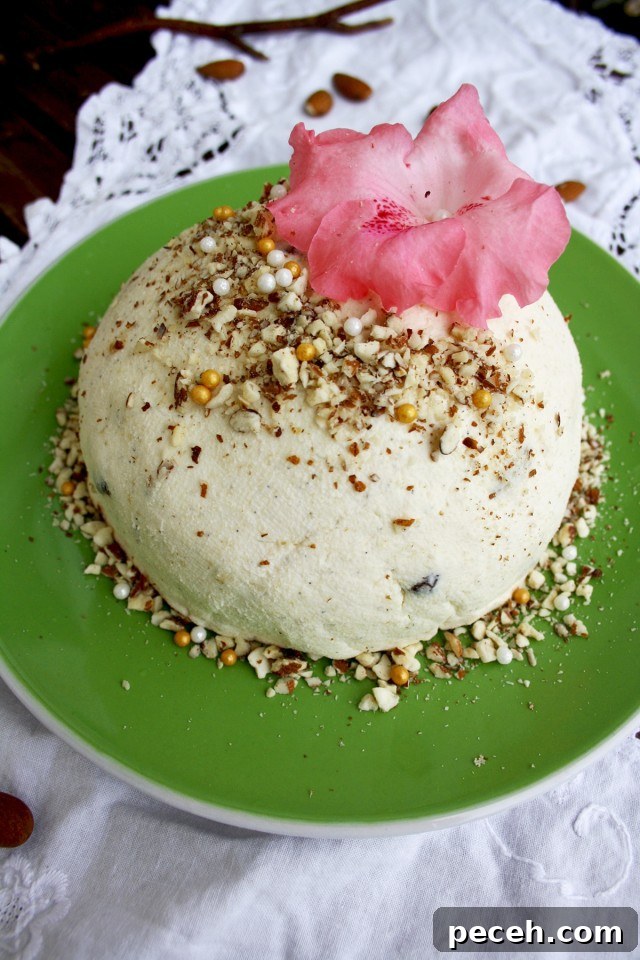
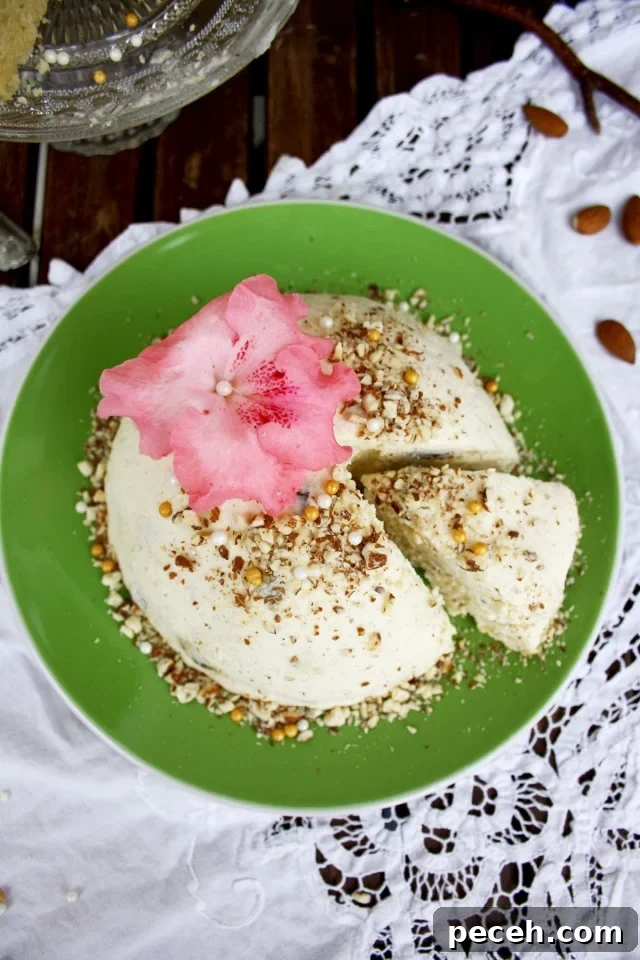
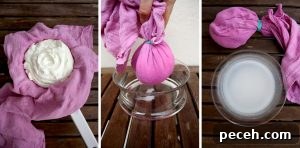
Making paskha is straightforward. The technique is similar to making fresh cheese: you drain cottage cheese in cheesecloth to remove excess whey, mix it with flavorings and enrichments, then press it into a mold to set. The final step—unmolding and decorating—is the most rewarding: chopped nuts, sugar pearls, candied fruit, flowers or a candle make it festive.
Traditionally the letters Х and В (for Христос Воскрес — “Christ is risen”) are often set on the surface. If you decorate with a candle, protect the food from dripping wax by placing a small layer of paper or foil beneath it.
Serve paskha alongside kulich, decorated hard‑boiled eggs and small appetizers like mushroom caviar or mini pancakes for a generous and traditional Easter table. It can be enjoyed as a spread or as a spoonable dessert.
Here is my lighter version of paskha for you to try this Easter. I’d love to hear which Easter recipes you enjoy—leave a comment below!
Russian Easter Paskha
Ingredients
- 500 g or 2 ¼ cups cottage cheese
- 60 grams or ⅓ cup raisins (or other dried fruits, chopped if needed)
- ½ lemon zest and juice
- 1 vanilla pod
- 80 grams brown sugar
- 50 grams or ½ cup or 1 stick unsalted butter at room temperature
- 250 g or 1 cup mascarpone
- 3 tablespoons chopped almonds to garnish, or other nuts
- 2 teaspoons sugar pearls to garnish
Instructions
-
Line a strainer with cheesecloth, spoon the cottage cheese onto it, tie the cloth or secure with a band and hang or set over a bowl to drain for 2 hours.

-
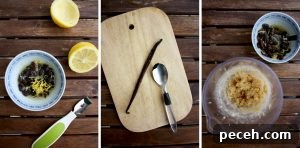
While it drains, combine raisins with lemon zest and juice in a small bowl. Split the vanilla pod and scrape the seeds with a teaspoon, then stir them into the raisins. In a large bowl, cream the brown sugar and butter together.
-
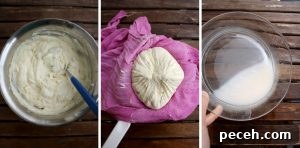
After draining, squeeze the cheesecloth to remove extra moisture. Add the raisin mixture, mascarpone and the drained cottage cheese to the butter-sugar mixture and stir until smooth and uniform. Transfer the mixture back into the cheesecloth, secure it and hang or chill over a bowl overnight to set.
-
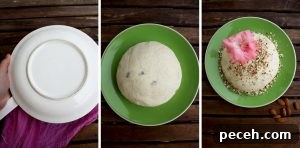
You’ll likely collect about 110 ml (½ cup) of liquid; save it for pancakes or bread. To mold, use a strainer or a dedicated mold: place the wrapped paskha in a strainer, press with a plate, then invert and remove the cloth. Decorate with chopped almonds, sugar pearls, candied fruit, flowers or a candle and serve.
Notes
Nutrition
Other Easter Recipes You’ll Love:
- Kulich – Sweet Russian Easter Bread
- Natural Egg Dye with Onion Skins — 5 Ways
- Asparagus Quiche with Sweet Potato Crust
- Easy Healthy Cheesecake in a Jar
- The Best Rustic Ricotta Spinach Quiche