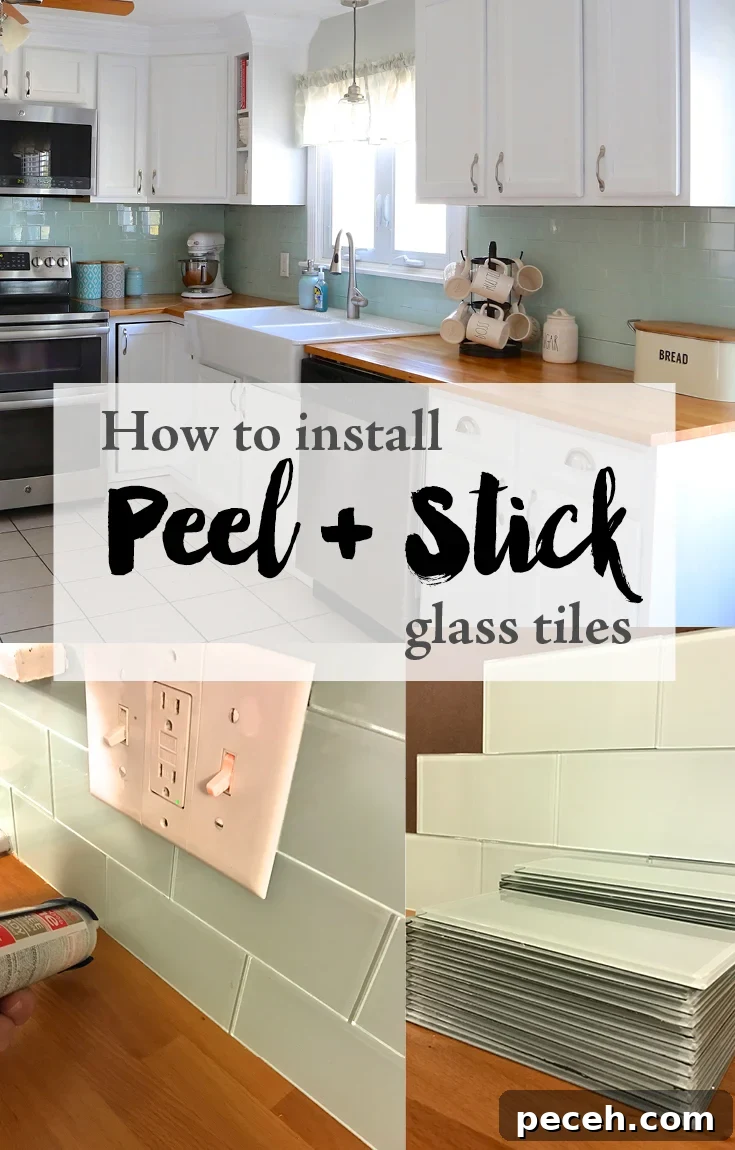
How to install a peel and stick glass tile backsplash in your kitchen.

Yes — you read that right. In this post I’ll walk through how we installed peel-and-stick glass tiles in our kitchen. I first saw these tiles demonstrated last summer and couldn’t believe there were glass tiles with adhesive backing. Once I spotted them, I knew they were perfect for our renovation.
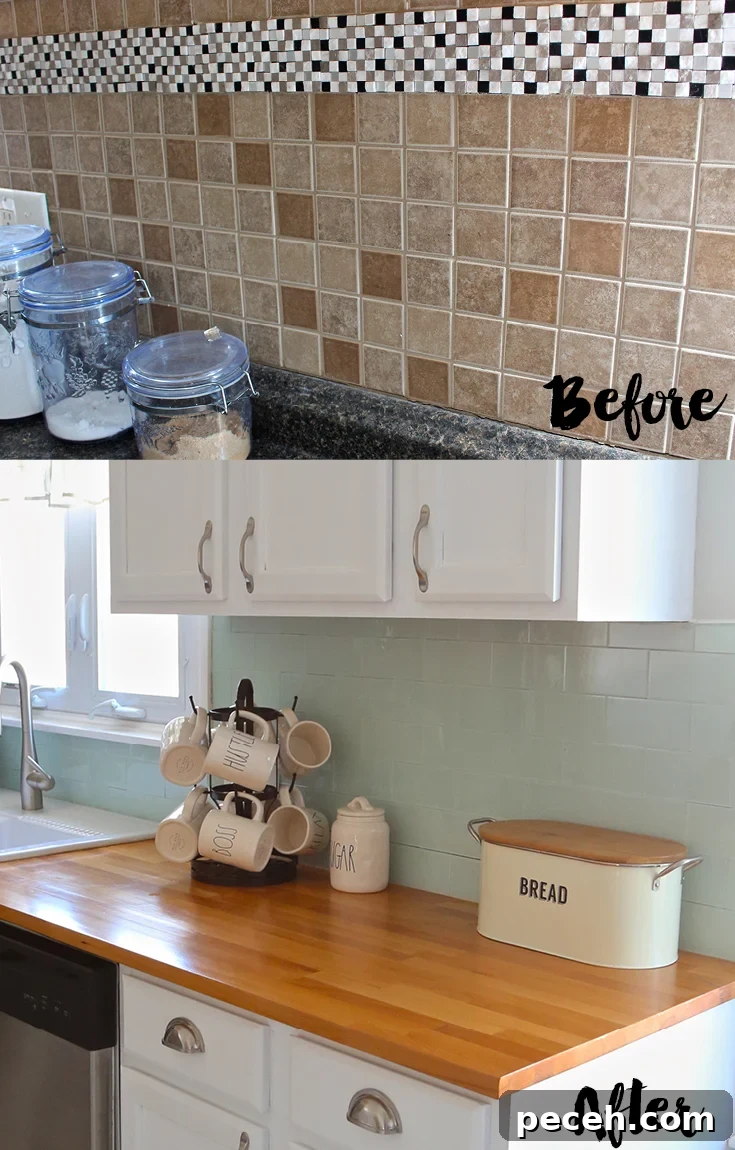
Before we began, our kitchen had an outdated backsplash. The old tile was uneven and the accent pieces didn’t sit flat, which made the whole area look dated and poorly finished. I removed the old tile before deciding to use peel-and-stick sheets; if you plan ahead you can often install over existing tile, which would save effort.
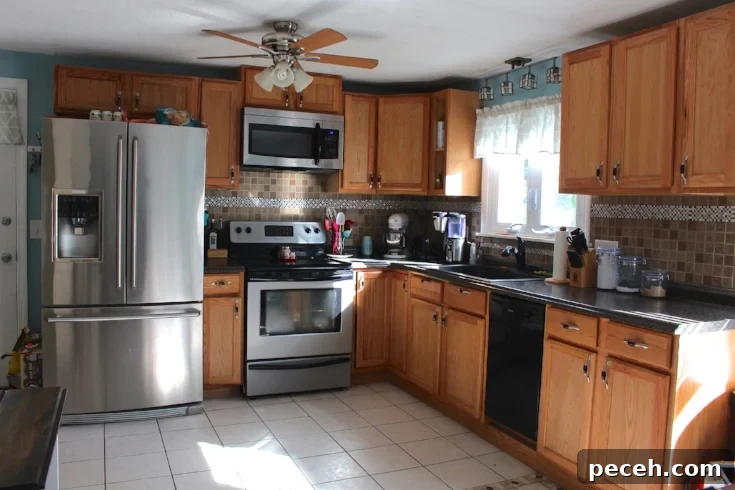
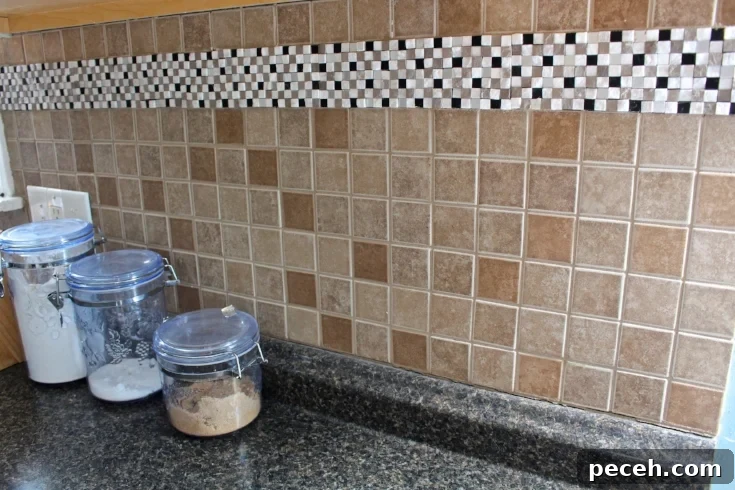
Removing the old backsplash made a big difference in preparing the space. Once the old tile was gone, our priority was creating a smooth, level surface for the adhesive sheets to stick to. The sheetrock behind the old tile was gouged and uneven, and while we tried patching with joint compound, the fastest, most reliable solution was installing masonite over the damaged wall. That created a flat surface and ensured the tiles would adhere uniformly.
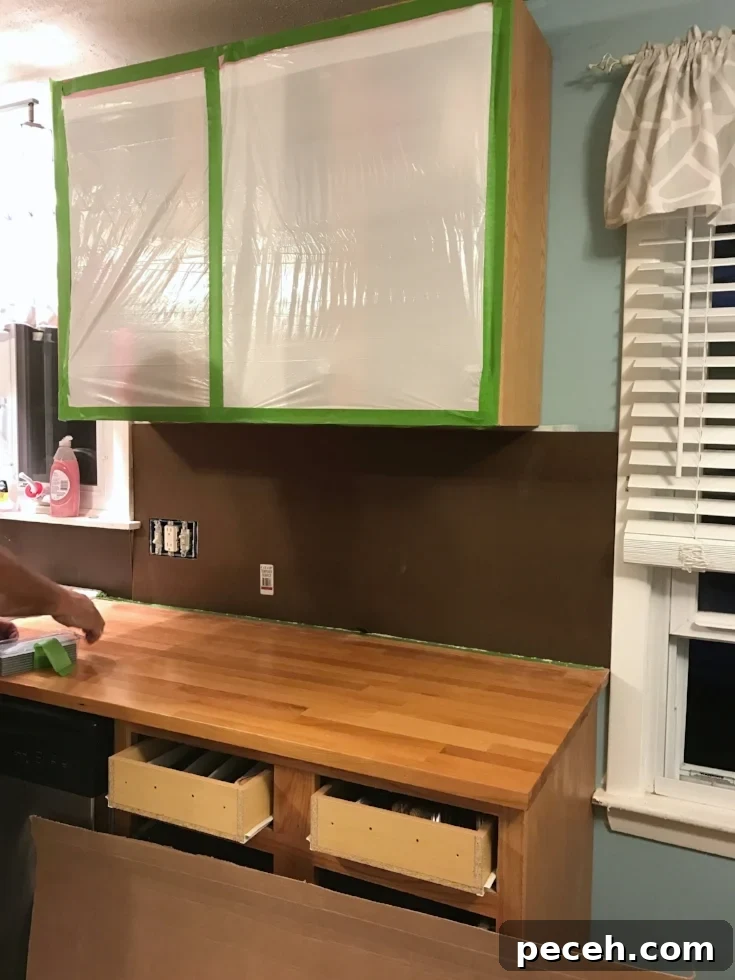
How to install glass peel and stick tile backsplash
Each tile sheet is essentially a sticker: peel the protective backing and press it into place. The adhesive is very strong, so avoid laying peeled sheets face down on counters. Carefully plan the layout and work methodically to keep rows straight.
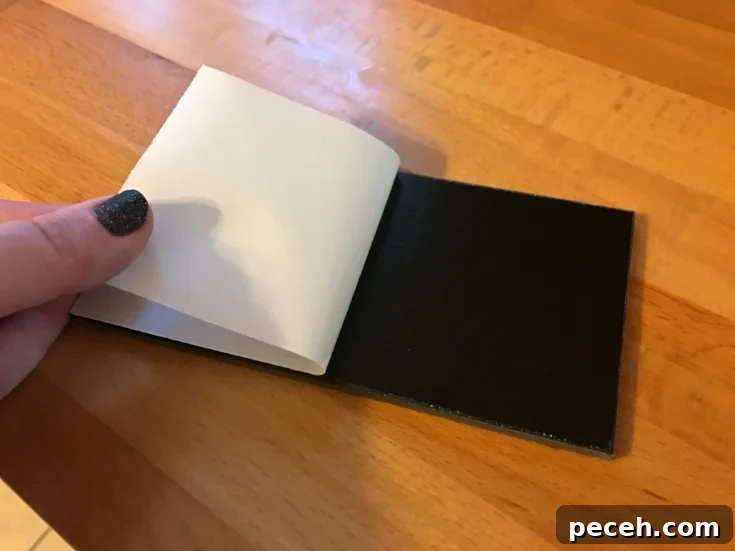
The method that worked best for us was to position the bottom edge of a sheet first, holding it at about a 45-degree angle, then rotate it upright and align it with adjacent sheets before pressing. Once you apply firm pressure the sheets are difficult to reposition, so double-check alignment before pressing firmly.
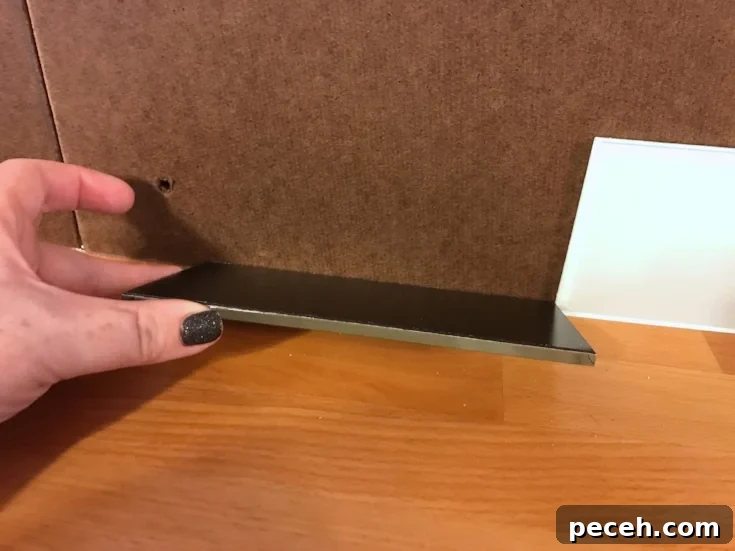
After placing a sheet, press from the center outward to remove any air pockets and ensure a strong bond. Smooth each sheet with consistent pressure so the edges meet tightly with the neighboring sheets.
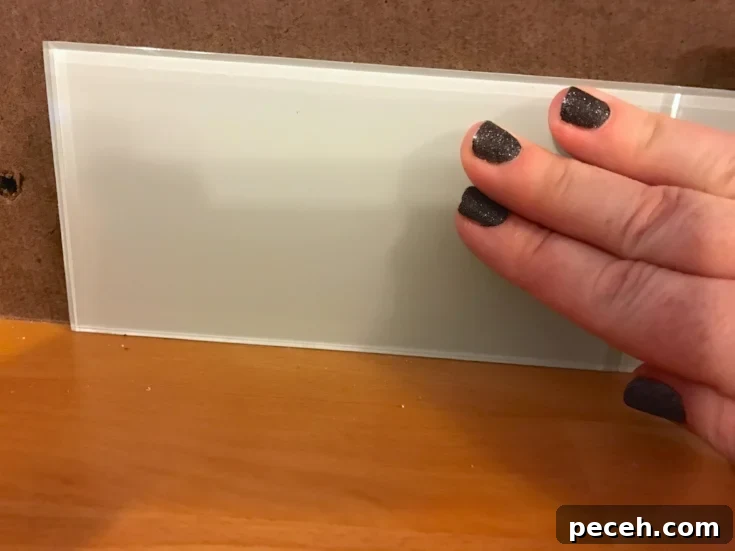
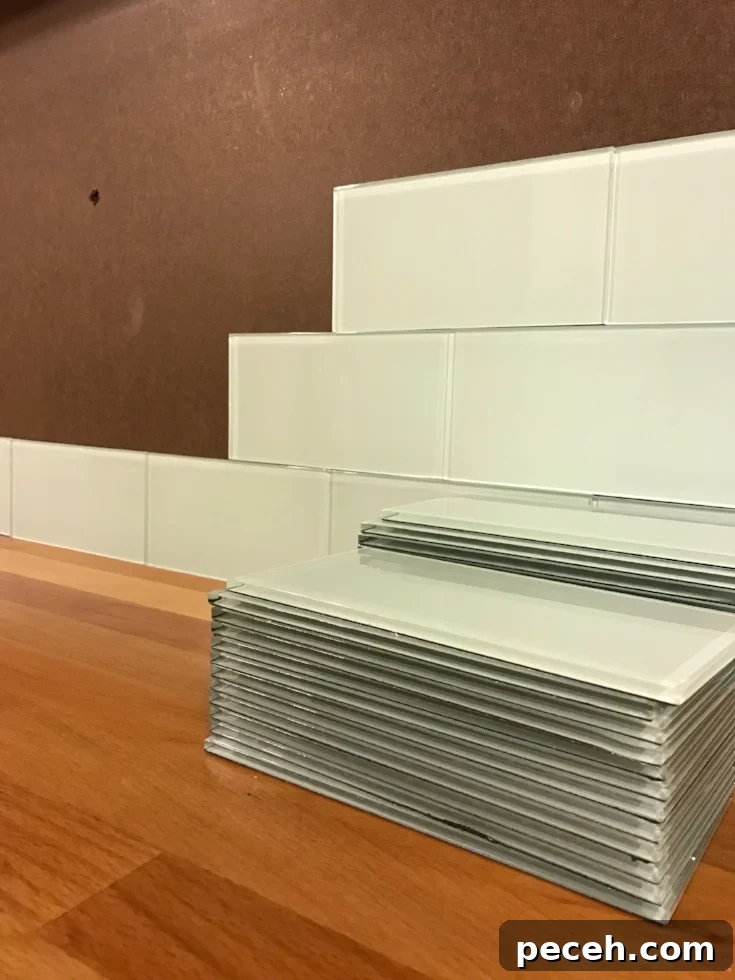
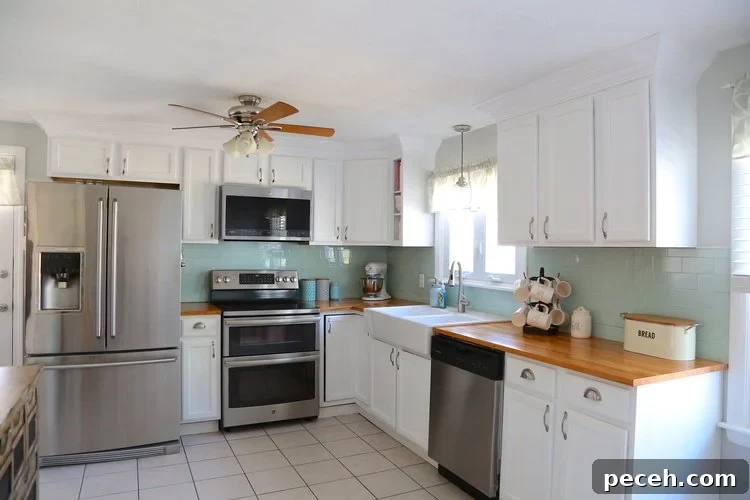
I chose a soft teal shade to complement the rest of my kitchen accents. The sheets install quickly, making this a great weekend project or something you can spread over a few evenings. The overall installation was faster and cleaner than traditional tile and grout.
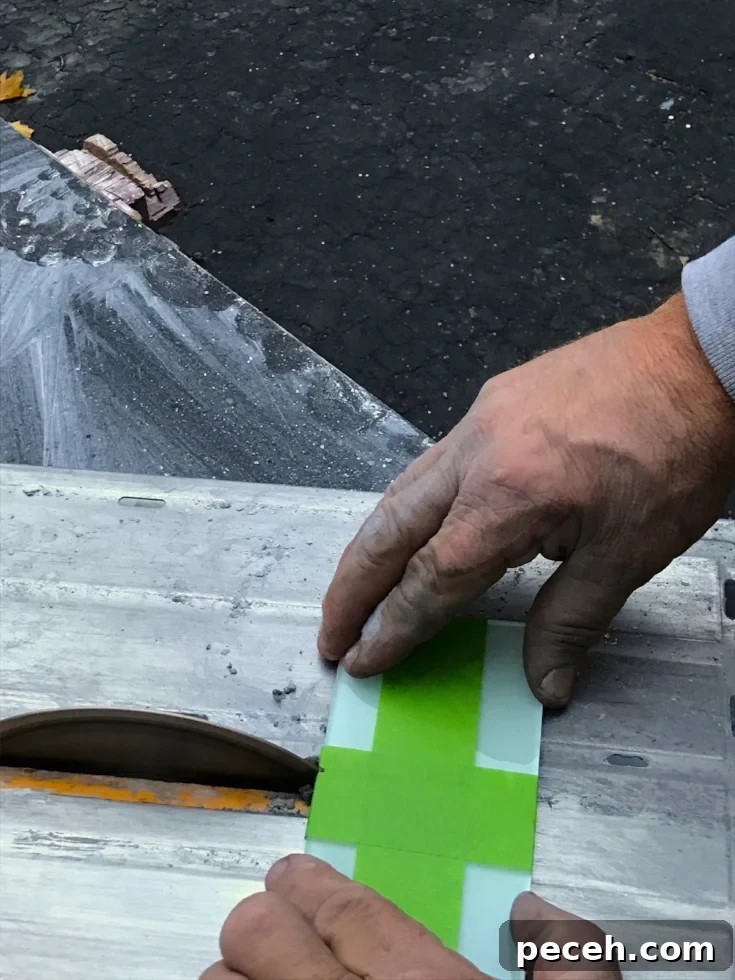
How to cut peel and stick glass tile
The instructions mention scoring with a glass cutter, but we had problems with shattering. We found the most reliable method was to tape the cut lines with painter’s tape and use a wet tile saw. Cutting was the trickiest part of the job, but with steady feeds and proper support it went smoothly. If you don’t own a wet saw, many big-box stores rent them by the day.
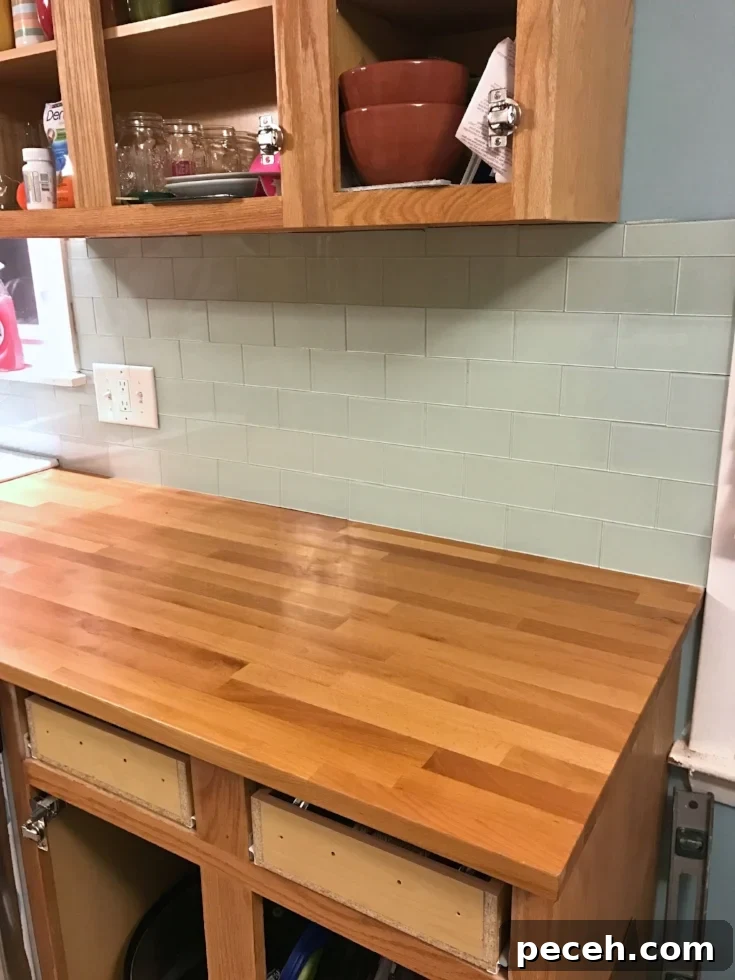
The big advantage is that these tiles don’t require grouting. That means a cleaner, lower-maintenance finish. Several people asked whether the tiles move over time; after months on the wall the adhesive remains strong and the sheets have stayed put.
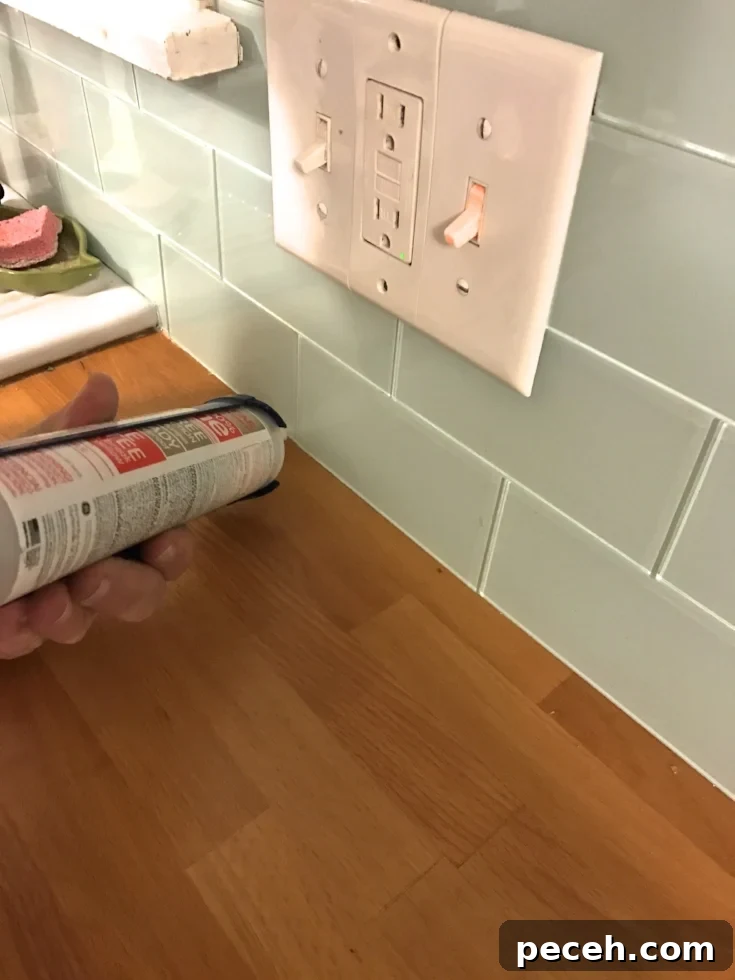
To protect the joint between the countertop and the tiles, we applied a bead of white silicone caulk. This seals the gap against water from the sink and accidental spills, which helps prevent moisture from getting behind the tiles.
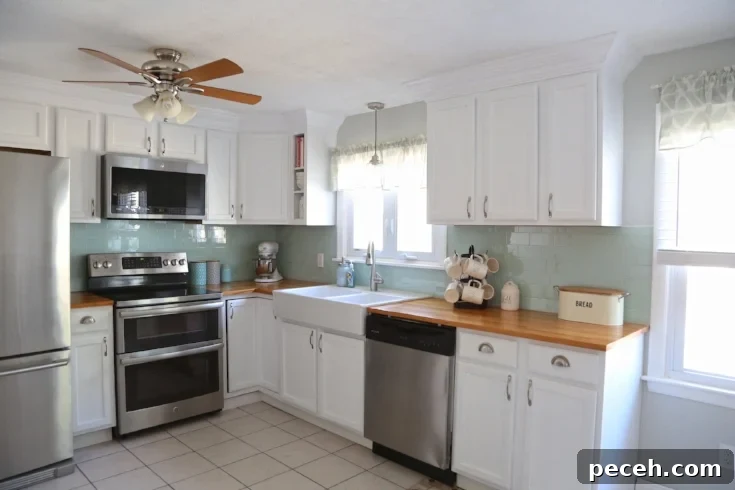
Overall, I’m very pleased with the result. The tiles were quick to install and clean up well. There are a few minor imperfections and small gaps, but they’re hardly noticeable unless you’re looking closely. The backsplash has held up well over several months and remains firmly attached.
If you’re considering peel-and-stick tiles for other areas, they work well in bathrooms, laundry rooms, and around fireplace surrounds, as long as you prepare a stable, level surface first.