Ever heard of a Highly Sensitive Person?
About 15–20% of people fall into this group, which means high sensitivity is a personality trait—not a disorder. That distinction matters: Highly Sensitive People (HSPs) and Highly Sensitive Children (HSCs) contribute important perspectives and abilities to society.
Still, being highly sensitive can be challenging.
Here’s an accessible introduction to what it means to be a Highly Sensitive Person, covering:
- How the senses influence sensitivity
- How emotions are involved
- Other common features of HSPs
- Potential challenges for HSPs and HSCs
- The unique strengths HSPs bring to the world
- How to support HSPs and HSCs during times of crisis and uncertainty
This topic was planned long before the recent surge in homeschooling and the pandemic, but it feels particularly relevant now. At the end I’ve included practical tips for helping HSPs cope in turbulent times.
Watch Highly Sensitive Person on YouTube.
If you don’t have time to watch the full video, here are the main points and notes.
Highly Sensitive Person Video Time Stamps
- 1:08: It’s valuable for parents to recognize HSCs. It’s also helpful to know your own sensitivity when parenting.
- 1:26: The speaker discovered she was an HSP during Stress Mastery training and initially resisted the label.
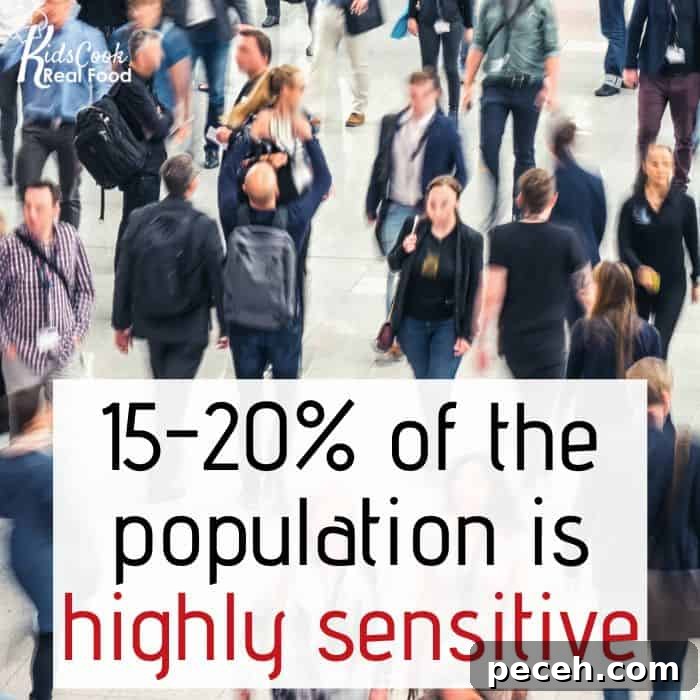
- 2:46: An estimated 15–20% of the population are HSPs. Because this is a significant portion of people, high sensitivity is considered a trait, like introversion or extroversion, rather than a disorder.
- 3:22: High sensitivity isn’t inherently good or bad, but cultural attitudes can make it feel negative—society often mistakes sensitivity for weakness.
What Does it Mean to be Highly Sensitive?
- 4:19: The phrase “highly sensitive” was popularized by Elaine Aron, who has written extensively on the topic.
- 4:51: HSPs tend to perceive sensory input more intensely. This explains the popularity of seamless, tagless, and ultra-soft clothing for many people.
- 6:21: Strong sensitivity to smells, textures, or tastes can make everyday places like the detergent aisle overwhelming—but it also means HSPs often notice subtle changes, such as food going bad.
- 7:39: Those sensitive to visual stimuli may be bothered by flashing ads, phone notifications, or loud commercials.
- 8:04: Constant sensory overload can trigger the stress response, so HSPs benefit from quiet time to recharge.
- 8:33: Sensitivity can affect one or several of the five senses. It differs from Sensory Processing Disorder, which involves more extreme sensory processing challenges.
- 9:08: HSPs are more likely to be selective eaters due to heightened taste or texture sensitivity.
- 9:58: High sensitivity includes emotional depth—HSPs often experience emotions intensely, empathize deeply, and may take on others’ feelings.
- 10:22: Watching distressing news or scenes of suffering can be especially heavy for HSPs, sometimes causing guilt or overwhelm.
- 11:05: Routine and predictability often help HSPs feel secure.
- 11:19: Many HSPs lean toward introversion, although extroverted HSPs are common too.
- 11:49: HSPs often think deeply, which can lead to rich inner lives and occasional overthinking.
- 13:15: Overall, being an HSP has both advantages and disadvantages, and cultural values influence how those traits are perceived.
Risks of Being a Highly Sensitive Person
- 14:18: HSPs are often misunderstood by others who mistake sensitivity for fragility.
- 14:44: Highly sensitive children can become targets for teasing because they react openly and deeply to emotional hurts.
- 15:41: Changes in routine or unexpected interruptions can be especially destabilizing for HSPs.
Benefits of Being a Highly Sensitive Person
- 16:29: Elaine Aron and others highlight how HSPs contribute essential skills to humanity, such as careful observation and foresight.
- 17:28: Although some people take immediate action, society also needs thoughtful planners who anticipate consequences and “what ifs.”
- 19:16: HSPs often prefer non-toxic, natural lifestyles because heightened senses make artificial fragrances and chemicals especially off-putting.
- 19:46: Greater sensitivity can lead HSPs to advocate for safer products and environmental responsibility.
- 20:27: HSPs frequently make compassionate caregivers, attuned to others’ needs.
- 21:05: Their capacity for deep reflection can support creativity, making many HSPs gifted writers, artists, and musicians.
- 21:46: Highly sensitive palates are common among chefs, sommeliers, and food professionals.
- 22:33: Not every HSP has every trait—sensitivity varies in type and degree across individuals.
- 23:41: The timing of this episode—published as many are home during a pandemic—makes its message particularly timely, since routines and sources of stability have shifted for many.
How to Support a Highly Sensitive Person in Times of Crisis
- 24:30: Establish a predictable routine and prioritize sleep. Keep bedtimes consistent, maintain regular mealtimes, and protect sleep as a cornerstone of emotional and physical resilience.
- 26:33: Limit news exposure. Constant updates increase anxiety; set designated times to check news, keep the duration short, then switch to restorative activities.
- 27:55: Shield children from adult worries when possible. Be honest and open, but avoid overloading them with information they can’t process. Be mindful of how your own stress can affect them.
- 29:45: Stay connected while also listening to your own needs. Use video calls or phone conversations to check in with friends, and schedule intentional pauses to recharge.
- 31:05: Remember it’s not your fault. You can’t fix everything—try to focus on manageable daily actions.
- 32:00: Focus on what you can control: love your family, prepare nourishing food, and care for your own wellbeing rather than trying to control uncontrollable outcomes.
Resources Mentioned
- Elaine Aron’s work on high sensitivity, including her books The Highly Sensitive Person and The Highly Sensitive Child.
- Information distinguishing high sensitivity from Sensory Processing Disorder.
- Practical resources on non-toxic living and reducing single-use plastics for people who prefer less chemical exposure.
- Related podcast episodes and interviews on stress mastery and parenting highly sensitive children.
Being highly sensitive is a complex mix of vulnerability and strength. With understanding, appropriate boundaries, and routines, HSPs and HSCs can thrive and offer valuable perspectives that benefit families and communities.