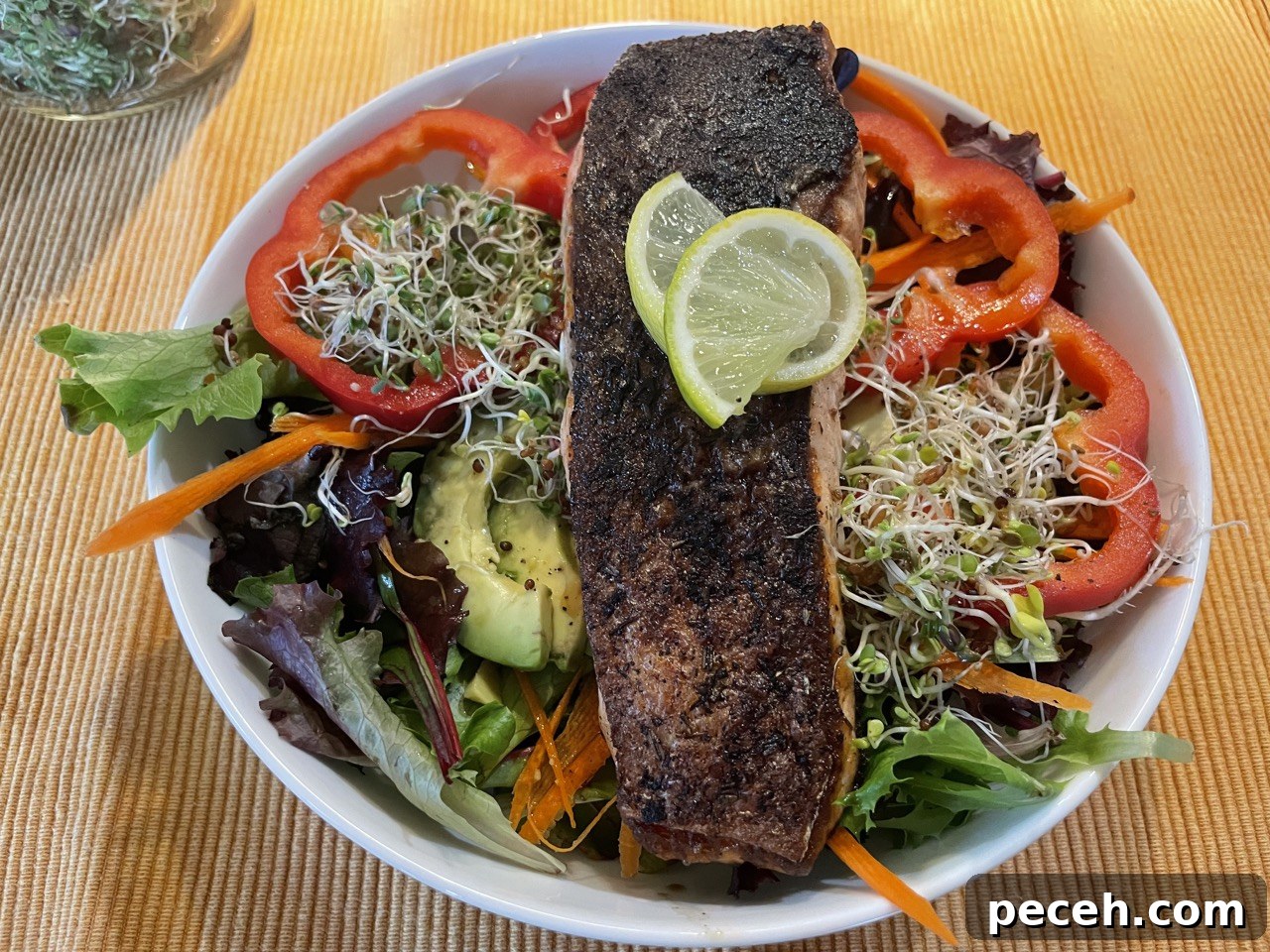
Fish oil offers many health benefits, especially as we get older. Research shows omega-3s from fish can support heart health, help lower blood pressure, balance triglycerides and cholesterol, and even ease symptoms of inflammatory conditions like rheumatoid arthritis. Eye doctors often recommend fish oil for dry eyes as well. In addition to daily supplements, I regularly serve salmon with crispy skin for my family—my daughters love fighting over the biggest crisped piece—so I’ve developed a simple method for reliably crisp skin and perfectly cooked flesh.
Ideal salmon has a crunchy skin and moist, slightly translucent flesh in the center. Overcooked salmon becomes dry and crumbly; perfectly cooked fillets remain tender and glistening with natural oils.
Tips for making crispy-skin salmon salad
Buying the salmon
Choose fresh salmon rather than frozen when possible. Fresh fillets have a milder scent and a better texture; frozen fillets often smell stronger and can be sold without skin. When your fishmonger is cutting fillets, select pieces from nearer the head and avoid tail sections—the tail is thin and cooks much faster, which can lead to overcooking. Plan about 170 g (6 oz) of salmon per person.
If you buy a whole fish or a fillet with the skin still on, ask the shop to remove the scales. If they won’t, be sure to scale the fish yourself before cooking. Salmon scales are unpleasant to eat and should be removed for the best texture.
Seasoning the salmon
Light seasoning enhances the salmon without overpowering it. Use an all-purpose seasoning—about a scant teaspoon per 6 oz fillet works well. If you have time, season the fillets and let them rest, skin-side down, in the refrigerator for about 30 minutes. Chilling the fish while it dries slightly on the surface helps the skin crisp when it hits the pan.
Cooking the salmon
A heavy pan such as a seasoned cast iron skillet gives dependable heat and helps develop a crisp skin. Preheat the skillet over medium heat until hot. If the pan isn’t well seasoned, add a small spray of oil to prevent sticking, but note that salmon will render its own fat as it cooks.
Place the fillets flesh-side down first so the skin is up; searing this way allows the flesh to cook gently while protecting the skin’s surface. Partially cover the pan with a lid that vents or leave a gap so steam can escape—excess moisture in the pan prevents crisping. Reduce the heat to medium and cook until the sides of the fillet appear about halfway cooked, roughly three minutes depending on thickness. Then flip so the skin cooks last; cooking skin-side down only briefly at the end will produce the crispiest result.
Overall cooking time is short—around 5–6 minutes total for most portion-sized fillets. Use tongs to handle the fillets while cooking and a thin spatula to remove them from the pan to avoid tearing the skin.
Plating the salmon
To keep the skin intact, gently slide a spatula under the fillet and lift, placing the portion on the plate with the skin-side up to preserve its crunch. Spoon a little of the rendered salmon oil over the skin before serving to maximize flavor and omega-3 content.
Serve the fillet over a crisp green salad and dress with a simple lemon vinaigrette—the bright acidity of lemon pairs beautifully with the richness of salmon and helps balance the dish.

CRISPY SKIN SALMON SALAD WITH LEMON VINAIGRETTE
Equipment
- Cast iron skillet
Ingredients (serves 4)
- 680 g salmon fillet with skin (about 170 g / 6 oz per person)
- 4 tsp all-purpose seasoning (adjust to taste)
Instructions
- De-scale the salmon fillet if needed. Many reputable fishmongers will do this for you.
- Cut the fillet into individual portions.
- Pat each portion dry with a paper towel to remove surface moisture.
- Season the fillets generously with all-purpose seasoning.
- Place the fillets skin-side down on paper towels and refrigerate for about 30 minutes to dry the skin slightly.
- Preheat your cast iron skillet over medium heat until hot.
- If the skillet is not well seasoned, add a light spray of oil to prevent sticking; the salmon will also render oil as it cooks.
- Sear the fillets flesh-side down first (skin up). Do not overcrowd the skillet.
- Partially cover the pan to reduce splatter while allowing steam to escape.
- Reduce heat to medium and cook until the sides of the fillet are about halfway opaque—approximately 3 minutes depending on thickness.
- Flip the fillets and briefly cook skin-side down so the skin crisps without overcooking the meat.
- When cooked, transfer fillets to plates skin-side up to maintain crispness. Serve on a bed of salad with lemon vinaigrette and enjoy.
Nutrition (per serving)
Keywords
easy salmon, pan-seared salmon, seared salmon