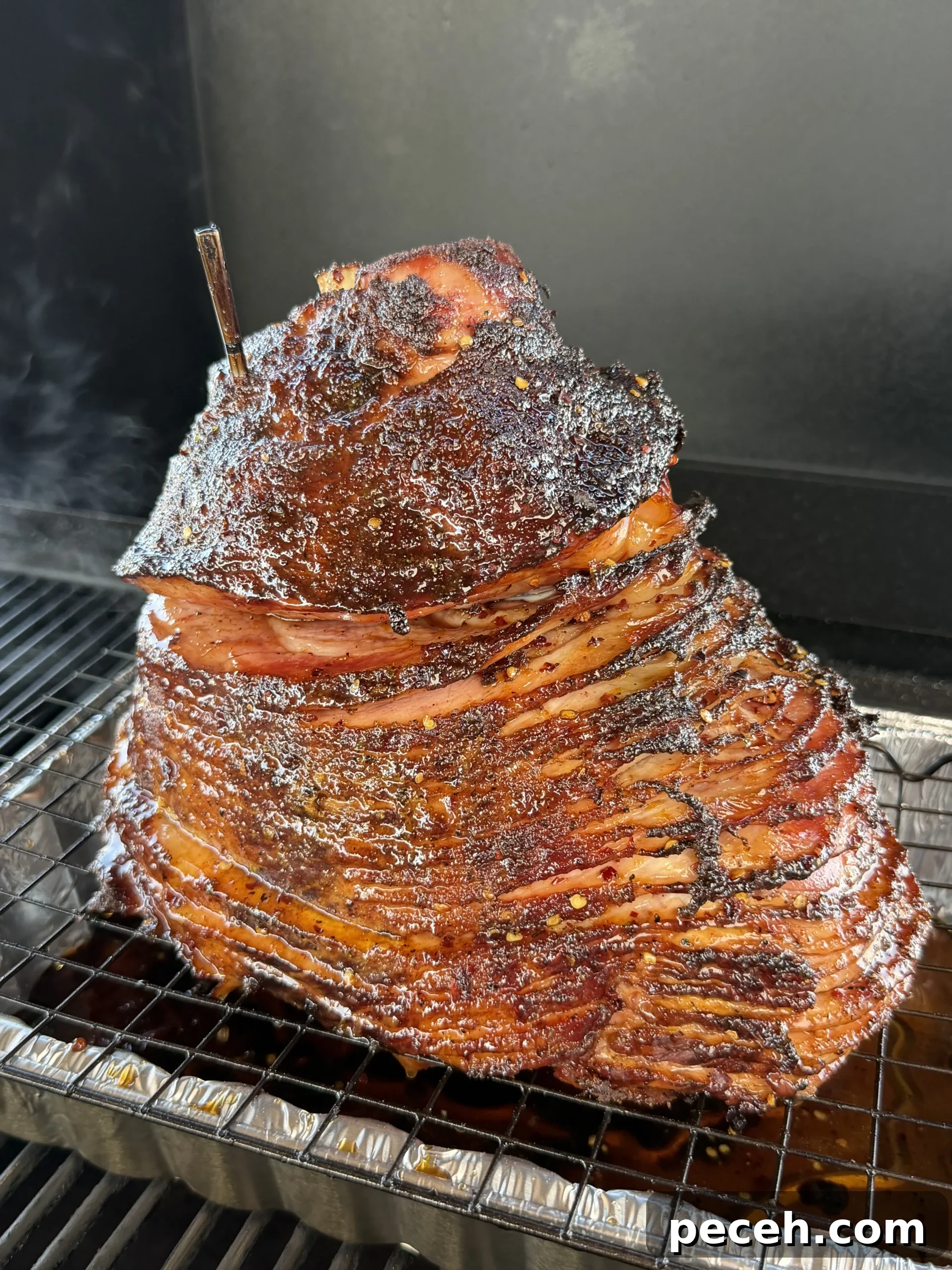
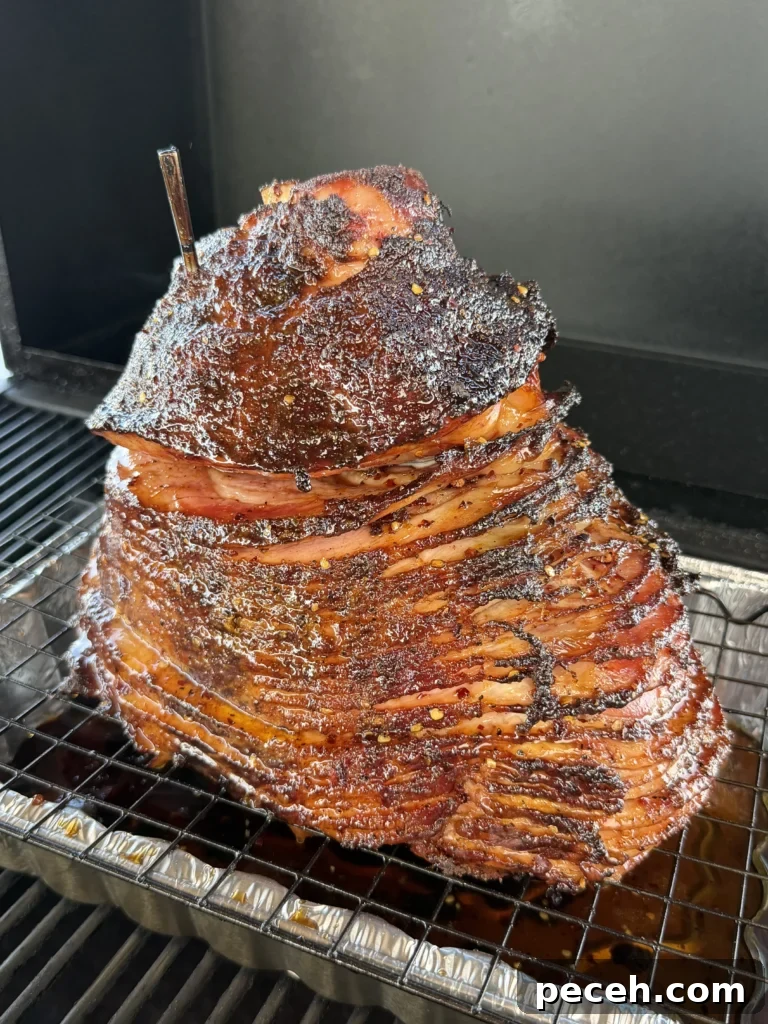
Maple bourbon Christmas ham is a fully cooked, bone-in spiral ham brushed with a rich maple-bourbon glaze and warmed until the exterior is deeply caramelized and glossy. The glaze combines pure maple syrup, bourbon, brown sugar, Dijon mustard, butter, orange juice and zest, apple cider vinegar, and warm spices like cinnamon, nutmeg, and cloves. The ham is gently reheated at a low temperature and then glazed repeatedly so the sugars build up into a sticky lacquer that clings to the spiral slices and seasons the meat throughout.
The process is largely reheating and flavor-building since the ham is sold fully cooked. Start by warming the ham in a 275–300°F smoker or a 300°F oven for about 1.5 to 2 hours (smoking will take a bit longer). Remove the foil, brush on the glaze, and continue cooking uncovered while applying additional glaze every 15–20 minutes for the last 45–60 minutes. This method yields a ham with deep maple sweetness, rounded bourbon notes, bright citrus from the orange, and a warm holiday spice profile. A typical 8–12 pound spiral ham serves 12–16 people and makes an impressive centerpiece for Christmas, Easter, or any celebratory meal.
Why Maple Syrup and Bourbon Work Better Than Honey or Pineapple
Maple syrup brings mineral depth and caramel complexity that honey or fruit juices don’t provide. Choose Grade A dark amber maple syrup for the most pronounced flavor. Its natural sugars caramelize at lower temperatures than granulated sugar, producing a glossy finish without burning. Bourbon contributes barrel-aged notes — vanilla, oak, and caramel — that remain after the alcohol cooks away, creating a sophisticated backdrop for the maple.
Honey-based glazes are sweet but can be one-dimensional and sometimes overly sticky; pineapple adds acidity and fruitiness but lacks the warm, rounded character of maple and bourbon. Brown sugar in the glaze reinforces caramel notes while Dijon mustard and apple cider vinegar cut through sweetness to help the glaze adhere and balance the flavor. Orange zest and juice add brightness, and spices like cinnamon, nutmeg, and cloves bring classic holiday warmth without heat. Together these elements produce a glaze that is familiar, layered, and elevated.
How Multiple Glaze Layers Create Professional-Level Caramelization
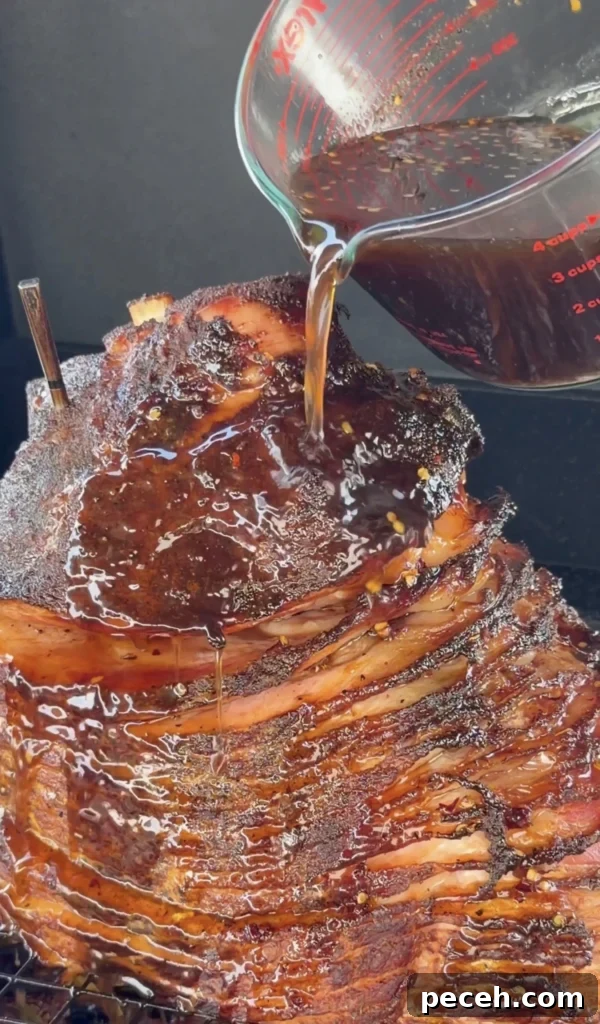
The secret to a restaurant-quality finish is applying the glaze in layers. The first coating soaks into the ham and establishes base sweetness. Each subsequent application caramelizes on the surface, building a lacquered, glossy finish. Begin glazing only after the ham has warmed through to around 120–125°F; glazing a cold ham can cause the butter in the glaze to solidify and the sauce to pool rather than cling.
Brush glaze every 15–20 minutes during the final 45–60 minutes of cooking to create 3–4 set layers. Let each layer caramelize before adding the next so the sugars concentrate and develop complexity. Use a pastry brush to work glaze between the spiral cuts; this seasons interior slices as well as the exterior. Reserve about a cup of the glaze before basting so you have a clean portion to warm and serve with the sliced ham.
Should You Smoke or Bake Maple Bourbon Ham
Both smoking and oven roasting work well. Smoking at 275–300°F with apple, cherry, or pecan wood adds subtle sweet smoke that complements the maple-bourbon glaze. Avoid heavy woods like hickory or mesquite, which can overpower the glaze. Plan 2–2.5 hours of smoking time to warm the ham, then glaze during the final 45–60 minutes.
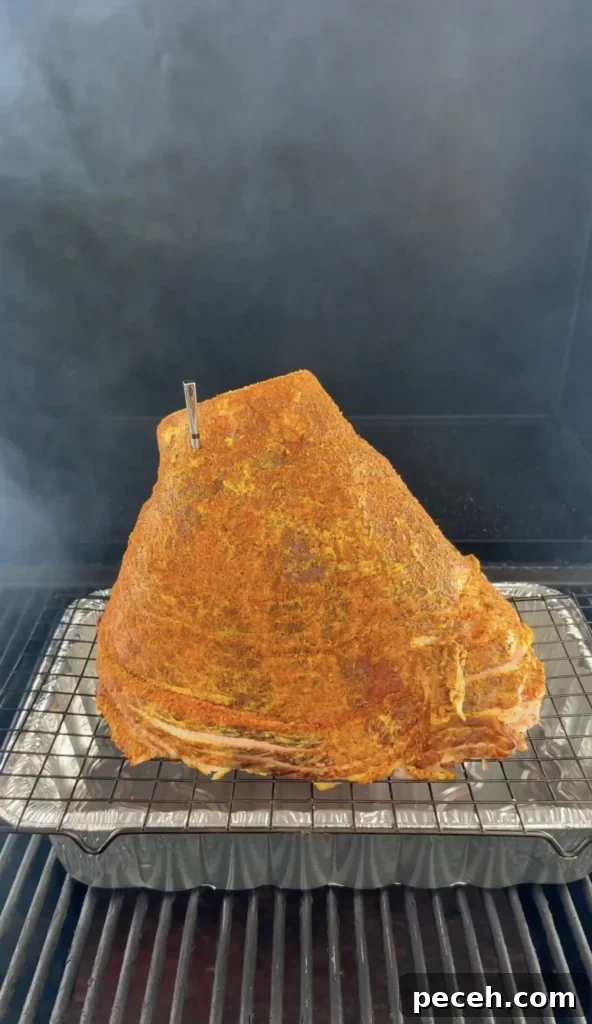
Oven baking at 300°F is simpler and very consistent: the ham warms evenly in about 1.5–2 hours and the glaze caramelizes reliably. Smoked ham gains an extra layer of complexity from wood flavor; baked ham lets the maple and bourbon stand front and center. Choose based on preference and equipment — both produce a sticky, caramelized crust and juicy interior when done correctly.
What Internal Temperature Should Christmas Ham Reach
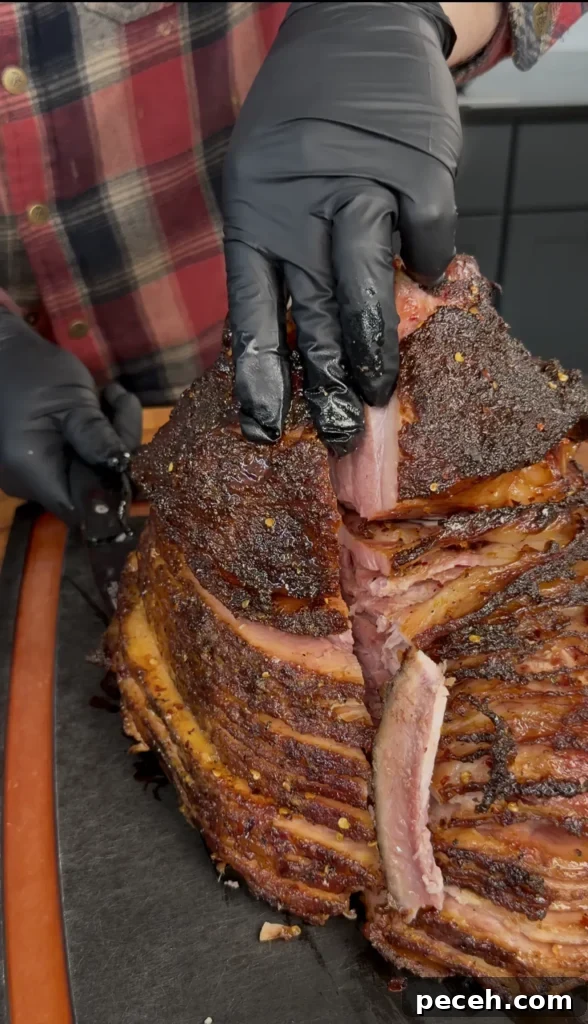
Because the ham is pre-cooked, you are reheating it. The USDA recommends heating pre-cooked ham to 140°F for food safety, but a practical approach is to warm the ham to 120–125°F before you begin glazing. During the glazing stage the temperature should rise to 135–140°F, which keeps the ham moist while reaching a safe final temperature. Avoid bringing the ham to 140°F before glazing, as the additional time during caramelization can push it to 145–150°F and dry the meat.
Use a probe thermometer inserted into the thickest meat section, avoiding contact with bone for an accurate reading. Rest the ham 10–15 minutes after removing it from heat so the glaze sets and slicing is cleaner.
Can You Make Maple Bourbon Glaze Ahead of Time
Yes. The glaze can be made up to three days ahead and refrigerated in an airtight container. Simmer the ingredients until slightly thickened, cool completely, and refrigerate. Warm gently before using and whisk to recombine any separated butter. If it’s too thick after chilling, add a tablespoon of water or bourbon to loosen it. Freezing is also possible for up to two months; thaw overnight and whisk well before use.
Do not baste the ham and then refrigerate it, because the sugar can draw moisture from the meat and prevent proper caramelization. Always perform the glazing on a warm ham during the final cooking stage.
Maple Bourbon Christmas Ham
Sweet & Smoky Holiday Glaze with Warm Spices
📝Ingredients
Ham
- 1 bone-in spiral ham (8–12 lbs)
- Whole cloves for studding (optional)
Maple Bourbon Glaze
- 1 cup pure maple syrup
- ½ cup bourbon
- ½ cup brown sugar
- 3 Tbsp Dijon mustard
- 3 Tbsp unsalted butter
- 1 Tbsp apple cider vinegar
- Zest and juice of 1 orange
- 1 tsp cinnamon
- ½ tsp nutmeg
- ½ tsp ground cloves or allspice
- ½ tsp black pepper
- ½ tsp kosher salt
- 1–2 tsp hot honey or chili flakes (optional)
Layer the glaze multiple times during the final hour. Each layer builds shine and stickiness. Allow each coat to caramelize before adding the next to achieve a lacquered finish.
Step-by-Step Instructions For Christmas Ham
Step 1: Preheat Your Oven or Smoker
Preheat the oven to 300°F or set the smoker for 275–300°F. If smoking, choose apple, cherry, or pecan wood for subtle sweetness. Place the ham cut-side down on a wire rack set in a roasting pan and tent tightly with foil. Scoring and studding with cloves is optional and primarily decorative; it’s more useful if you’re using an uncut whole ham.
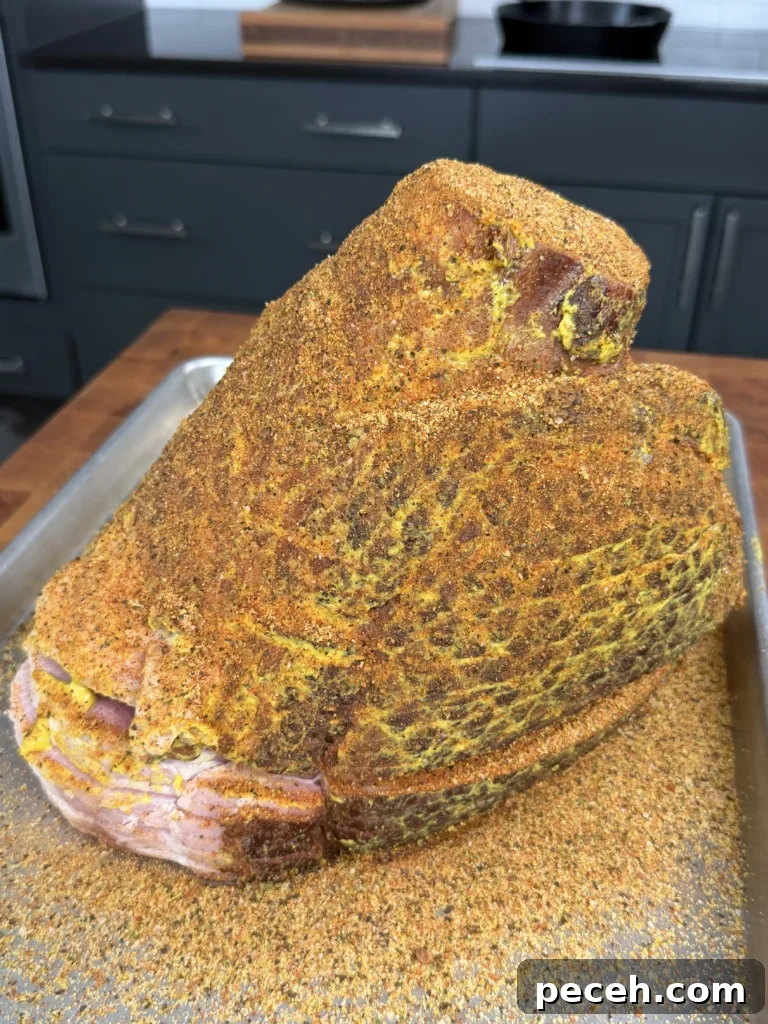
Step 2: Make the Maple Bourbon Glaze
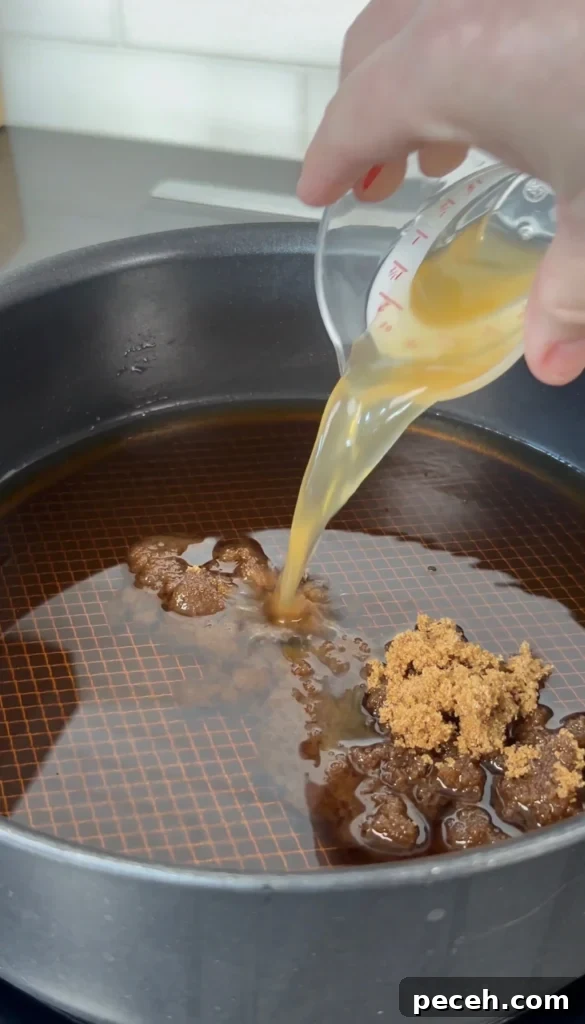
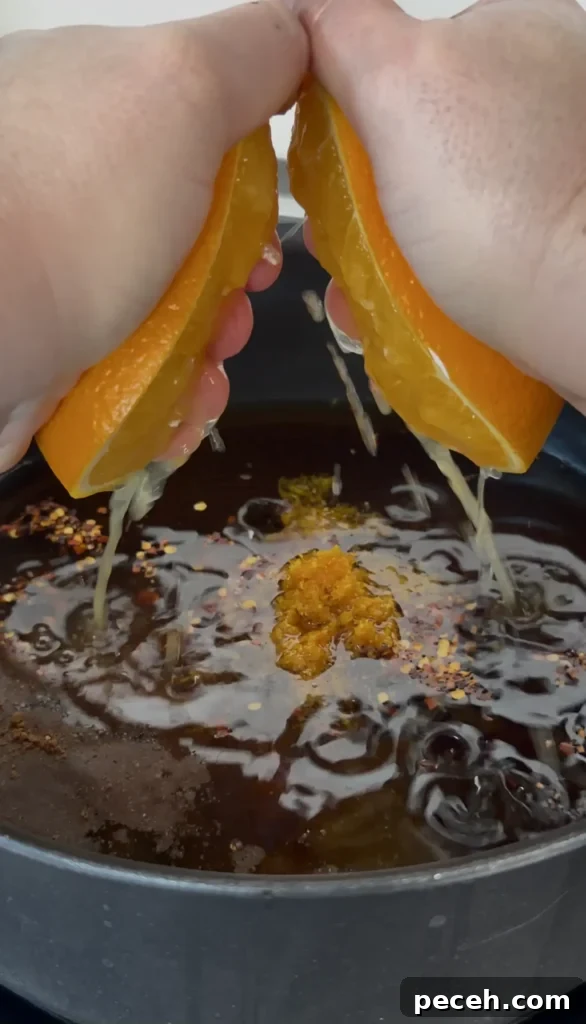
Combine the glaze ingredients in a medium saucepan: maple syrup, bourbon, brown sugar, Dijon, butter, orange zest and juice, and apple cider vinegar. Add the spices and any optional heat. Bring to a simmer over medium heat, then reduce to medium-low and simmer 6–8 minutes until the glaze coats the back of a spoon. Reserve about 1 cup of glaze for serving and set it aside.
Step 3: Warm the Ham
Cook the covered ham in the oven 1.5–2 hours or smoke 2–2.5 hours, monitoring with a probe thermometer until the internal temperature reaches 120–125°F. Remove the foil carefully and prepare to glaze.
Step 4: Apply the First Glaze Layer
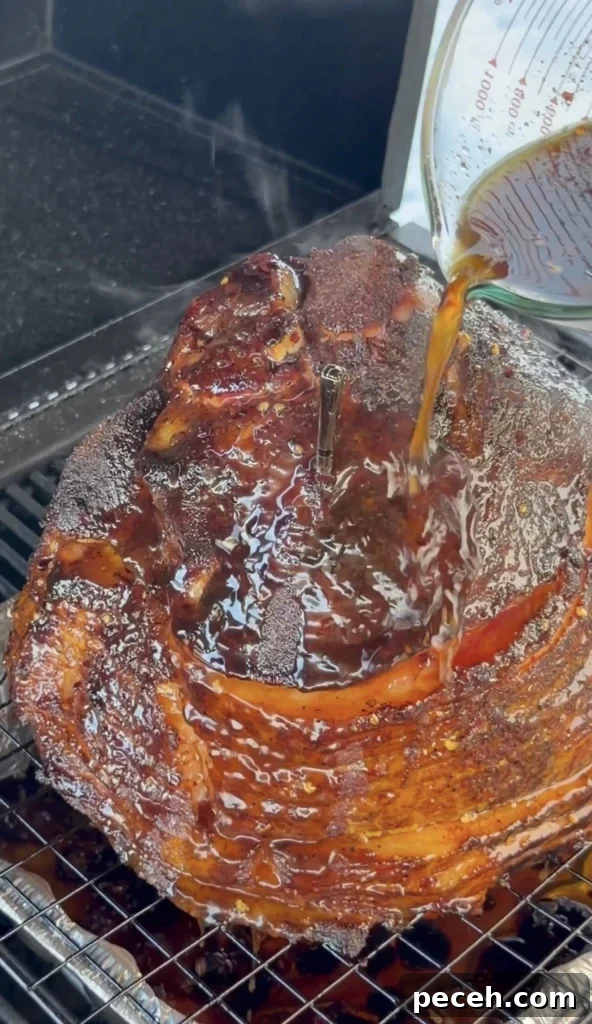
Brush the ham generously with the glaze, working it between the spiral slices. Return the ham to the oven or smoker uncovered and set a timer for 15–20 minutes.
Step 5: Build Glaze Layers
Repeat glazing every 15–20 minutes for a total of 45–60 minutes, applying 3–4 layers. Monitor internal temperature; aim for 135–140°F by the end of glazing. If the ham needs more caramelization after reaching temperature, raise the oven to 350°F for the final 10 minutes and watch closely to avoid burning.
Step 6: Rest and Serve
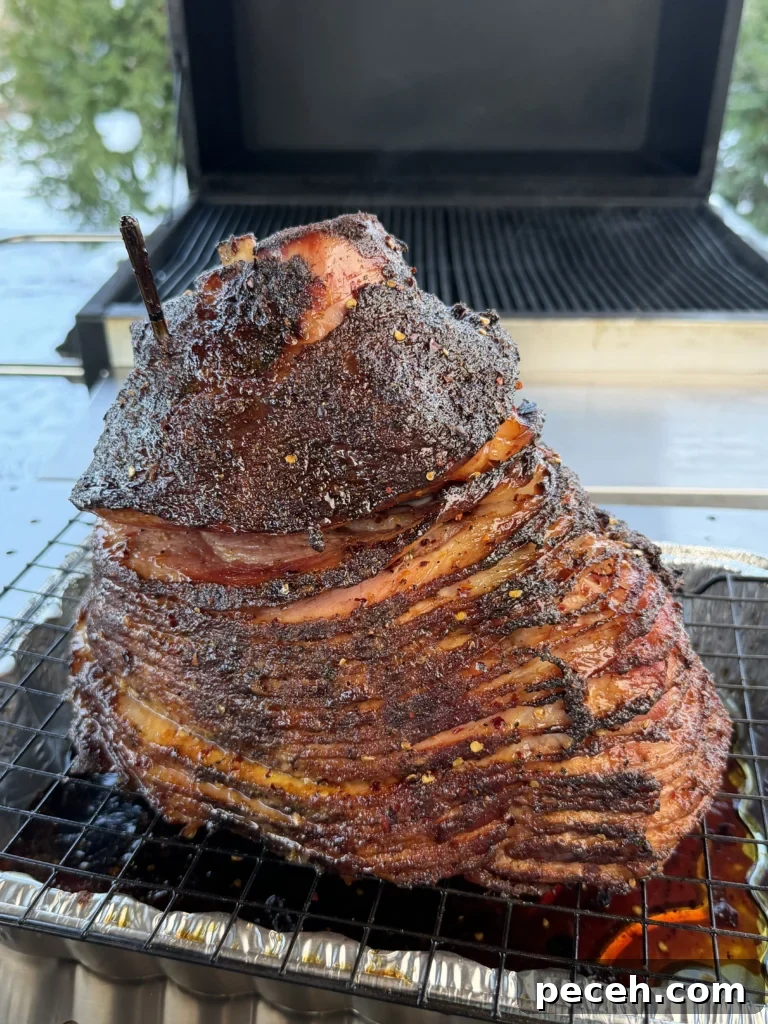
Remove the ham and rest 10–15 minutes so the glaze sets. Warm the reserved serving glaze and offer it alongside the sliced ham. Carve following the spiral cuts and arrange slices on a platter, drizzling a little of the warm glaze over the top. Serve with classic holiday sides.
Frequently Asked Questions
Can I Make This Recipe Without Bourbon?
Yes — substitute apple juice or extra orange juice (½ cup) and consider adding ½ tsp vanilla extract to approximate bourbon’s vanilla notes. The glaze will be fruitier but still delicious. Simmering the glaze removes most alcohol if you prefer to use bourbon but want no alcohol remaining.
How Much Ham Should I Buy Per Person?
Plan ¾ to 1 pound bone-in spiral ham per person. A 10 lb ham serves roughly 10–13 people; a 12 lb ham serves 12–16. Leftovers are useful for sandwiches and other dishes, so err on the generous side when feeding a crowd.
Can I Use an Uncut Whole Ham Instead of Spiral Ham?
Yes, but add 30–45 minutes to the warming time. Score a diamond pattern into the fat so the glaze can penetrate and brush glaze into the cuts. Carving whole ham requires more technique than spiral-cut ham.
How Do I Store and Reheat Leftover Christmas Ham?
Refrigerate wrapped tightly for 5–7 days, or freeze portions for 2–3 months. Reheat slices at 325°F covered with a little water or leftover glaze for 10–15 minutes, or microwave covered with a damp paper towel for 1–2 minutes on medium power.
Should I Score and Stud the Ham with Cloves?
Scoring and studding is optional and decorative. It helps the glaze penetrate uncut hams and creates a traditional presentation. If you use cloves, remove them before serving.