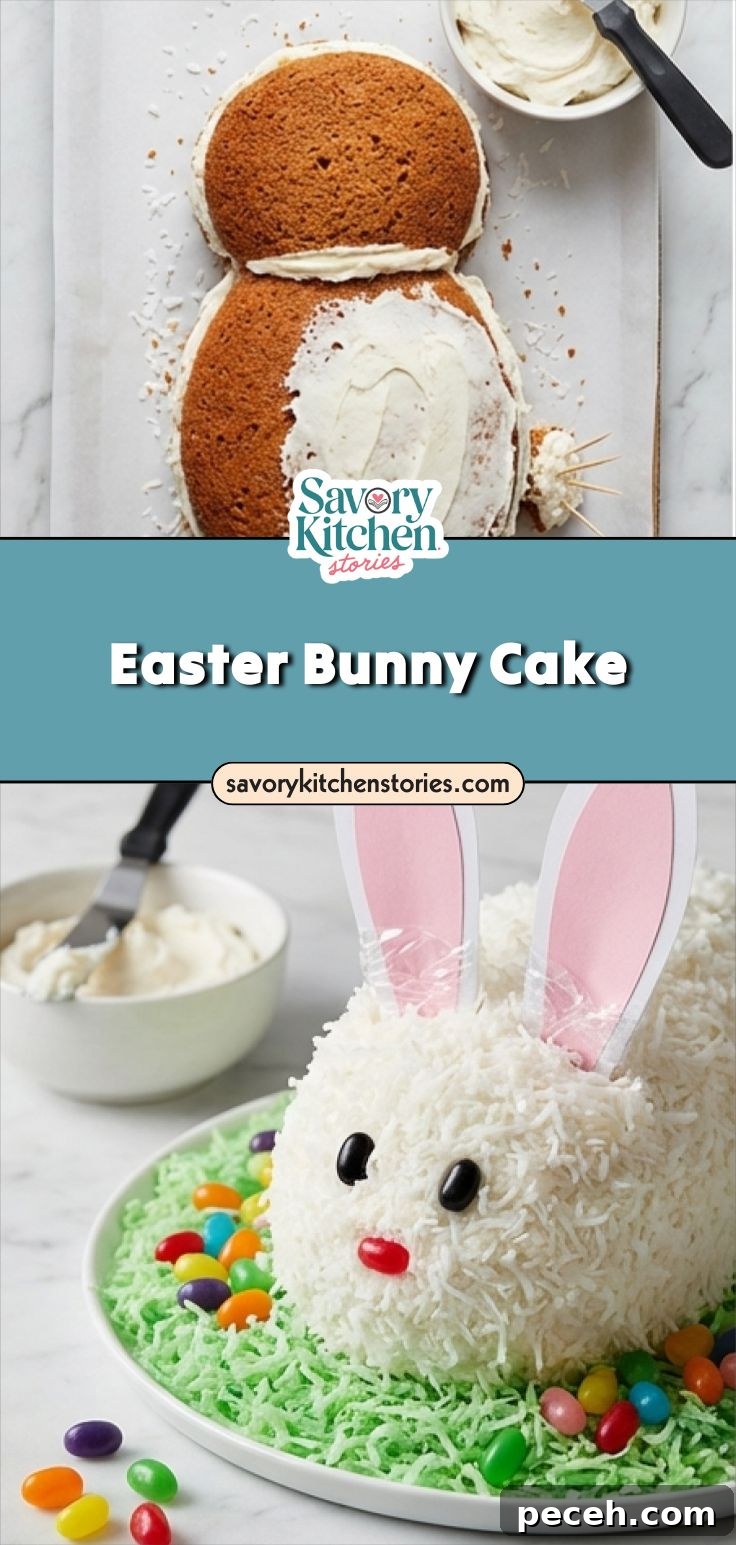
I still smile when this dessert appears on the table. The Easter Bunny Cake has become my go-to for spring gatherings and last-minute celebrations. I first brought this cake to a neighborhood potluck and watched children and adults gravitate toward the little white bunny like it had its own gravity. Making the Easter Bunny Cake is straightforward and oddly relaxing once you get into the carving and frosting rhythm. If you enjoy playful baking projects that double as a centerpiece, this is one you’ll return to year after year.
How This Cake Became My Springtime Showstopper
One soft March afternoon my niece asked for a “real bunny cake,” and I decided to turn a boxed carrot cake into something memorable. I can still hear the oven timer as I trimmed and stacked layers while warm spice filled the kitchen. Pressing coconut into the frosting felt like painting fur, and when the jelly bean eyes went in, the whole family laughed. That first cake was a bit lopsided, but everyone loved it. Since then I’ve refined the assembly, learned that chilled layers slice cleaner, and discovered that construction paper ears add a cheeky touch without extra sugar. The memory of sticky frosting on my fingers and my niece’s proud smile is why I reach for this template whenever I want something festive and uncomplicated.
What Goes Into This Bunny
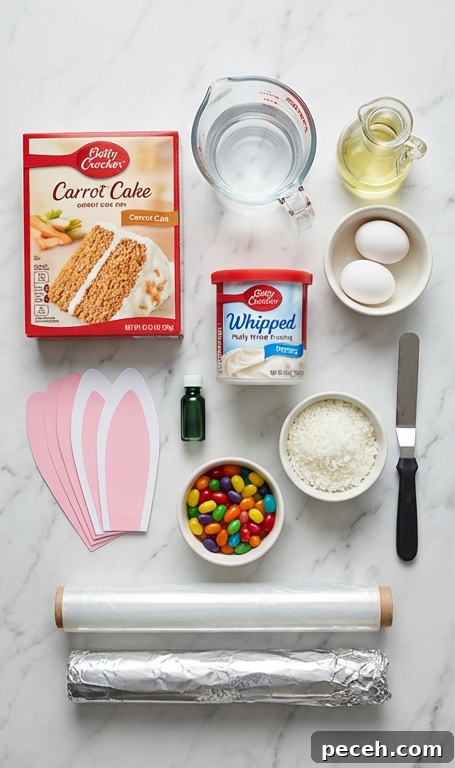
- Carrot cake mix: A boxed mix provides a reliably moist, spiced base; swap for a homemade carrot cake if you want more texture and freshly grated carrot.
- Water, vegetable oil, and eggs: These bind and hydrate the batter; use a neutral oil or replace some oil with applesauce to lighten the cake.
- Whipped white frosting or cream cheese frosting: Canned whipped frosting spreads easily, while cream cheese frosting adds tang and depth if you prefer.
- Shredded coconut: Creates the rabbit’s fur and forms the grassy bed; unsweetened coconut reduces extra sweetness and holds texture well.
- Jelly beans, gumdrops, or small candies: Colorful accents for eyes and nose; chocolate chips also work for small features.
- Construction paper and plastic wrap: Nonedible ear inserts—wrap the ends so paper never touches the cake directly and remove the wrap before serving.

Essential Tools That Make This Easy
A few simple tools keep the process calm and tidy. The right equipment speeds carving and frosting and prevents frustration.
- Two 8- or 9-inch round pans: Even layers bake predictably; if you have only one pan, bake layers sequentially and allow them to cool between bakes.
- Offset spatula or small rubber spatula: For smooth frosting strokes and a fluffy finish.
- Small bowl: Keeps frosting handy and helps control application while you work.
- Toothpicks and plastic wrap: Secure cut pieces and wrap ear inserts so paper never contacts the cake.
- Resealable bag for dyeing coconut: A no-mess way to tint shredded coconut for the grassy bed.
Step-by-Step Preparation Guide
Step 1: Bake the cake layers
Preheat the oven according to the cake mix directions and prepare two 8- or 9-inch round pans. Mix the batter using water, vegetable oil, and eggs as directed, divide the batter between the pans, and bake until centers spring back. Cool completely. For easier assembly, wrap and freeze one layer for later use while chilling the other layer about 45 minutes before cutting; a slight chill helps produce cleaner cuts with fewer crumbs.
Step 2: Assemble the bunny body from the baked rounds
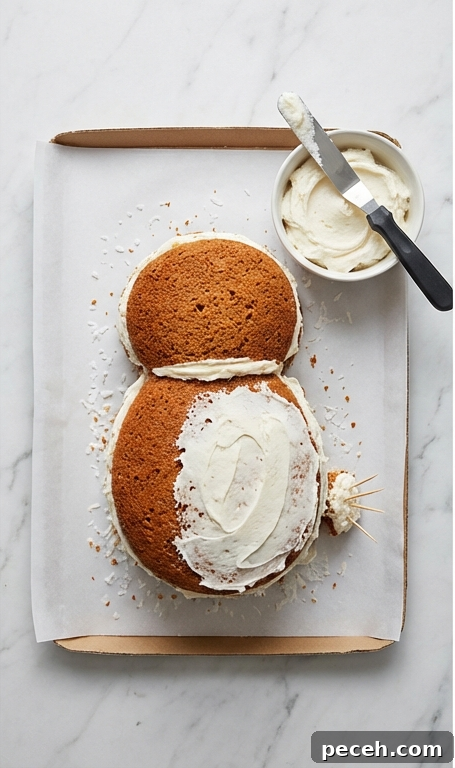
Slice one chilled cake layer horizontally to create two thinner rounds, then stack those halves with a thin smear of frosting between them so they form a single elongated oval body. Stand that oval upright on its cut edge on your tray or a cardboard base covered with plastic wrap; this upright orientation creates the bunny silhouette. Keep the tub of frosting and a small bowl with your spatula nearby, and use any loose crumbs or the frozen extra layer to tidy the base as needed.
Step 3: Carve, attach and frost into a bunny shape
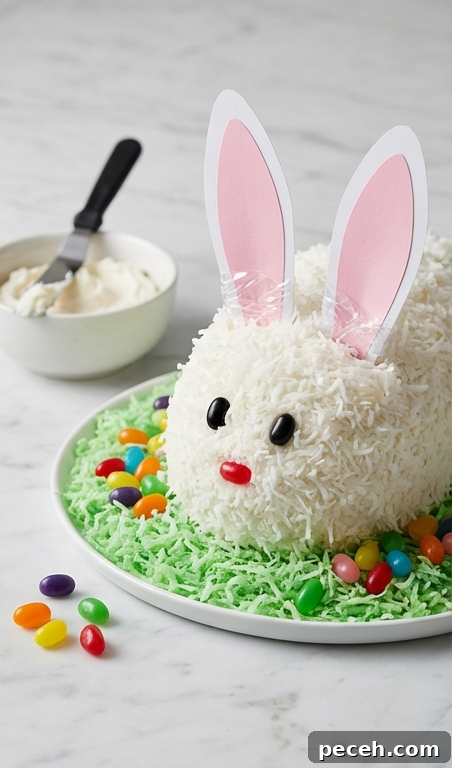
Carve a shallow notch about one-third of the way up the narrow end to form a small head, reserving the cutout pieces. Attach half of a cutout as the tail and secure with toothpicks if needed while you shape. Coat the whole body with an even, rounded layer of frosting using soft, sweeping strokes so the surface reads as fluffy fur. Immediately press a generous layer of shredded coconut into the frosting to create dense white fur. Cut two ears from construction paper, wrap the ends with plastic wrap, and gently press them into the top notch. Press jelly beans into the face as glossy eyes and a small candy for the nose to give the bunny character.
Step 4: Tint the coconut, finish styling, and serve
Place 1 cup shredded coconut into a resealable bag, add a drop or two of green food coloring, and shake until the coconut tints evenly a bright, grassy green. Surround the frosted, coconut-covered bunny with this dyed coconut to form an Easter-grass bed, and scatter multicolored jelly beans around the perimeter for a festive look. Remove toothpicks and plastic wrap from ear inserts before serving; if you prefer to display ears during transport, keep them wrapped until you plate the cake. Store the cake loosely covered until ready to serve.
Making It Your Own
Swap the boxed mix for a spiced homemade carrot cake if you want more texture and grated carrot in the crumb. Use cream cheese frosting for tangy richness instead of canned whipped frosting. To keep the cake egg-free or dairy-free, choose vegan mixes and plant-based frosting options.
Seasonal variations are easy: swap jelly beans for pastel chocolates at Easter, or use dried cranberries and candied orange peel for a winter version. Toasted coconut adds a warm, nutty flavor and an attractive golden hue.
How to Serve
For a crowd, place the Easter Bunny Cake on a large platter surrounded by extra dyed coconut and small candies for a whimsical centerpiece. For smaller gatherings, serve slices with vanilla ice cream or a drizzle of warmed caramel to complement the cake’s spice. Keep a plate of pre-cut slices chilled for guests who want to help themselves—chilled slices cut more cleanly.
To scale up for a buffet, make two bunnies. For a tea party, slice thinner pieces and pair with light herbal teas or sparkling water with citrus.
Storage and Reheating Tips
Store the cake loosely covered at room temperature for up to one day. To keep it longer, refrigerate in an airtight container for three to four days to prevent the coconut from drying out. Bring the cake to room temperature before serving so the frosting softens and the flavors open up.
For leftovers, reheat individual slices in the microwave in 12–15 second bursts for a slightly soft center, taking care not to melt the frosting. You can also freeze wrapped slices for up to two months and thaw them overnight in the refrigerator before serving.
Mistakes People Make and How to Avoid Them
Not chilling the layer before carving often leads to ragged cuts and crumb drag; a 45-minute chill makes shaping far easier. Use a serrated knife and a light touch to slice cleanly. Applying coconut to frosting that’s too thin can cause clumping or gaps—work with frosting that holds its shape and press the coconut gently but firmly so it adheres evenly. Keep paper ears wrapped where they touch the cake and remove toothpicks before serving for safety.
A Warm Invitation to Try It
The Easter Bunny Cake is a charming, easy way to celebrate the season and create a memory. Try it this year—even an imperfect first attempt will bring smiles. Let the decorating be the fun part and don’t be afraid to personalize the design.
Frequently Asked Questions
- Can I make the cake ahead of time? Yes. Bake layers a day or two ahead and freeze or refrigerate them; assemble and decorate the day you plan to serve.
- Is there a gluten-free option? Use a gluten-free carrot cake mix or a gluten-free homemade recipe and ensure all decorations and coconut are labeled gluten-free.
- Can I use homemade frosting instead of canned whipped frosting? Absolutely. Cream cheese frosting is a popular, delicious alternative that pairs beautifully with carrot cake.
- How do I keep green coconut from staining surfaces? Tint the coconut inside a closed resealable bag, then spread it on parchment to dry briefly before arranging it around the cake.
- What if the cake falls apart while carving? Save crumbs to fill gaps, chill the pieces so they firm up, and use frosting as glue to hold pieces together until the shape sets.