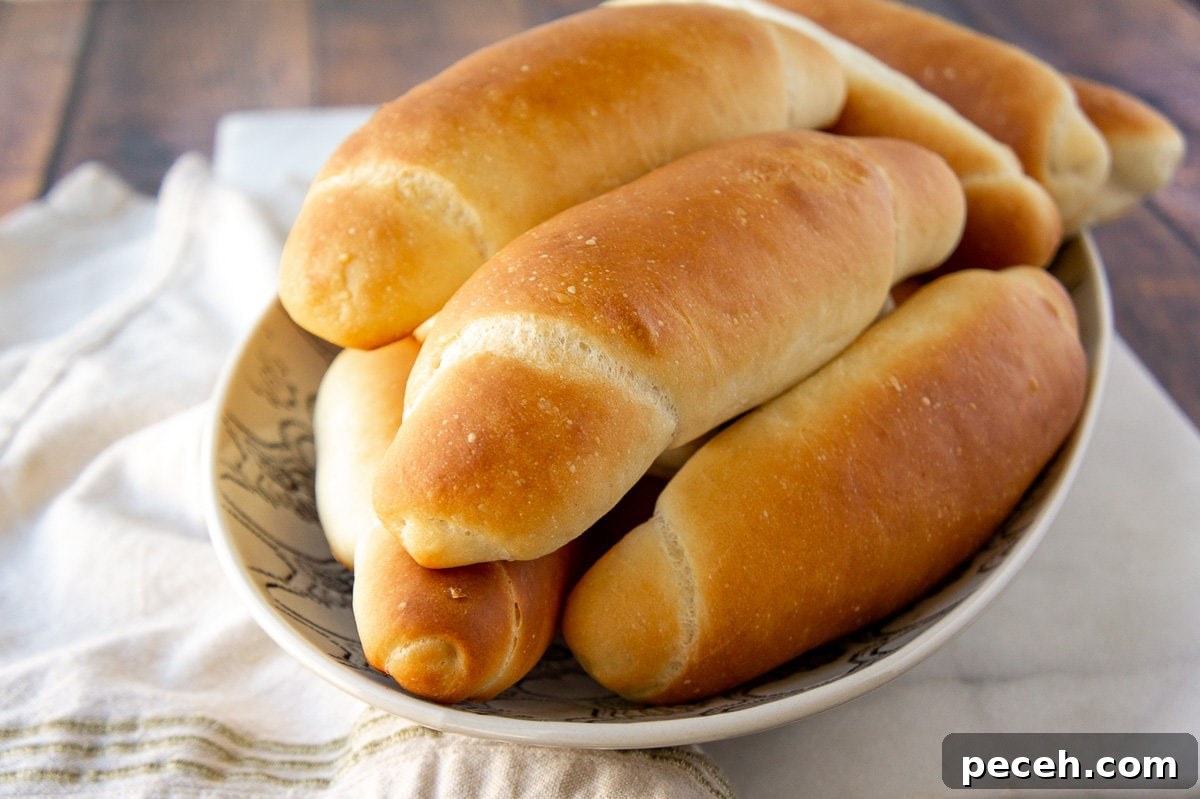
Hot links, polish sausages, or classic hot dogs all taste best inside these homemade hot dog buns. With a soft, fluffy interior and a slightly chewy, golden crust, these freezer-friendly buns are reliable and delicious every time.
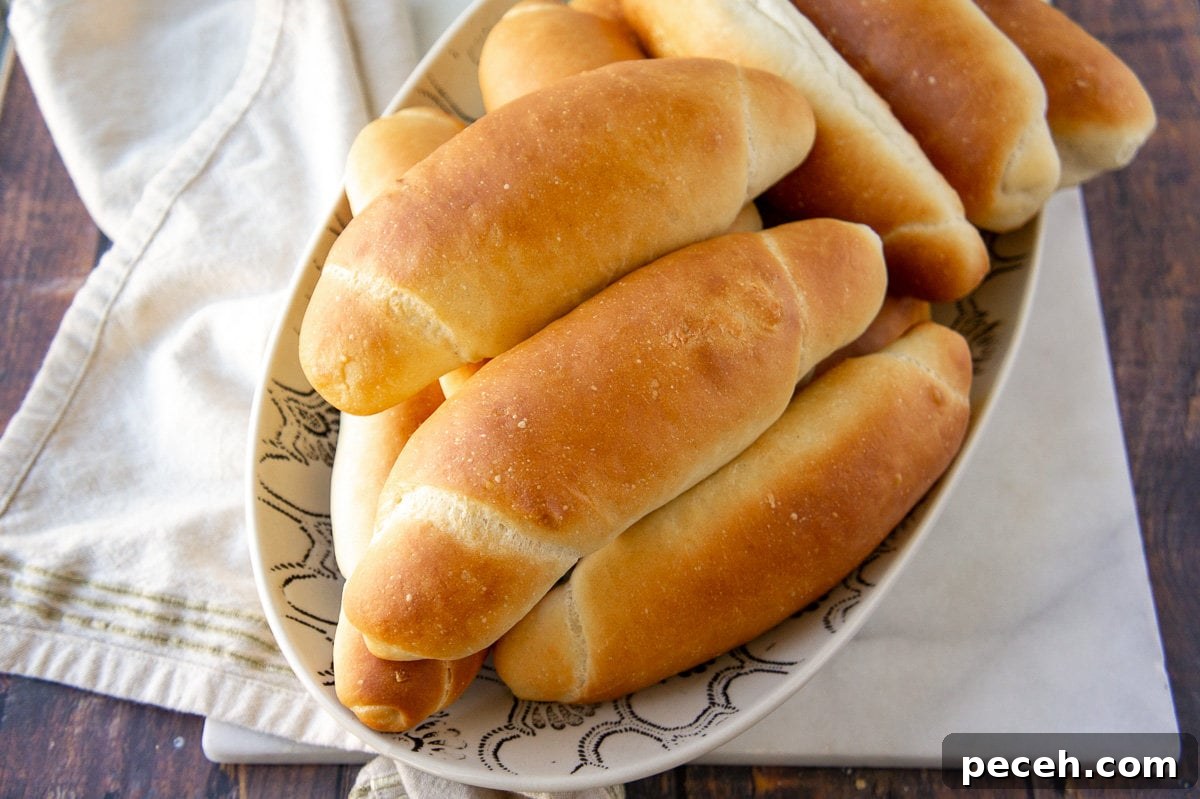
Store-bought hot dog buns often feel too delicate, too small for hearty sausages, and sometimes lack character. After many attempts, this recipe produces the buns I had in mind: sturdy enough to hold chili or loaded toppings, yet tender and soft inside. The crust is a satisfying golden chew while the crumb stays fluffy. They freeze beautifully, so you can keep a supply for quick meals and nights when you don’t want to cook.
Ingredients and Substitutions
This bread recipe is straightforward and relies on a few quality ingredients to get the right texture. Below are the essentials and suggested swaps if needed.
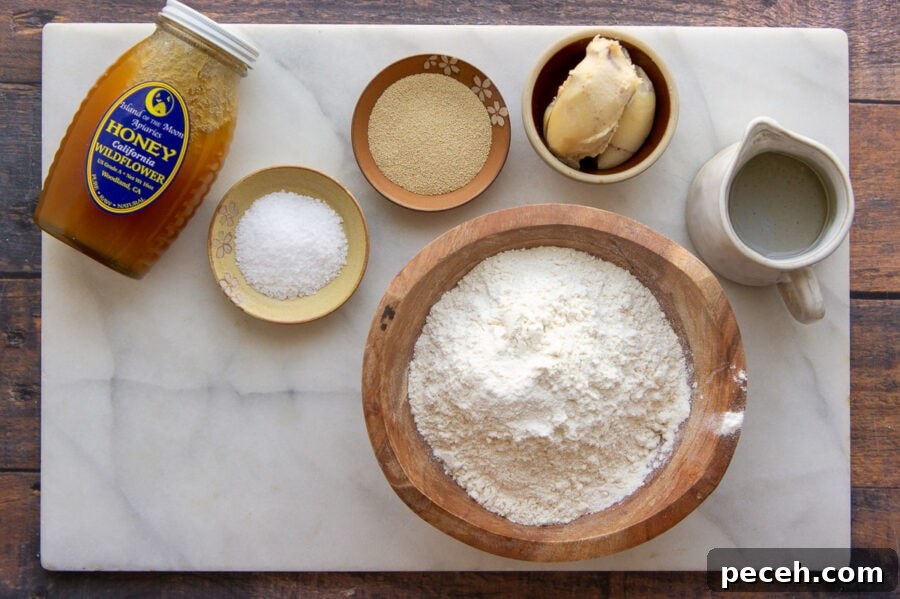
- Bread Flour – Bread flour is recommended for its higher protein content, which builds more gluten and gives the chew and structure desirable in buns. All-purpose flour will work in a pinch, but use slightly less water and expect a softer, less chewy bun.
- Warm Water – Start with warm water to help yeast activate faster. You can use room temperature water but allow longer rising times for better flavor. Avoid water hotter than 110°F, which can kill yeast.
- Honey – A bit of sweetener feeds the yeast and adds a gentle flavor. Honey, maple syrup, or granulated sugar are all fine.
- Salt – Salt is essential for flavor; don’t omit it. A coarse kosher salt works well.
- Yeast – Active dry yeast is used here and works reliably. Instant yeast can be substituted in equal amounts if you prefer. If using less yeast than suggested, allow for a longer rise time.
- Fat – Fat contributes to texture, flavor, and dough workability. Rendered bacon fat gives a savory depth and excellent texture, but softened (not melted) unsalted butter, lard, shortening, or olive oil will also yield excellent results.
Pro Tip – Bacon Fat vs. Lard
If you keep rendered bacon fat on hand it’s a flavorful, zero-waste option. Strain the drippings through a sieve or cheesecloth into a jar and refrigerate; scoop out the solid fat as needed. Lard will work too, but lacks the smoky bacon note.
How to Make Homemade Hot Dog Buns
Making great buns has three key steps: the dough, shaping, and baking. None are difficult, but attention to texture and timing makes a big difference. Follow the instructions below for consistent results.
Making the Dough
The most important part is kneading. I prefer hand-kneading because you can feel the dough develop, though a stand mixer works for a single batch. Start by proofing the yeast with honey and warm water until bubbly. Combine the flour, salt, and fat in a bowl, then pour in the yeast mixture.
Mix until most flour is absorbed, turn the dough onto a lightly oiled surface, and knead. Knead for about 10–12 minutes until the dough is soft, tacky, and elastic. You should be able to stretch a small piece until it becomes almost translucent before it tears—this indicates good gluten development.
Early in kneading the dough may feel sticky—that’s normal. Rather than adding more flour, coat your hands with a little oil or softened fat and keep kneading. The dough will come together as the gluten forms.
Shaping Hot Dog Buns
After the first rise (about 1 to 1½ hours in a warm spot) the dough will be puffy. Gently punch it down and divide it for shaping.
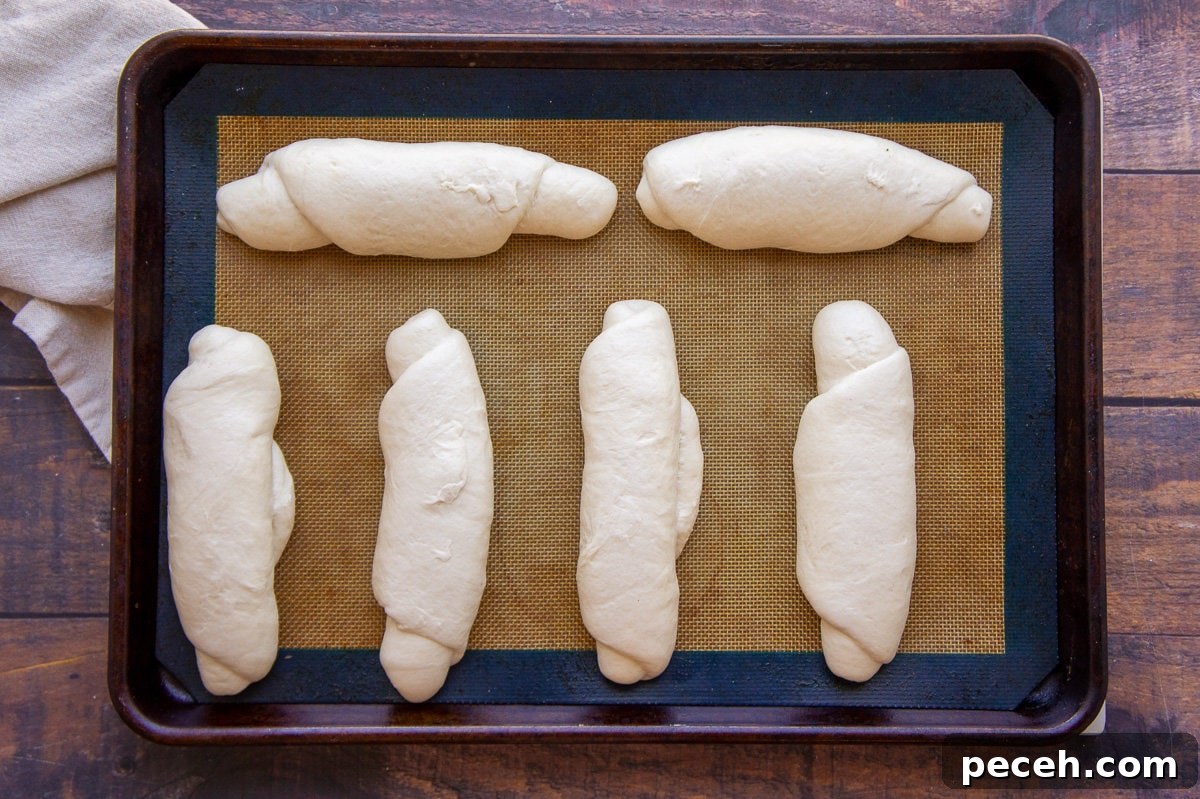
- Divide the dough into 12 pieces of approximately 112 grams each. A kitchen scale ensures even sizing and uniform baking. If you prefer smaller buns, divide into pieces of about 96 grams to yield 14 buns.
- Shape each piece into a smooth ball, then flatten it gently into a circle. Avoid overworking the dough so it doesn’t spring back; if it tightens, let it rest briefly and return to it.
- Roll each circle into a long oval with a small rolling pin or bottle. Starting from the narrower end, roll up tightly like a croissant, pressing gently outward so the center is slightly wider than the ends.
- Place each bun seam-side down on a parchment-lined or silicone-lined baking sheet about 3 inches apart so they don’t fuse together while rising.
- Cover with a damp (not wet) towel and allow a second rise of 1 to 1½ hours, or until the buns are puffy and roughly doubled in size.
Baking Homemade Hot Dog Buns
Thirty minutes before baking, preheat your oven to 425°F and place a large, oven-safe dish on the bottom rack. Heat a kettle of water or warm some water in the microwave.
Brush the tops of the risen buns with milk for a glossy, browned finish. An egg wash can be used for extra shine but is optional.
Set the buns on an upper rack in the oven. Carefully pour the warm water into the preheated pan on the bottom rack and quickly close the oven door to trap steam—this steam helps develop the crust texture. Do not use cold water in a hot pan, as sudden temperature change can damage cookware.
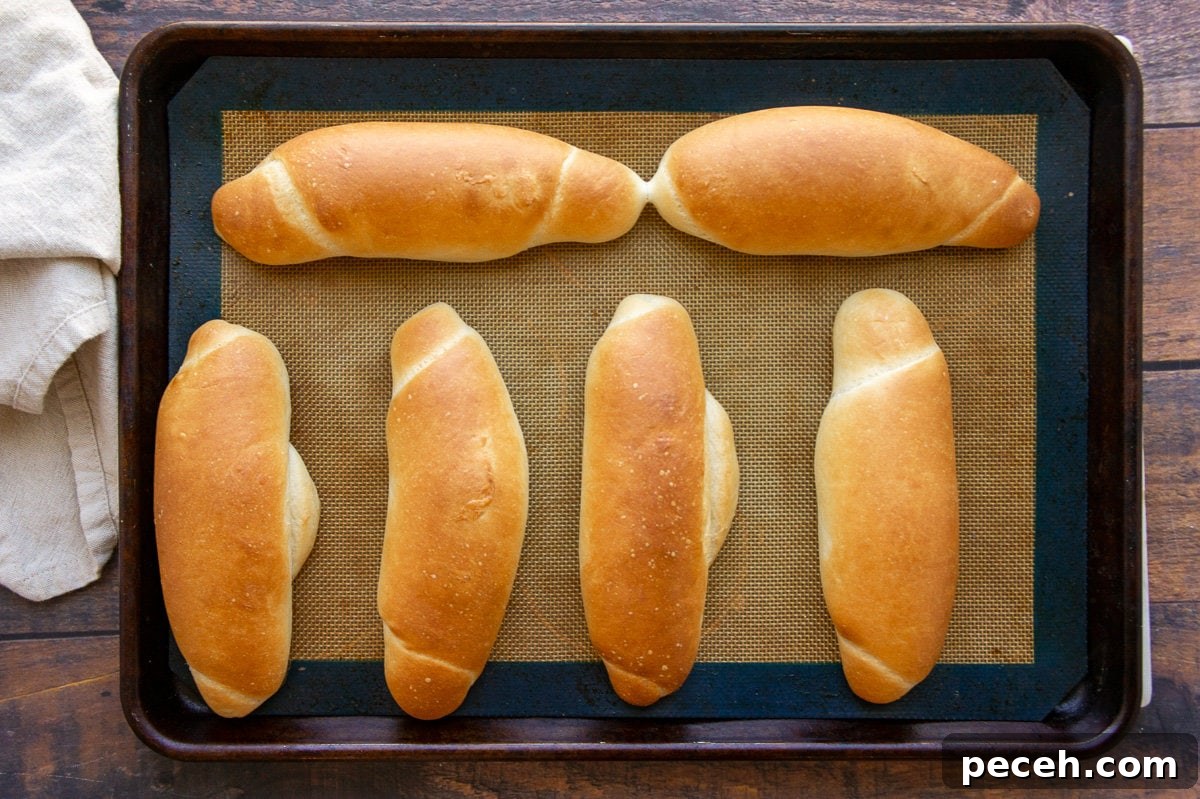
Bake for 20–25 minutes until the buns are golden brown. Remove to a cooling rack and allow them to cool completely before storing. At room temperature, keep in an airtight container for up to 4 days; for longer storage, freeze for up to 3 months.
FAQs
Can I scale this recipe up?
Yes. This recipe scales well; double, triple, or quadruple as needed. When increasing quantities, measure ingredients by weight so dough consistency stays consistent. Larger batches will require longer rising times and you’ll need to bake in multiple trays.
Can I freeze homemade hot dog buns?
Absolutely. Cool the buns completely, then store in airtight freezer bags or containers for up to 3 months. Use silicone freezer bags for best protection from freezer burn. If using cloth bags, consume within a month.
How long will homemade buns stay fresh?
Because this recipe contains fat, the buns remain soft for up to 4 days when fully cooled and stored airtight. If they become slightly stale, refresh them by sprinkling with water and heating at 450°F for 3–4 minutes.
Can I make different sizes?
Yes. For smaller hot dog buns, divide the dough into 14 pieces of about 96 grams each. For sandwich rolls, divide into larger portions (about 135 grams) to make 8 rolls.

When you slice one open, you’ll notice the fluffy interior and the pleasant chew of the crust. These buns are large enough for robust sausages, hot links, and piled-high toppings without falling apart. They’re ideal for Chicago-style dogs, chili dogs, or creative toppings at a hot dog bar. The same dough can also be adapted for hamburger buns or sandwich rolls by adjusting portion sizes and shaping.
Homemade Hot Dog Buns
A chewy crust, soft interior, and generous size make these homemade hot dog buns perfect for any sausage, link, or hot dog.
Equipment
- Kitchen scale
- Baking sheets
Ingredients
- 750 grams bread flour (about 5.5–6 cups)
- 1 tablespoon salt
- 75 grams fat* (plus extra for greasing pans and kneading)
- 500 milliliters warm water (no hotter than 110°F, about 2 cups)
- 1 tablespoon honey
- 1 tablespoon yeast
- 1 tablespoon milk (for brushing)
Instructions
Hot Dog Bun Dough
- Combine the honey, yeast, and warm water and stir to dissolve. Let proof 5–10 minutes until bubbly.
- In a large bowl, combine the flour, salt, and fat.
- When the yeast mixture is bubbly, pour it into the dry ingredients and mix until most of the flour is absorbed.
- Turn the dough onto a lightly oiled surface and begin kneading.
- Knead for 10 minutes until the dough is soft, tacky, and elastic.
- Form into a ball, place in a large oiled bowl, cover, and let rise 1–1.5 hours until puffy.
Shaping Hot Dog Buns
- When doubled and the dough does not bounce back when poked, punch it down and turn it out onto a clean surface.
- Divide the dough into 12 equal pieces, about 112 grams each.
- Form each piece into a smooth ball, flatten, and roll into a long oval.
- Starting at the narrow end, roll up tightly like a croissant, making the center slightly wider than the ends.
- Place seam-side down on a baking sheet and repeat with remaining pieces.
- Cover and let rise another 1–1.5 hours until puffy.
Baking Hot Dog Buns
- Preheat oven to 425°F and place a large oven-safe dish on the lowest rack.
- Warm a few cups of water in a kettle or microwave.
- Brush the buns with milk and place them on a rack in the upper third of the oven.
- Carefully pour the warm water into the preheated dish on the bottom rack and quickly close the oven to trap steam.
- Bake 20–25 minutes until golden brown.
- Transfer to a cooling rack, cool completely, then store at room temperature for up to 4 days or freeze up to 3 months.
Notes
*Measuring flour by volume can vary; spoon and level into cups if not using a scale—this should yield about 6 cups.
*Rendered bacon fat gives a unique smoky flavor; you can substitute softened butter, lard, shortening, or olive oil.
**112–113 grams per bun makes large buns ideal for polish sausages and hot links. Reduce to ~96–97 grams to make 14 smaller buns.
Nutrition (per bun)
Calories: 287 kcal • Carbohydrates: 47 g • Protein: 8 g • Fat: 7 g • Sodium: 585 mg • Fiber: 2 g