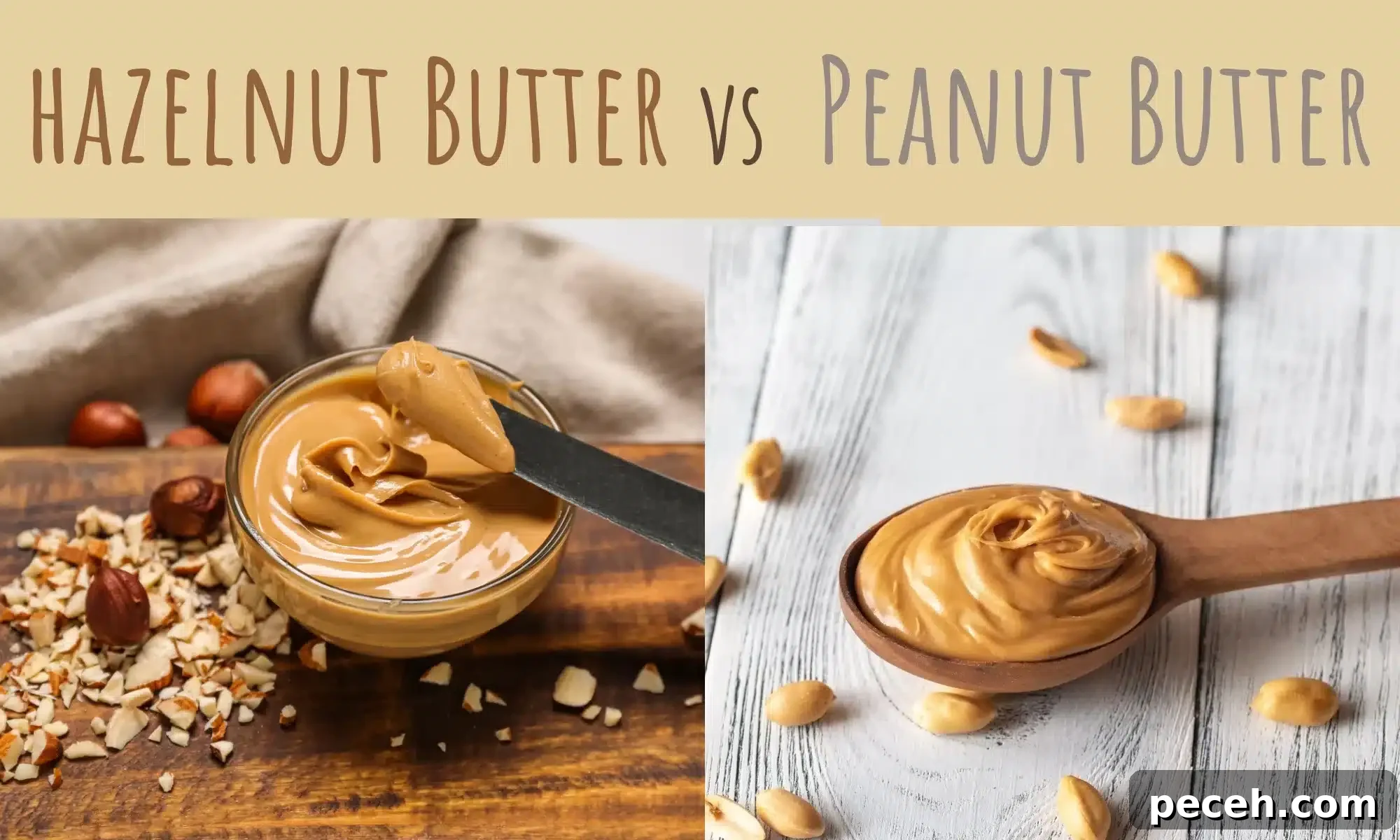
Hazelnut butter is a tasty alternative to traditional peanut butter, but which one should you choose? This article compares their flavors, textures, nutrition, uses, and storage so you can decide which fits your pantry and diet.
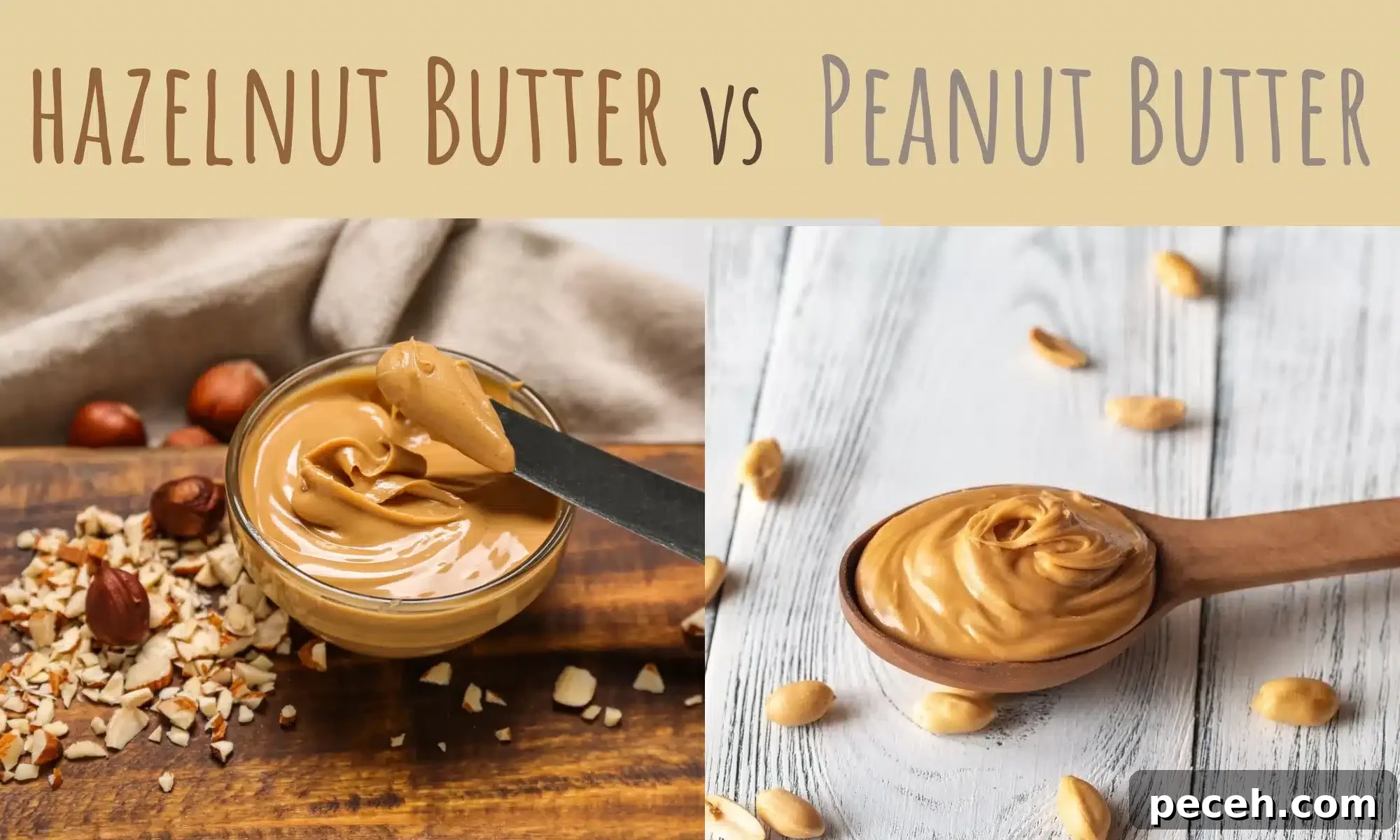
Comparing hazelnut butter vs peanut butter
| Hazelnut butter | Peanut butter | Reduced-fat peanut butter (Jif brand) | |
| Taste | Rich, nutty, slightly sweet | Nutty, slightly sweet | Mild peanut flavor, slightly sweet |
| Texture | Dense, smooth | Thick, smooth & creamy (or crunchy) | Thick, smooth & creamy (or crunchy) |
| Allergens | Tree nuts | Peanuts | Peanuts, soy |
| Vegan? | Yes | Yes | Yes |
| Paleo? | Yes | No | No |
| Keto? | Yes | Maybe (4 g net carbs) | No |
| Glycemic index | Hazelnuts=0 | Peanuts=14 | Unknown; likely low like regular peanut butter |
What is hazelnut butter?
Hazelnut butter is a creamy spread made by roasting and grinding hazelnuts until their natural oils transform the nuts into a smooth, velvety paste. No extra ingredients are necessary for a basic version, though some commercial varieties include a pinch of salt or a touch of sweetener. The roast brings out a rich, slightly sweet and toasty flavor that works beautifully on toast, in baking, or paired with fruit and chocolate.
What is peanut butter?
Peanut butter is made from roasted peanuts ground into a smooth or crunchy spread. Store-bought versions range from minimally processed (just peanuts and maybe salt) to highly processed varieties that include added sugar, oils, and stabilizers to improve texture and shelf life. Peanut butter is prized for its savory, nutty profile and higher protein content compared with most tree-nut butters.
Differences between hazelnut butter and peanut butter
The most obvious difference is the source: hazelnut butter comes from tree nuts, while peanut butter is made from peanuts, which are legumes. Their textures can be similar, though hazelnut butter often feels denser and creamier. Flavor is the biggest distinction—hazelnut butter has a pronounced roasted-sweet note that complements desserts, whereas peanut butter has a broader range of uses, easily fitting both sweet and savory recipes.
How to use hazelnut butter vs peanut butter
Hazelnut butter shines with chocolate, fruit, and baked goods: spread it on toast, fold it into oatmeal, use it in desserts like chocolate-hazelnut cups, or drizzle it over baked oatmeal bars. It also makes an indulgent filling for sandwiches and pancakes.
Peanut butter is versatile for sandwiches, smoothies, energy balls, breakfast parfaits, and savory sauces. Its neutral, savory edge makes it a go-to for peanut sauces in stir-fries, noodle dishes, and salad dressings.
Can you substitute hazelnut butter for peanut butter?
Yes—most recipes that call for nut butter can accept a swap. Keep in mind the flavor difference: hazelnut butter’s sweetness suits sweet dishes best, while peanut butter’s more neutral, savory profile makes it better for sauces and savory preparations. Adjust seasoning and sweetness as needed when substituting.
Nutrition: Hazelnut butter vs peanut butter
Hazelnut butter is relatively low in net carbs and high in monounsaturated fats, making it appealing for low-carb or keto-style diets. It also supplies minerals such as iron. Peanut butter tends to offer more protein per serving and provides healthy fats as well. Reduced‑fat peanut butter versions may lower calories and fat but often add sugars or vegetable oils, so natural, minimally processed options are generally the healthier choice.
| Serving size: 2 tbsp. | Calories | Total fat (saturated) | Total carbs | Net carbs (fiber) | Total sugars (incl. added) | Protein |
| Hazelnut butter | 210 | 20 g (2 g) | 6 g | 3 g (3 g) | 2 g (0 g) | 5 g |
| Peanut butter (Adams natural) | 200 | 16 g (3 g) | 7 g | 4 g (3 g) | 2 g (0 g) | 8 g |
| Reduced-fat peanut butter (Jif) | 190 | 12 g (2.5 g) | 15 g | 13 g (2 g) | 4 g (3 g) | 7 g |
How to store hazelnut butter and peanut butter
Natural nut butters without stabilizers are best refrigerated to slow oil separation and rancidity. If refrigeration isn’t possible, store jars in a cool, dark place and plan to use them sooner. Shelf-stable commercial peanut butters that contain hydrogenated oils or stabilizers can be kept at room temperature. After opening, consume natural nut butters within about 2–3 months and always check the product label for specific guidance and best-before dates.
Hazelnut butter vs peanut butter: The ultimate verdict
Both spreads have advantages. Hazelnut butter offers a rich, naturally sweet flavor and is ideal for desserts, baking, and those following low-carb or paleo diets. Peanut butter provides more protein and greater versatility for savory and sweet dishes. If you prefer a simple, naturally sweet spread and enjoy baking, hazelnut butter may become your favorite. If you need a pantry workhorse for sandwiches, sauces, and protein-rich snacks, peanut butter remains hard to beat.
FAQs:
Hazelnut butter is often praised for its higher monounsaturated fat content and lower carbohydrate count, which can benefit heart health and low-carb diets. Peanut butter provides more protein. The healthier choice depends on individual nutritional goals and the specific product ingredients.
Almond butter is frequently cited as a very healthy option due to its balance of monounsaturated fats, vitamins, and minerals. However, the best nut butter varies by dietary needs and ingredient quality.
No. Hazelnut butter has a distinct roasted and slightly sweet flavor that differs from peanut butter’s more neutral, nutty taste.