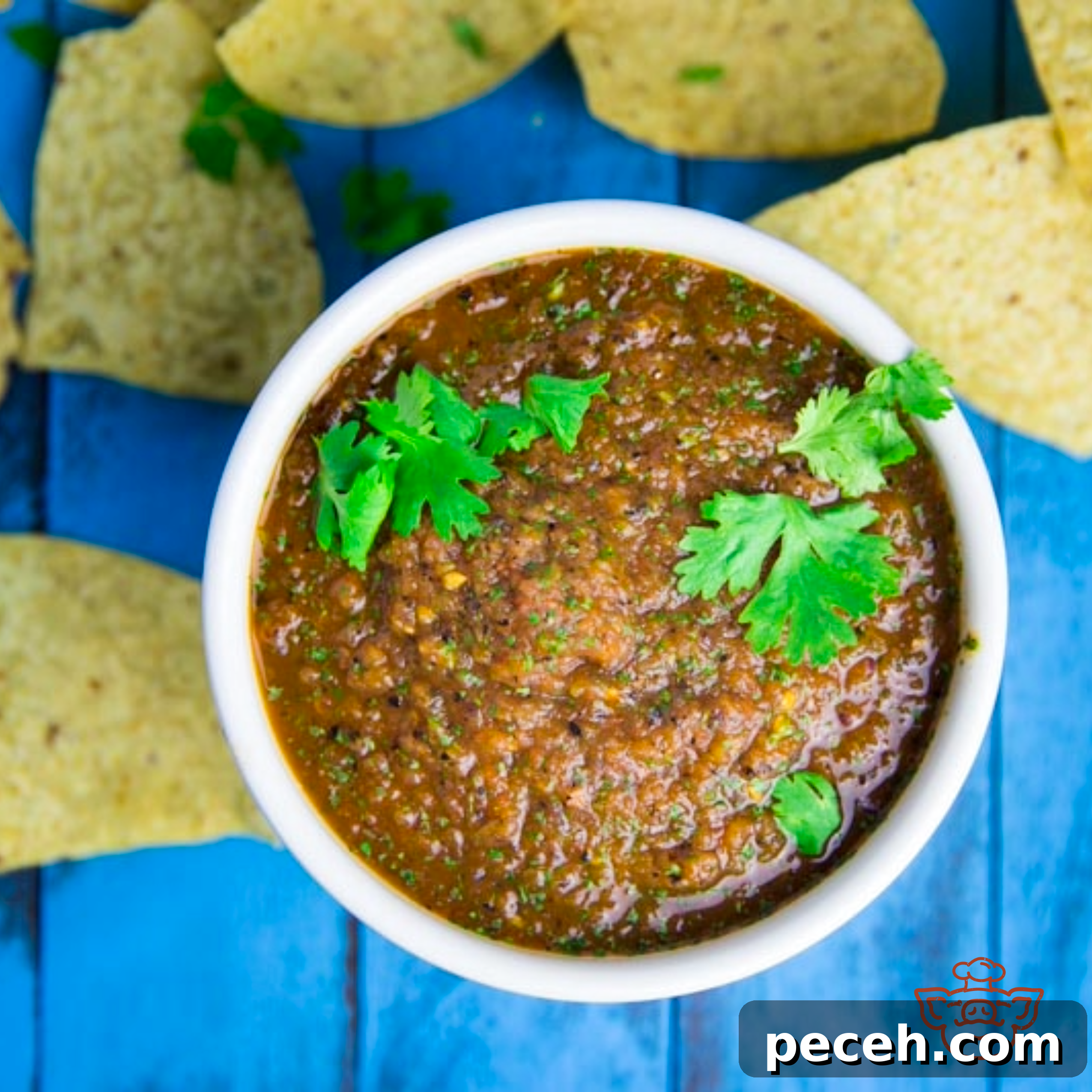
If you’ve been searching for the secret to restaurant-quality salsa at home, the answer isn’t in a jar — it’s in the fire. Fire-roasting vegetables on a Big Green Egg transforms simple ingredients into a complex, smoky, and vibrant salsa.
While some people smoke their vegetables low and slow, the real magic here comes from a direct, high-heat roast. By charring the vegetables directly over lump charcoal on a MiniMax, you get a deeper flavor profile: blistered tomato skins, blackened onion edges, and jalapeños with a smoky bite that you can’t achieve any other way.
This fire-roasted method is my go-to. Grab an ice-cold Corona with a fresh lime wedge and enjoy this guide to Big Green Egg Fire Roasted Salsa.
Why Fire-Roasted Beats Smoked
There are distinct differences between smoked and roasted salsa:
The Speed: Using a hot MiniMax or any Big Green Egg, you can prep and char your vegetables in under 15 minutes.
The Texture: High-heat roasting softens vegetables while preserving their juices, giving a brighter finish.
The Flavor: Smoking can overwhelm tomato acidity. Direct charring adds a grilled essence that complements cilantro and lime.
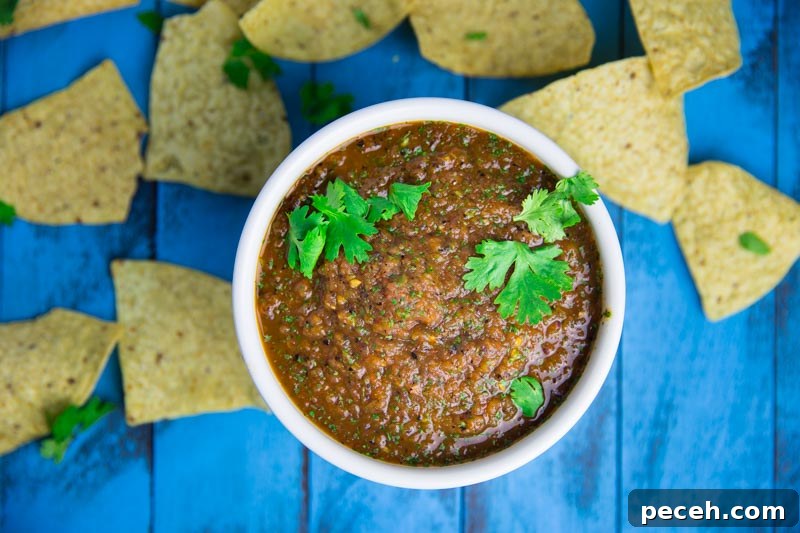
Step 1: BGE Setup and Roasting the Vegetables
The goal is a clean, direct roast that concentrates flavor without greasiness. Setting up the Big Green Egg or MiniMax for direct heat is the best way to achieve authentic charred skins.
The Setup
Preheat the MiniMax to 350°F before adding roma tomatoes, a red onion, jalapeños, and garlic. Maintaining a steady 350°F blisters skins and softens interiors without burning the vegetables.
Direct Fire Roasting
Place the vegetables directly on the grilling surface without oil. Skipping oil lets the skins char and blister naturally, creating a dry roast with a cleaner smoke flavor and a lighter finished salsa.
- The Process: Keep the dome closed as much as possible to maintain convection heat, but open occasionally to rotate the vegetables for even charring.
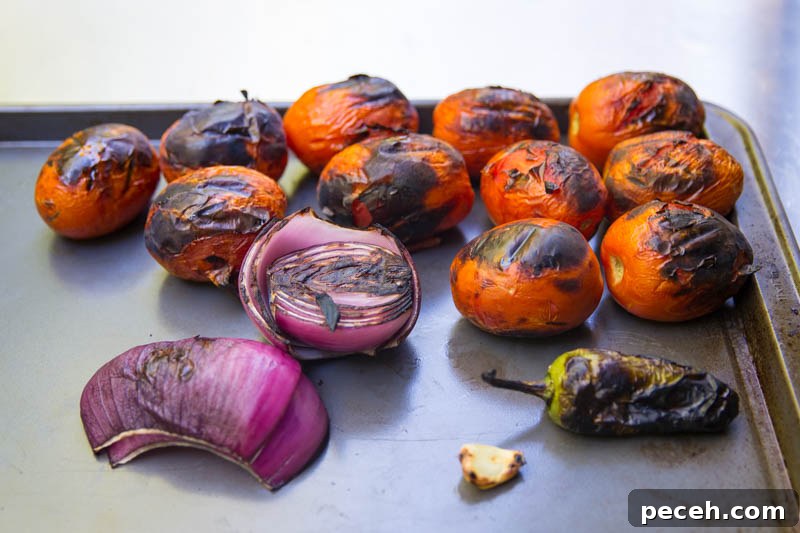
Note: Watch for cues: tomatoes should split and show black char marks, onion layers should soften and caramelize, and jalapeños should be blistered all over.
Step 2: The Art of the Char
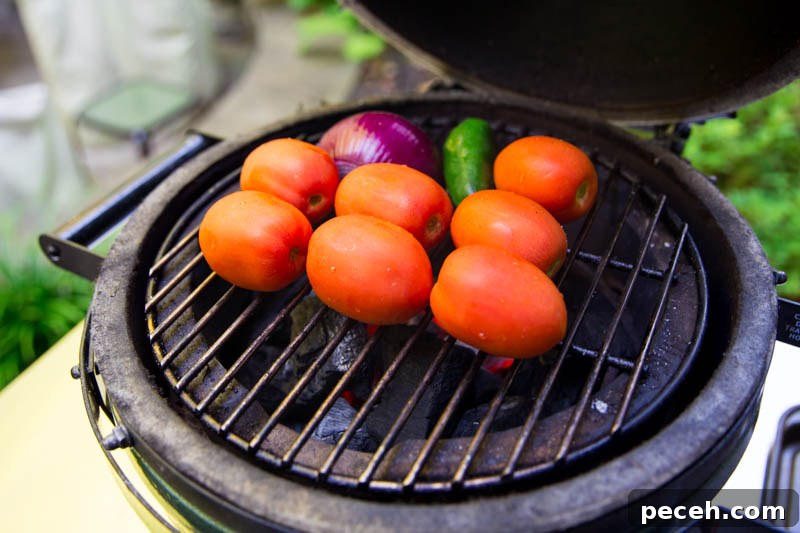
Roast the vegetables directly over the lit charcoal, turning occasionally so they color evenly. Contact with the hot grates caramelizes natural sugars, producing the dark blisters that give fire-roasted salsa its character.
- Rotational Cooking: Use long-handled tongs to quarter-turn tomatoes and jalapeños every 3–4 minutes. You want skins blackened and peeling from the flesh to add a pleasant bitterness that balances lime.
- Managing the Heat: Even at 350°F the center above the charcoal is hottest. Move smaller jalapeños toward the edges if they char too quickly, leaving thicker tomatoes in the center.
The Garlic Strategy
Add garlic later so it doesn’t overcook. Garlic is delicate; if left over the fire too long it will turn bitter.
- The Timing: Add garlic cloves in their skins when tomatoes are about halfway done.
- The Goal: Remove garlic once cloves feel slightly soft and show light browning. You want sweet, mellow garlic, not sharp or burnt flavors.
Finding the Perfect Char
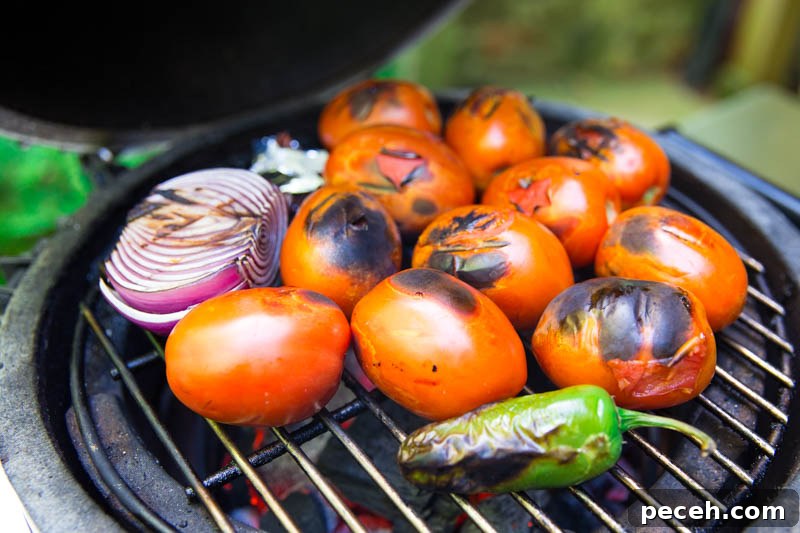
Cook mostly by sight and feel, not clock time. How long you roast depends on how charred you prefer the vegetables. Some like a light golden roast; others prefer a deep, blackened street-style finish.
Typical Timing: Around 15 minutes on a MiniMax usually produces the transformation you want.
- Tomatoes: Skins split, juices bubble and concentrate.
- Onions: Fully softened with dark, caramelized edges.
- Jalapeños: Look deflated with skin separated from the flesh, forming smoky pockets.
Tip: If you want a chunkier salsa, keep some charred bits — they concentrate flavor. For a cleaner appearance, peel skins after roasting, but leave some for authentic character.
Step 3: The Blend
After roasting, how you handle the vegetables determines the final texture. Preserve grilled texture without overprocessing into a liquid.
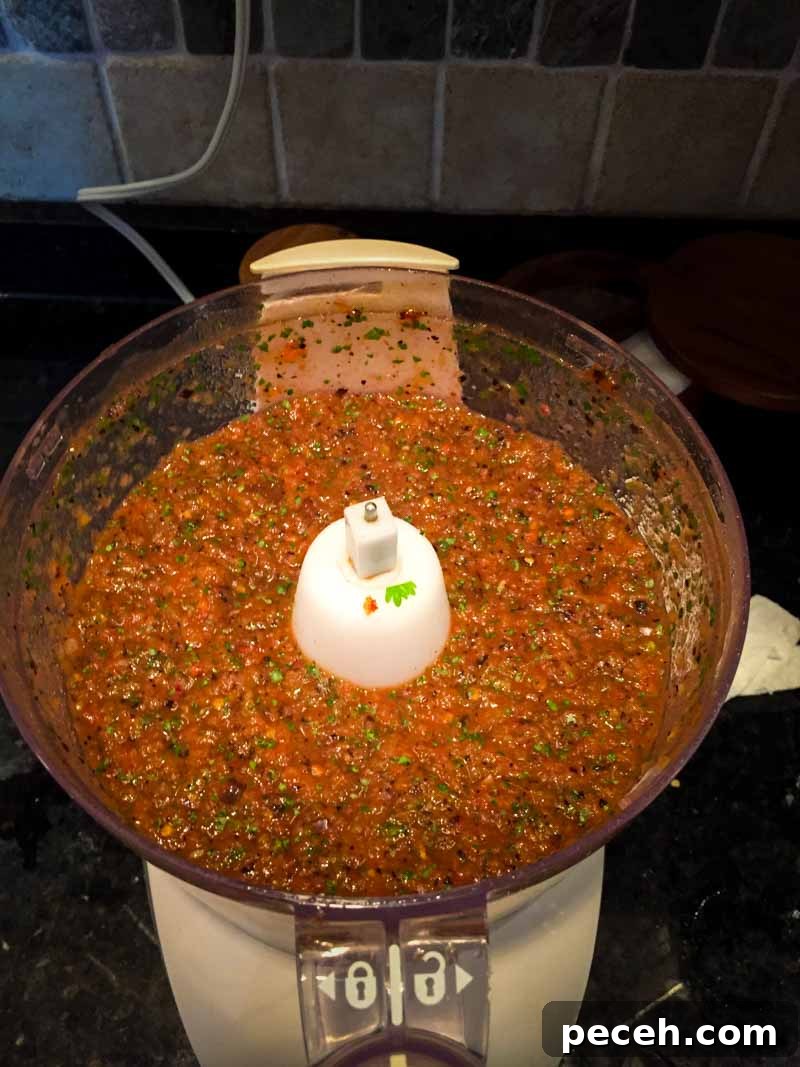
Roughly chop cooled vegetables and add them to a food processor with cilantro, lime juice, cumin, salt, and pepper.
- The Rough Chop: Cut onions and tomatoes into chunks before pulsing so everything breaks down evenly.
- The Seasoning: Cumin adds an earthy undertone that bridges smoky char and bright lime. Fresh lime juice wakes up roasted flavors, and cilantro leaves with tender stems give the herb punch.
Pulse for Texture
Note: Pulse the food processor in short bursts. Aim for a rustic, chunky consistency like a cantina salsa. Holding the button down produces a smoother purée, which works for some uses, but for dipping you want texture.
The Rest
Salsa improves as the flavors meld.
- The Marriage: Transfer the salsa to a glass bowl, cover, and refrigerate at least one hour.
- The Heat Check: As it rests, capsaicin from the roasted jalapeños infuses the mixture. Taste after chilling and adjust salt or lime if needed.
Why This Method Wins
Raw salsa is bright and acidic, but fire-roasted salsa adds savory, sweet, and smoky complexity. Charring reduces tomato water content and concentrates sugars. Combined with cumin and lime, the result becomes more than a condiment — it can be the star of the table.
Final Thoughts
This technique approximates the dark, slightly smoky profile found at some restaurant salsas. The MiniMax works well because it reaches temperature quickly and keeps vegetables close to the coals for an excellent sear.
The recipe is flexible: keep seeds for more heat or swap a jalapeño for a serrano; add more red onion for sweetness. Once you master the 15-minute char, tweak ratios to craft your signature blend.
Storage and Shelf Life
Because this salsa uses fresh ingredients without preservatives, storage matters:
- Container: Store in a glass jar or airtight container to avoid flavor transfer from plastic.
- Fridge Life: Keeps well for 5 to 7 days in the refrigerator.
- Better with Age: Making it a day ahead lets cumin and garlic meld with the tomato juices.
- Freezing: Roasted vegetables freeze surprisingly well. Leave headspace in the jar; it will keep up to three months.
Quick Pairing Guide
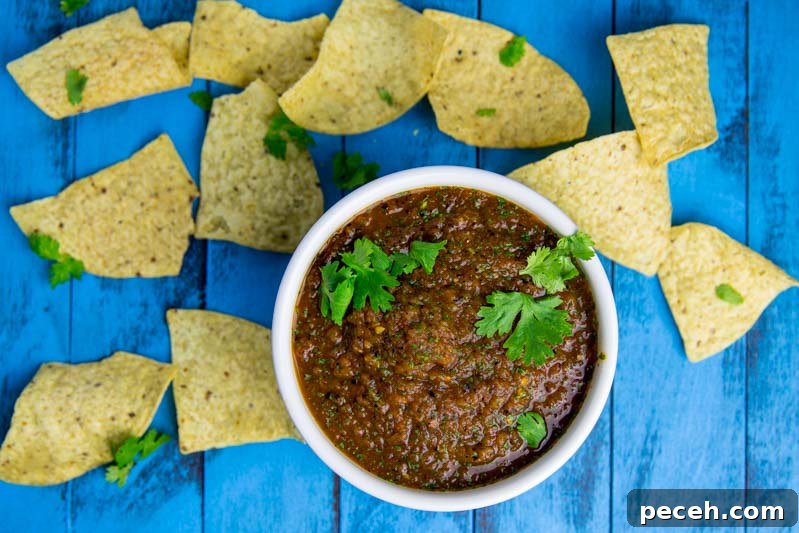
- Classic: Thick-cut, salted tortilla chips.
- Upgrade: Use as a base for chilaquiles or spoon over huevos rancheros.
- Main Event: Great with skirt steak tacos or smoked pork butt.
Easy Big Green Egg Fire Roasted Salsa Recipe
Ingredients
Vegetables:
- 6–8 Roma tomatoes
- 1 Red onion, peeled and halved
- 2–3 Jalapeños, stems removed after roasting
- 3 Garlic cloves, kept in skins
The Finishers
- 1/2 Bunch fresh cilantro, roughly chopped
- 1 tbsp Fresh lime juice (approx. 1/2 lime)
- 1/2 tsp Ground cumin
- Kosher salt & pepper, to taste
Instructions
- BGE Setup: Light your Big Green Egg and stabilize at 350°F. Set up for direct grilling with no convEGGtor.
- The Roast: Place tomatoes, onion, and jalapeños directly on a clean cooking grate. Do not use oil; the dry heat creates perfect blistered skins.
- The Timing: Roast about 15 minutes total, turning occasionally so all sides char evenly.
- Add Garlic: Add garlic cloves in their skins during the last 5–7 minutes to prevent bitterness.
- Cool Down: Remove vegetables when softened and charred. Let cool 10 minutes, peel garlic, and remove jalapeño stems.
- The Pulse: Roughly chop roasted onions and tomatoes. Add them to a food processor with garlic, jalapeños, cilantro, lime juice, cumin, salt, and pepper.
- Texture Control: Pulse in short bursts until rustic and chunky. Avoid over-processing into a purée.
- The Rest: Transfer to a glass jar and refrigerate at least 1 hour before serving to let flavors meld.
Nutrition information is an approximation.