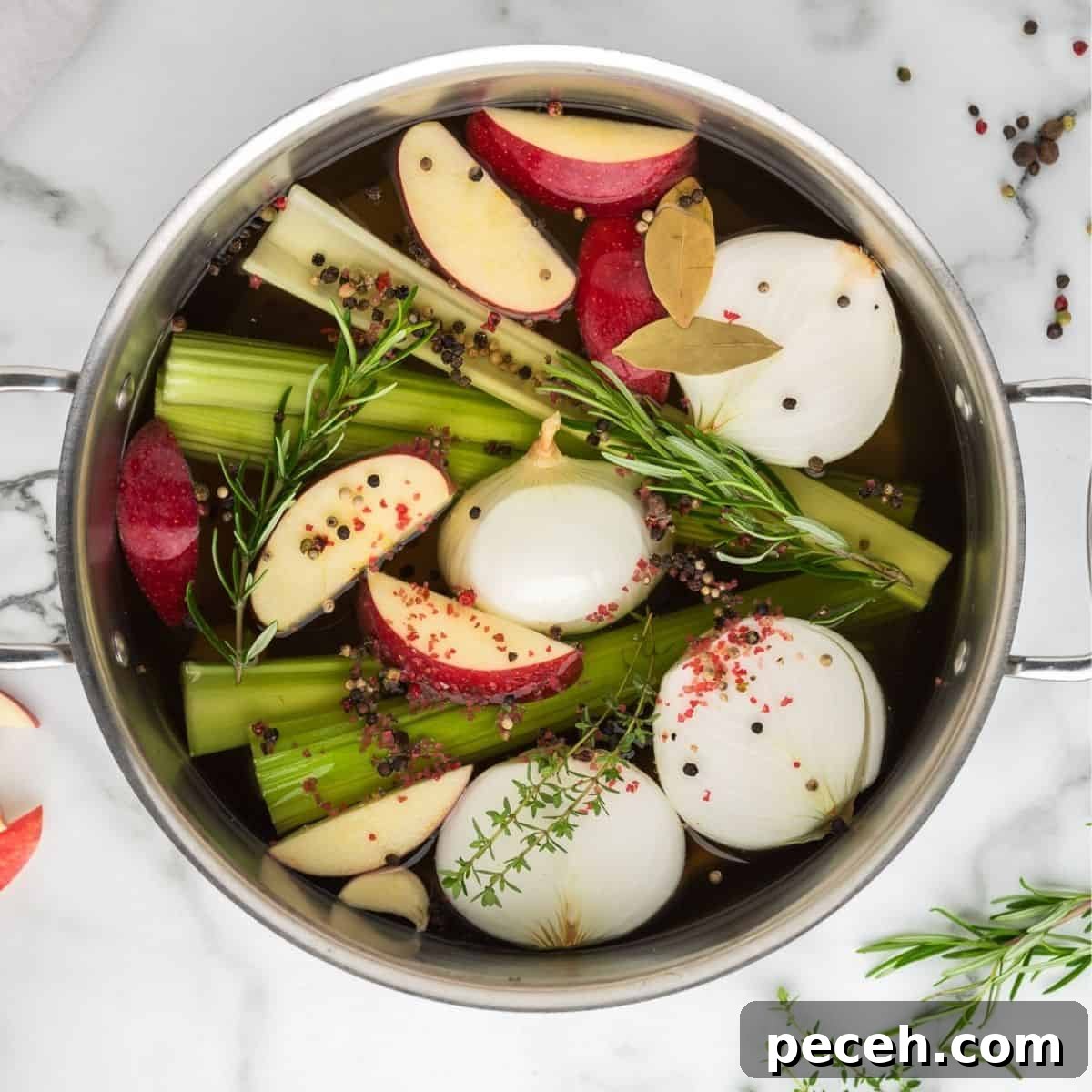
This is the Turkey Brine Recipe that outperforms the rest. It uses simple, inexpensive ingredients and straightforward techniques to deliver a consistently juicy, flavorful, and tender turkey every time.
Brining isn’t just about taste — it’s about confidence at the table. Taking this one extra step before cooking ensures a Thanksgiving centerpiece that stays moist and succulent, often earning seconds (and thirds). After years of preparing holiday meals, this is the brining method I rely on. I can’t wait for you to taste the difference.
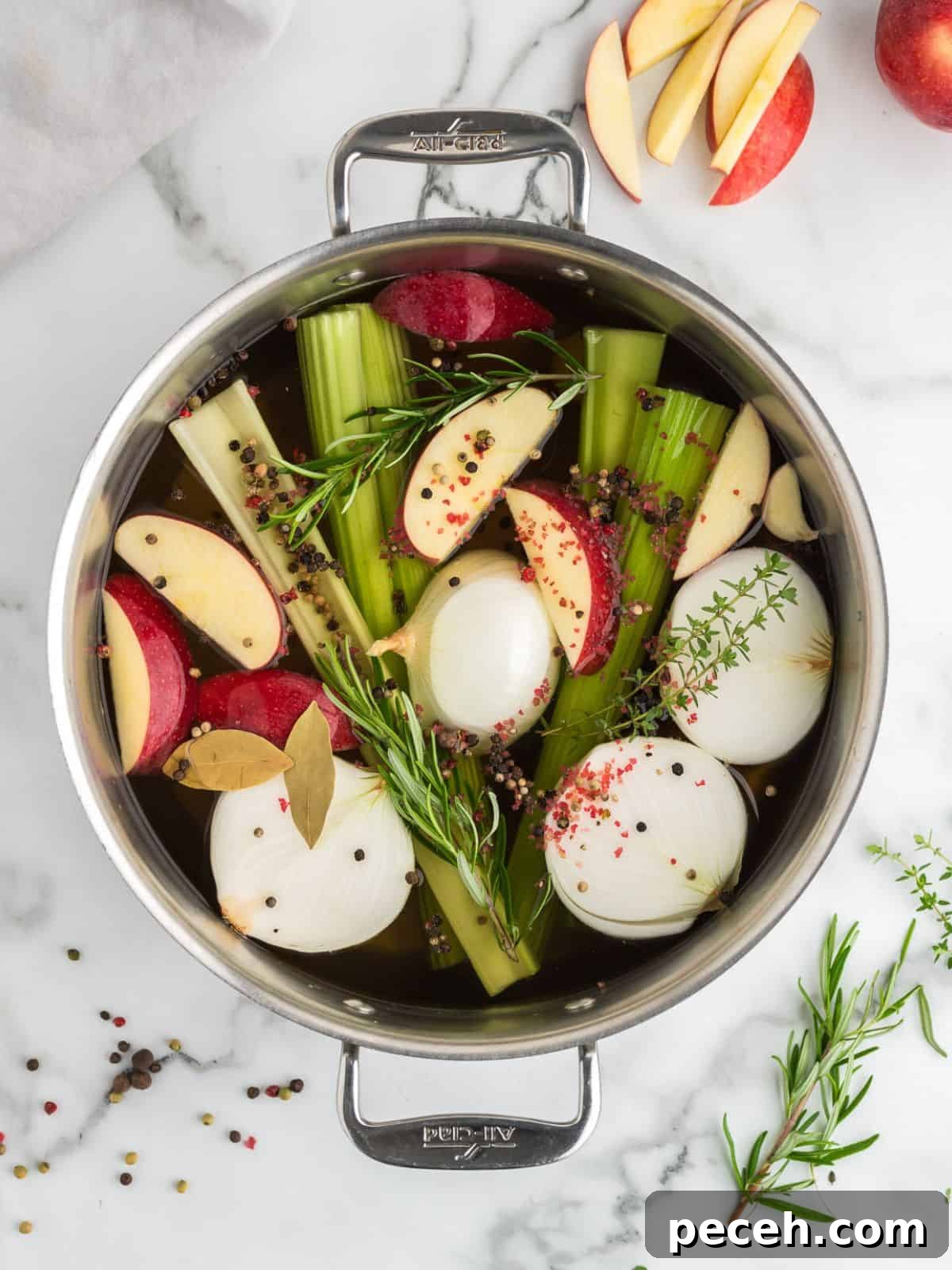
Kristen’s Keys for Brining a Turkey
Brining a turkey is simple but requires planning. These tips will keep the process smooth, safe, and affordable.
- Choose a fresh turkey when possible. Frozen birds can be pre-injected with sodium, which reduces how much additional brine they absorb. A defrosted frozen turkey will still benefit from brining, however.
- Plan your timing. Allow 3–5 days to thaw a frozen turkey, prepare and cool the brine 1–2 days ahead, and brine the turkey for 8–18 hours.
- Cool the brine completely. Never pour warm or hot brine over raw poultry. Make the brine a day or two ahead or add ice to cool it quickly.
- Use extra protection for storage. Place the sealed brining bag inside a large pot or bucket to catch leaks and prevent cross-contamination.
- Keep safe temperatures. Store the turkey and brine between 31°F and 40°F. If your refrigerator is crowded, leave extra space so the temperature stays steady.
5-Star Reader Review
I’d give it 10 stars. Been making turkeys for Holidays for 50+ years. This is the best looking, juiciest, most delicious turkey I think I have ever made. THANK YOU, Kristen for your marvelous recipes. — Linda ⭐⭐⭐⭐⭐
Turkey Brine Ingredients
Kosher salt is the star of any brine: it seasons and tenderizes the meat. The rest of the ingredients are flexible — aromatics and herbs provide depth and nuance.
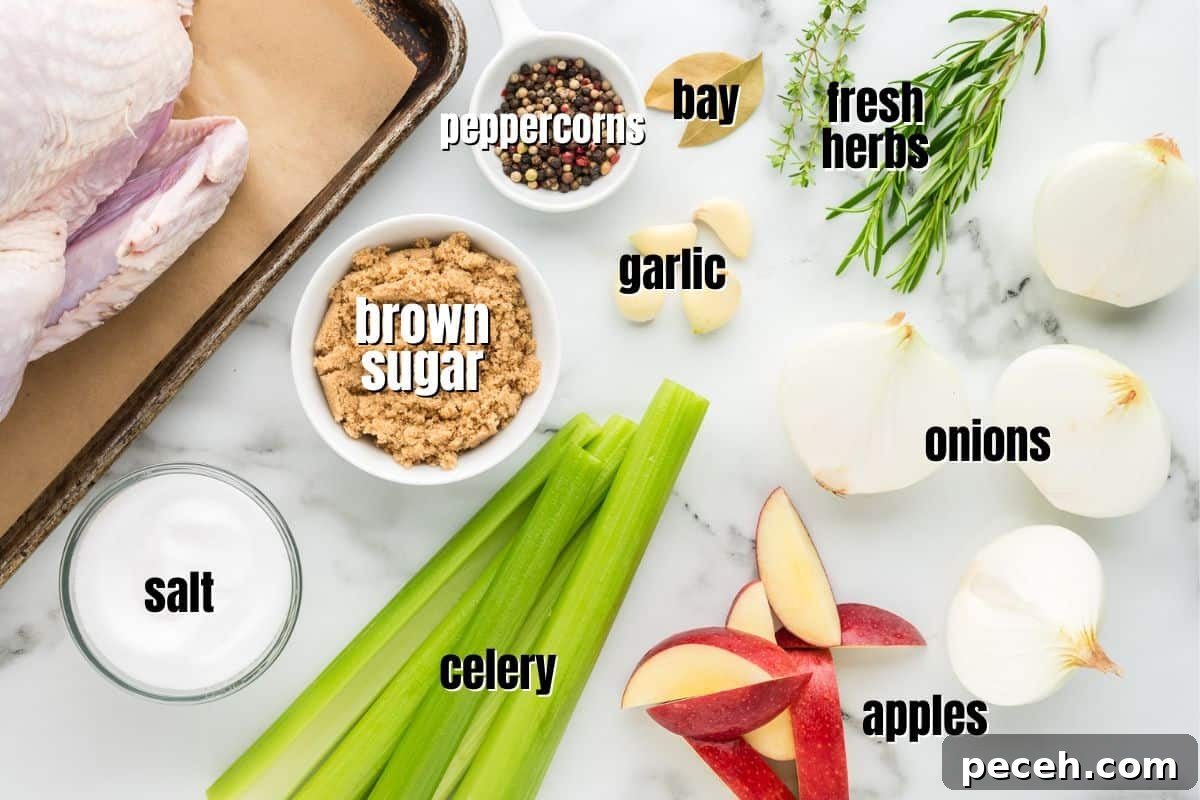
- Water: Plain water is economical and effective. You can substitute apple juice, cider, or stock, but the aromatics and herbs usually provide the most noticeable flavor.
- Kosher salt: Use kosher salt only; iodized table salt can give an off, metallic taste.
- Aromatics: Onion, celery, apple, and garlic add fresh, slightly sweet flavors to the brine.
- Herbs & spices: Fresh rosemary, thyme, and bay leaves add savory, earthy notes; peppercorns add a gentle bite.
- Brown sugar: Balances the salt with subtle sweetness and dissolves easily in the brine.
Equipment Tip
Do You Need a Turkey Brine Bag?
Large turkeys often won’t fit in a pot that can go in the refrigerator, so a commercial brining bag or an extra-large freezer bag is handy and inexpensive. Always place the bag in a pan or bucket to contain leaks.
How to Brine a Turkey
Brining is straightforward. Follow this step-by-step guide to feel confident and prepared.
Step One: Thaw Turkey (3–5 days ahead)
If your turkey is frozen, fully thaw it in the refrigerator before brining. Allow about 24 hours of thawing time for every 4–5 pounds; a 20-pound bird may need up to 5 days.
Step Two: Prepare Brine (1–2 days ahead)
In a large stockpot combine kosher salt, brown sugar, herbs, aromatics, and water. Bring to a boil, then reduce heat and simmer until the salt and sugar dissolve.
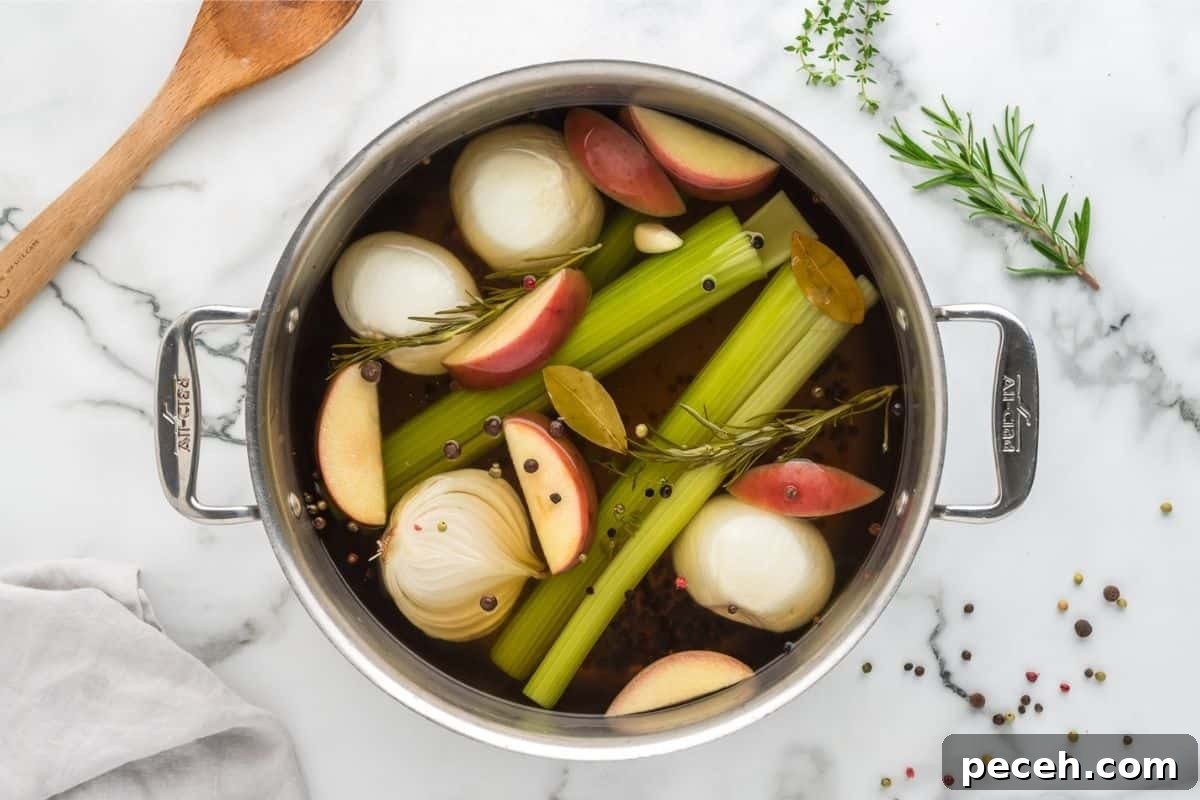
Step Three: Fully Chill Brine
Cool the brine at room temperature for about 30 minutes, then refrigerate until it’s completely cold. This prevents bacterial growth. To speed cooling, add 10–12 cups of ice.
Step Four: Brine the Turkey (8–18 hours before cooking)
Submerge the turkey in chilled brine for 8–18 hours. Less than 8 hours provides limited benefit; longer than 18 hours can start to break down proteins and affect texture.
- Remove the packaging, gizzards, neck, and any pop-up timer.
- Place the turkey in a brining bag or large container and pour the chilled brine over it.
- Add enough cold water to fully submerge the bird (about 1 gallon).
- Seal the bag and set it inside a pan or bucket in the refrigerator to catch any leaks.
- Refrigerate for 8–18 hours.
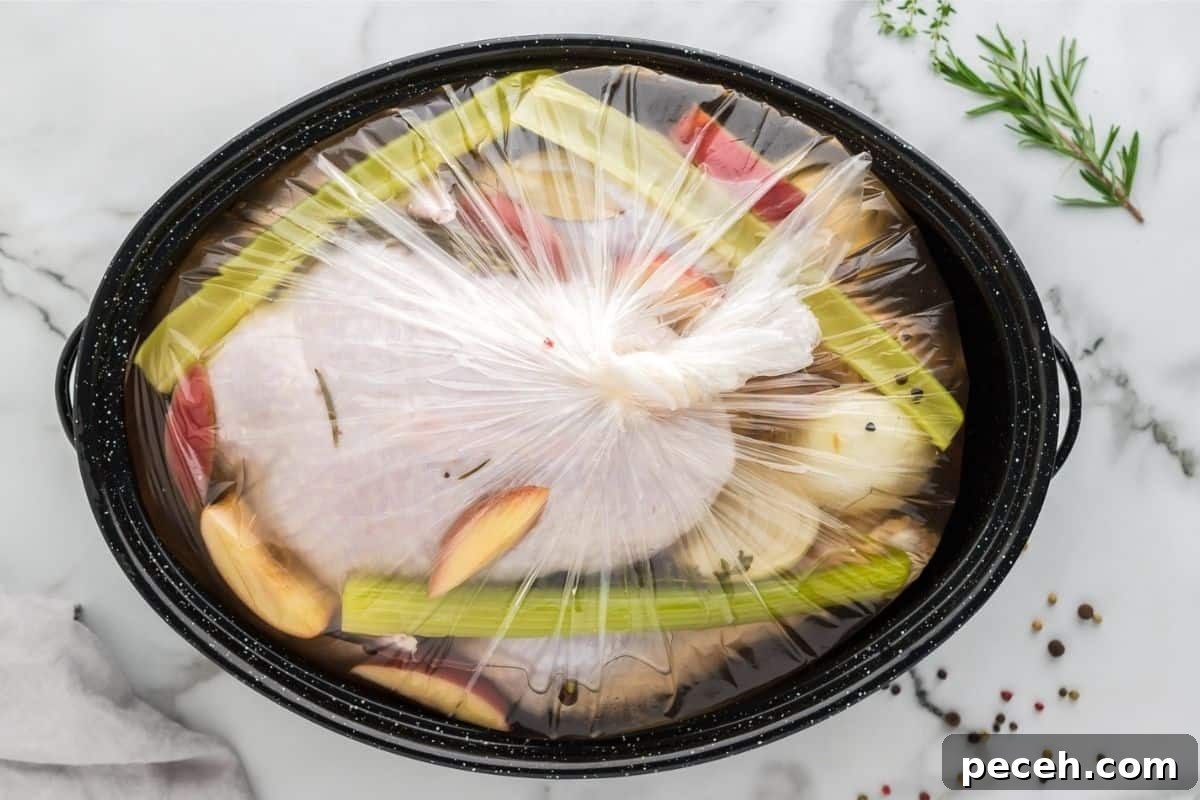
Step Five: Remove Turkey From Brine
When brining is complete, prepare your sink area and roasting pan for an efficient, sanitary cleanup.
- Clear the sink area and have a trash can and roasting pan nearby.
- Lift the turkey from the brine, rinse briefly to remove excess surface salt, then place it on the roasting pan and pat dry with paper towels.
- Strain and discard the brining liquid, solids, and bag. Sanitize the sink and any surfaces the raw turkey contacted to prevent contamination.
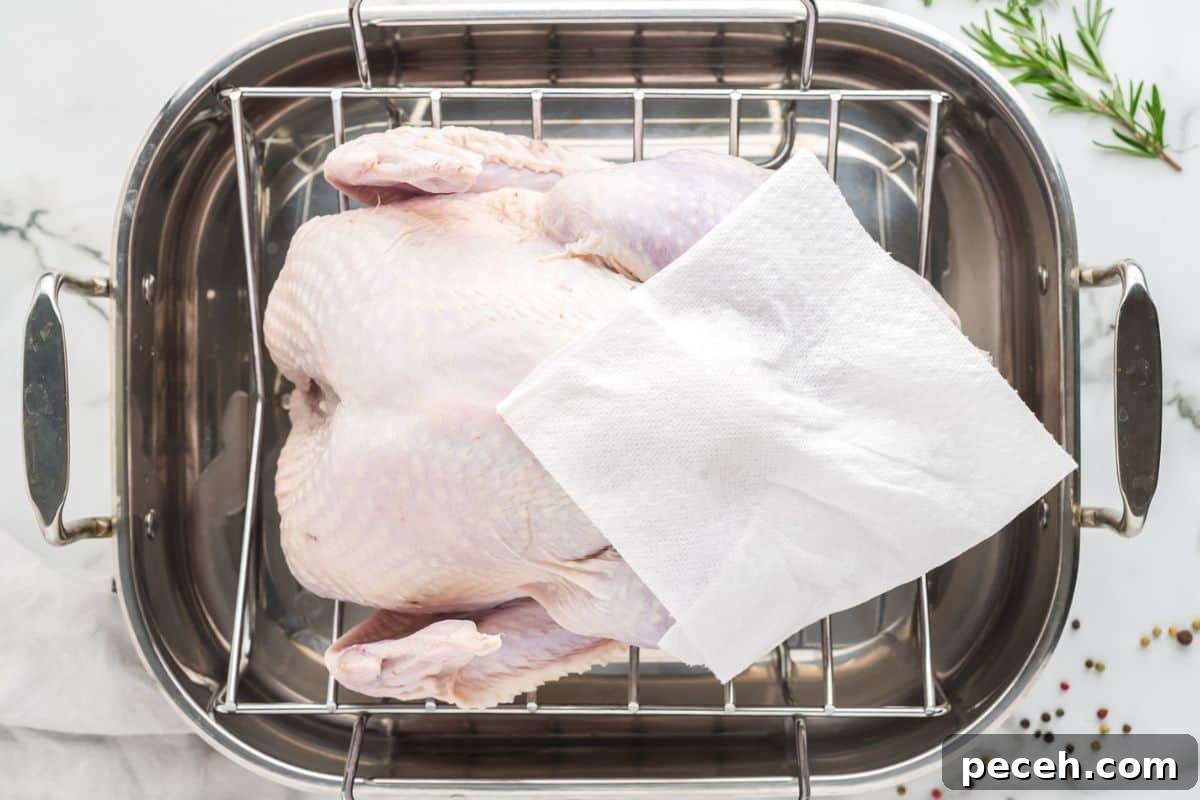
Step Six: Cook the Brined Turkey
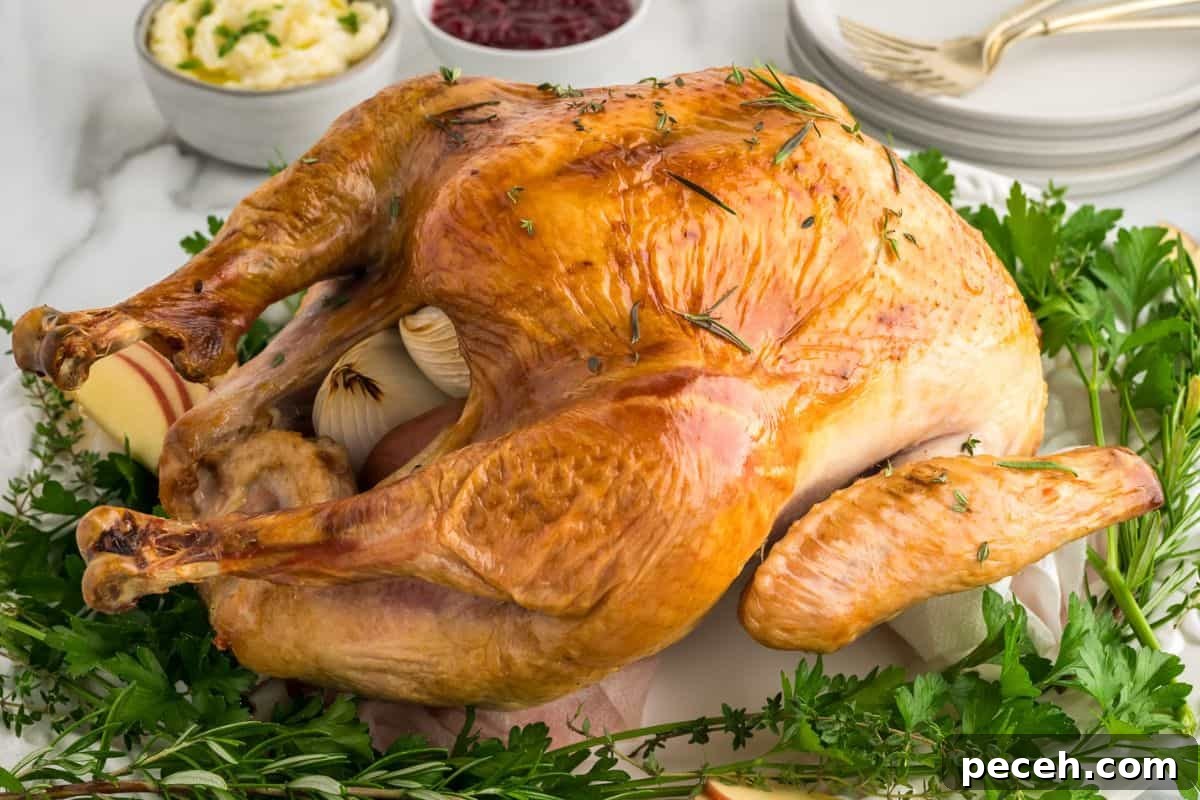
A brined turkey cooks well by roasting, smoking, pressure-cooking, or slow-cooking. Use a digital thermometer and cook until the thickest part of the breast reaches 162°F; it will rise to 165°F as it rests.
The most reliable way to check doneness is an oven-safe digital probe or instant-read thermometer inserted into the deepest part of the breast. Remove the turkey when the breast hits 162°F and let it rest until it reaches 165°F before carving.
Can You Brine a Frozen Turkey?
Yes. Even if a frozen turkey was injected with a sodium solution, brining can still enhance flavor. Make sure the bird is fully thawed, remove the giblets and neck, and follow the brining steps as directed.
A Few Final Tips
- Budget-friendly tip: Save onion peels, celery ends, apple peels, and wilted herbs in a freezer bag and use them in your brine to add flavor while reducing waste.
- No refrigerator space? If outdoor temperatures are reliably between 31°F and 40°F, a well-monitored cooler can work, but watch the temperature and be mindful of animals or pests.
- Gravy note: Drippings from a brined turkey can be very salty. If you prefer less sodium, make gravy without drippings or serve the turkey without gravy — the meat will be flavorful and moist on its own.
Complete Your Holiday Meal
Serve your brined turkey with classic sides like mashed potatoes, stuffing, sweet potato casserole, and cranberry orange sauce for a Thanksgiving spread guests will remember.
Easy Turkey Brine Recipe

Ingredients
- 1 cup kosher salt, NO exceptions
- ½ cup brown sugar, light or dark
- 2 sprigs fresh rosemary
- 2 sprigs fresh thyme
- 2 bay leaves, fresh or dry
- 4-5 cloves garlic, peeled
- 1 tablespoon peppercorns
- 2 large yellow onions, peeled and cut in half
- 5 stalks celery
- 1 large apple, any variety, sliced
- 10-12 cups water, plus about 1 gallon additional for submerging the turkey
Instructions
Turkey Brine Recipe (Prepare 1–2 Days Before Cooking)
-
Combine the kosher salt, brown sugar, rosemary, thyme, bay leaves, garlic, peppercorns, onions, celery, and apple in a large stockpot. Cover with 10–12 cups water (or stock).
-
Bring to a boil, then lower heat and simmer about 30 minutes until the salt and sugar are fully dissolved. Remove from heat and cool 30 minutes at room temperature, then refrigerate until cold.
-
You may strain solids now or leave them in and discard them later with the brining bag — either approach works.
How to Brine a Turkey (8–18 Hours Before Cooking)
-
The night before roasting, remove the turkey from packaging and discard the packaging, pop-up thermometer, gizzards, and neck.
-
Place the turkey in a brining bag or large pan and pour the chilled brine over it. Add cold water (about 1 gallon) to fully submerge the bird.
-
Seal the bag and set it in a pan or bucket. Refrigerate for 8–18 hours.
-
Before roasting, remove the turkey, rinse briefly to remove excess salt, place on a roasting pan, and pat dry with paper towels.
-
Cook the turkey using your preferred method and sanitize all surfaces and tools that contacted the raw turkey after you finish.
Equipment
-
Brining bags or extra-large freezer bags
-
Large stockpot, bucket, or roasting pan for support
Notes
Frozen turkeys: You can brine a previously frozen turkey — just be sure it is completely thawed first.
Small pot option: If using a smaller pot, prepare 4 cups of brine concentrate and, after it chills, add about 1.5 gallons of cold water in the brining bag to finish the full volume.
Money-saving tip: Store vegetable and fruit scraps and wilted herbs in a freezer bag to use in brines and stocks — onion peels, celery ends, apple cores, and herb stems work well.
Sanitize: Always clean and sanitize surfaces and the sink after handling raw turkey to prevent foodborne illness.
Adjust the amount of vegetables, fruits, and herbs to taste. Salt and sugar are the essential components of this brine.
Nutrition
Nutrition information is an approximation and calculated for the entire brine.
This post was originally published in 2017 and updated in 2025.