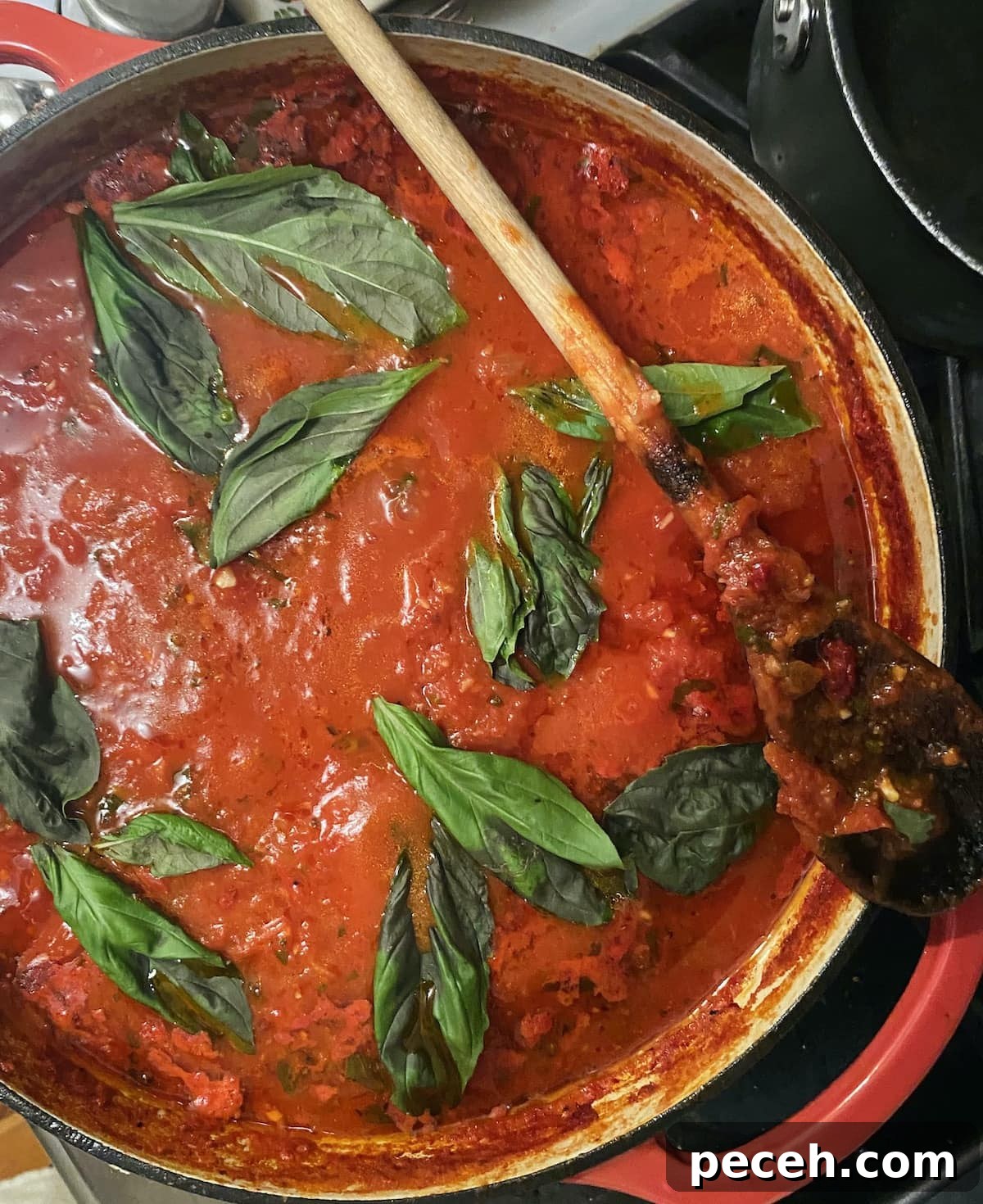
This authentic Sugo recipe is an easy, reliable Italian tomato and basil sauce packed with flavor. It works beautifully with your favorite pasta and many other dishes. Simple to make and full of depth, this homemade sugo will likely replace store-bought jarred sauces in your kitchen.
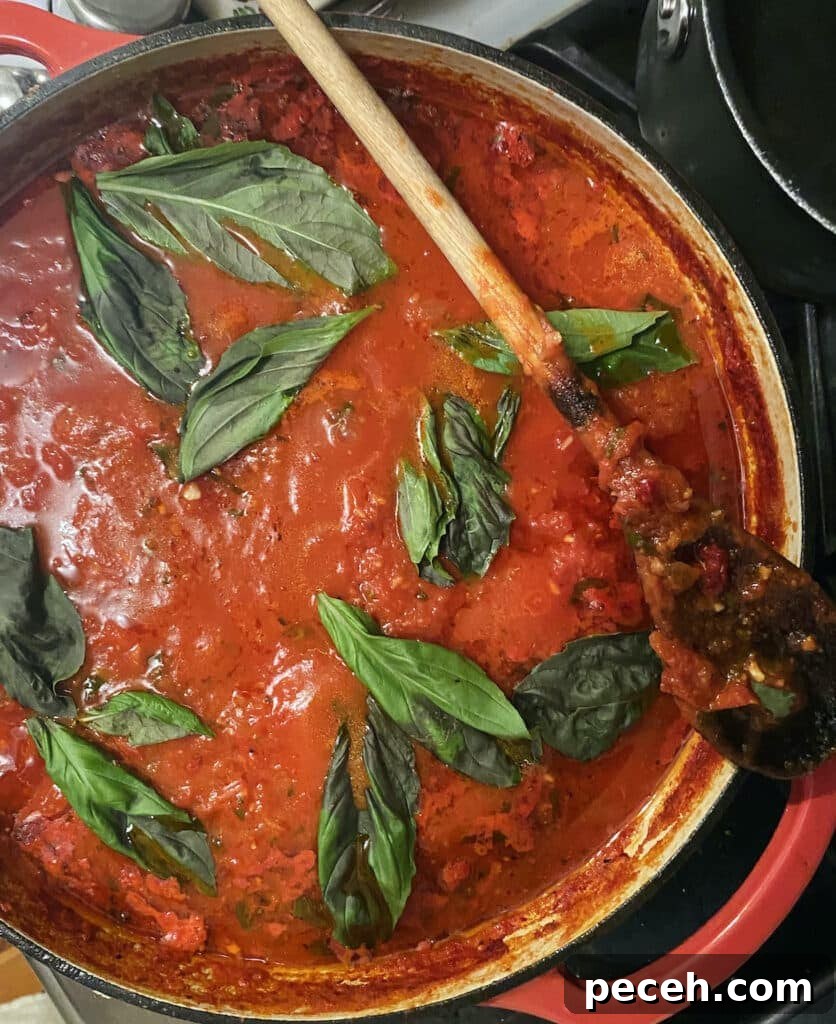
I grew up making and eating this rich tomato sugo. The scent of tomatoes simmering on the stove is deeply nostalgic for me and evokes family Sundays in southern New Jersey. This meatless version was our household staple: straightforward, economical and satisfying.
Sugo means “sauce” in Italian, and tomato sauces vary widely across Italy and Italian-American kitchens. This recipe highlights tomatoes with a few simple ingredients and a gentle simmer to develop a thick, luscious sauce that pairs perfectly with pasta, proteins and baked dishes.
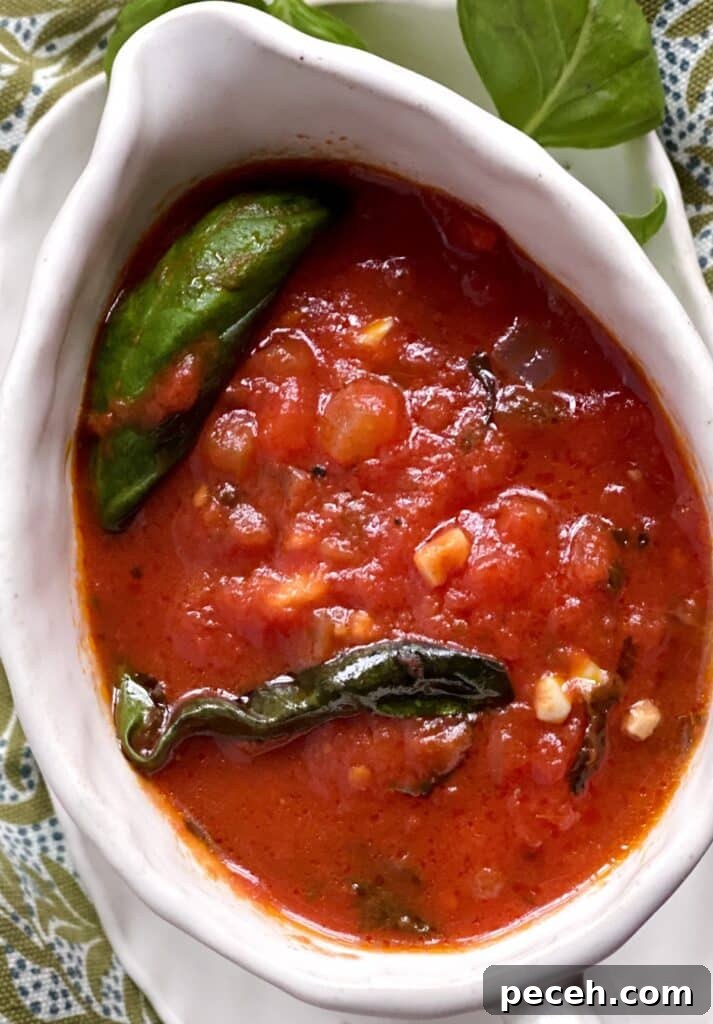
What’s the difference between sugo, marinara, ragu and gravy?
Definitions vary by region and family. In general:
- Marinara is often thought of as a quick, meatless tomato sauce seasoned with garlic, oregano and basil.
- Sugo is a broader term for tomato sauce and can be simple or more developed; many meatless ragùs would fall under this name in some households.
- Ragù typically includes slow-cooked meats in a tomato base and is hearty and rich.
- “Gravy” is used by some Italian-American families to mean a meat-based tomato sauce, though terminology differs widely.
No matter the name, tomato-based sauces are central to Italian cooking and each cook has their own preferred method and ingredients.
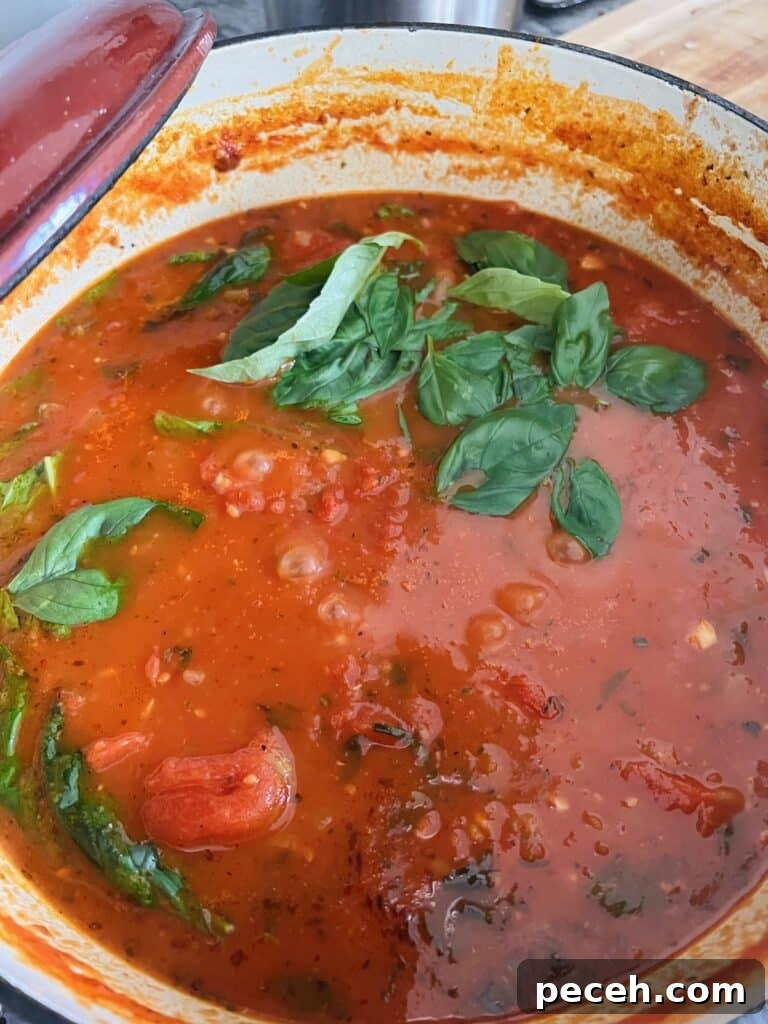
It’s all about the tomato
This sugo relies on high-quality tomatoes. Even the best olive oil and basil can’t fix inferior canned tomatoes. Use the best canned tomatoes you can find—imported Italian whole peeled tomatoes are ideal. Certified San Marzano DOP tomatoes are an excellent choice because they’re picked at peak ripeness and processed to preserve flavor.
- Choose whole peeled tomatoes rather than pre-crushed or purée for a less processed texture; hand-crush them for a slightly chunky sauce.
- If you prefer a smoother sauce, use passata (tomato purée) or crushed tomatoes, or blend the whole tomatoes with an immersion blender in the pot.
Quality tomatoes are naturally sweet and typically don’t need added sugar. If the sauce tastes overly acidic, adding a couple of large carrot pieces while simmering (and removing them before serving) mellows acidity naturally.
Make a double batch and freeze extras for quick meals like baked ziti or lasagna.
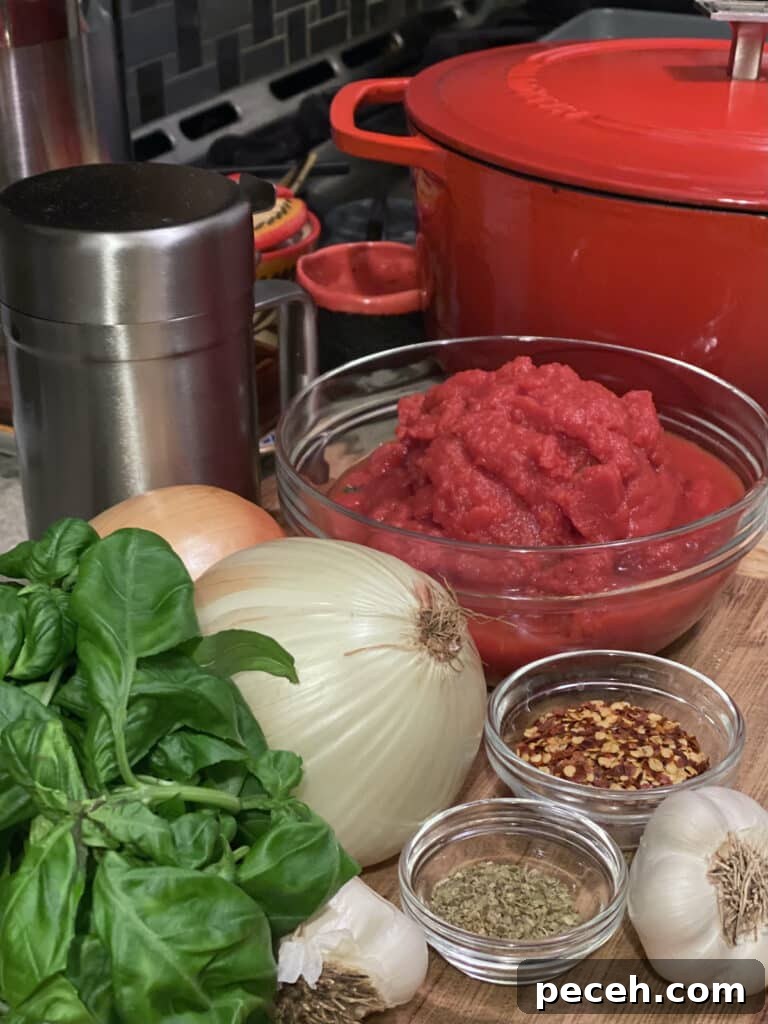
Ingredients for Tomato Basil Sugo
Simple, quality ingredients make this sauce shine.
- Tomatoes: 4 (28-ounce) cans whole peeled tomatoes, crushed by hand. Add 1 can of water from one tomato can for consistency if needed.
- Extra virgin olive oil: 1/3 cup to sauté the aromatics.
- Yellow onions: 2 cups finely chopped.
- Garlic: 1/4 cup finely chopped.
- Fresh basil: 1 cup sliced or hand-torn for cooking, plus a large handful of whole or torn leaves to finish.
- Crushed red pepper: 1/2 teaspoon (adjust to taste).
- Salt and pepper: 2 teaspoons salt and 1/2 teaspoon black pepper, or to taste.
- Dried oregano: 1 tablespoon.
Steps to make authentic Sugo (with pro tips)
Follow these straightforward steps for a classic tomato basil sauce:
- In a heavy-bottomed saucepan or Dutch oven, heat 1/3 cup extra virgin olive oil over medium heat. Add the onions and sauté until soft, about 5–7 minutes. Cover briefly to speed softening if desired.
- Add the garlic and sauté until fragrant and softened, taking care not to brown it.
- Stir in 1 cup sliced basil and 1/2 teaspoon crushed red pepper and cook for about two minutes to release the herb’s aroma. If you don’t have fresh basil, add 2–3 teaspoons dried basil later with the oregano.
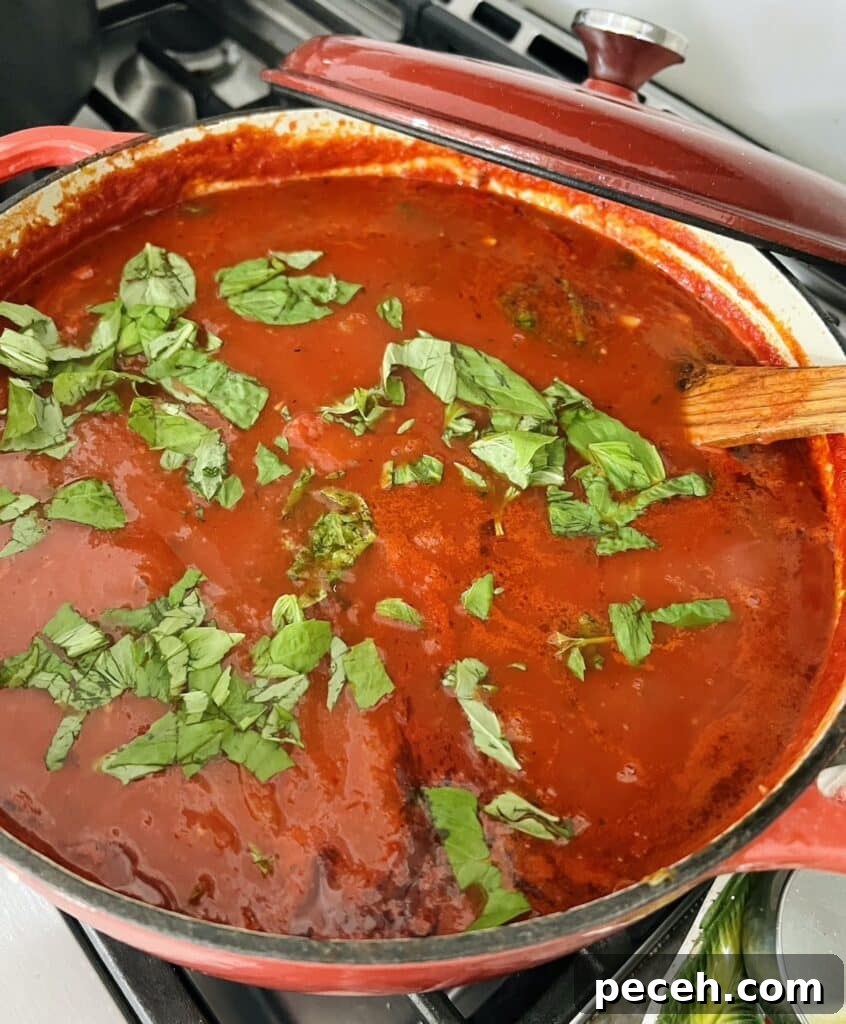
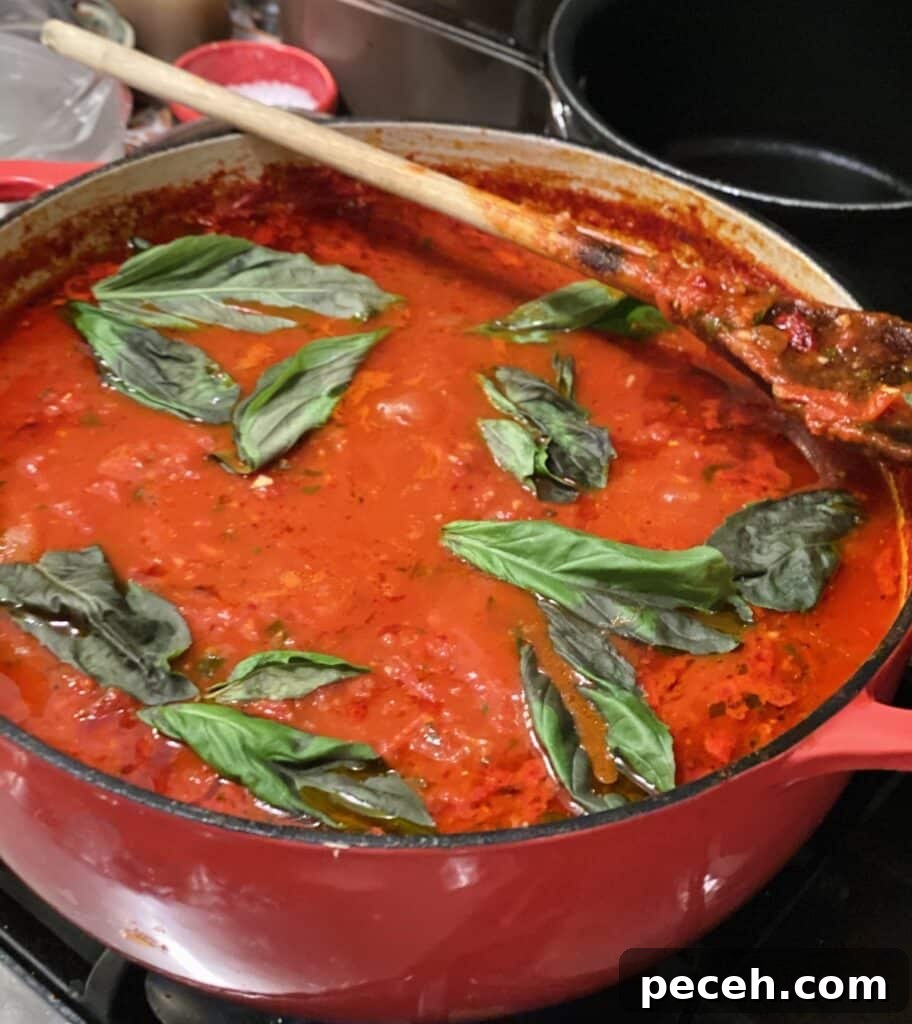
- Add the hand-crushed tomatoes, 1 can of water (if using whole tomatoes), 2 teaspoons salt, 1/2 teaspoon black pepper and 1 tablespoon dried oregano. Bring to a light boil, then reduce to a low simmer. Partially cover and simmer 45–60 minutes, stirring occasionally, until thick and flavorful. If you used diced or whole tomatoes in juice, reduce added water by about 25% or simmer longer to reach desired consistency.
- Remove from heat and stir in the remaining large handful of fresh basil. Taste and adjust seasoning. The sauce can be refrigerated up to 7 days or frozen 3–6 months. This recipe yields about 12–13 cups; halve or double as needed.
Frequently asked questions
What are the best canned tomatoes to use?
Use high-quality imported Italian whole peeled tomatoes, ideally certified San Marzano DOP. They are picked at peak ripeness and tend to be sweeter with fewer seeds. For a smooth sauce, use passata or crushed tomatoes, or blend whole tomatoes with an immersion blender.
Should I add sugar to the sauce?
Adding sugar is optional. Many people do to balance acidity, but with good-quality tomatoes it’s usually unnecessary. If needed, simmering a couple of large carrot pieces in the sauce and removing them later will add natural sweetness.
Can I use dried basil instead of fresh?
Fresh basil is recommended for best flavor, especially added at the end. If you must use dried, add 2–3 teaspoons with the dried oregano.
Can I double or freeze the recipe?
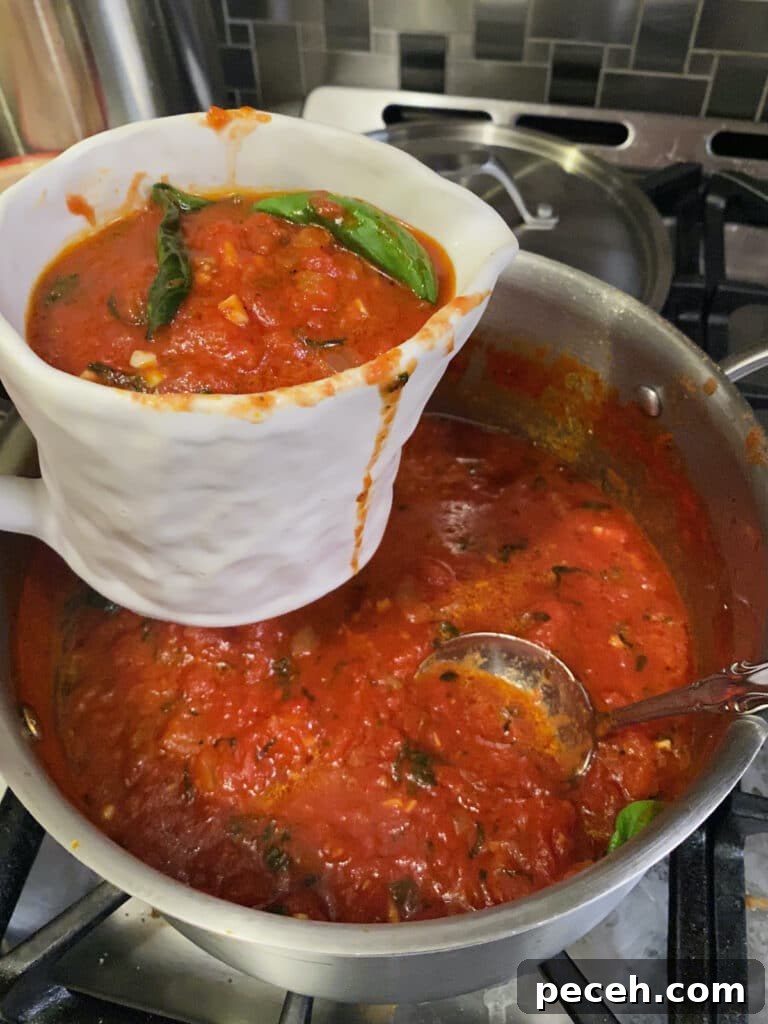
Yes. This sugo freezes very well. In airtight containers it will keep 3–6 months. I often double the batch and freeze in portions sized for one pound of pasta.
What ratio of sauce to pasta should I use?
A general guideline is about 3 cups of sauce per pound of pasta, but adjust to your preference and the pasta shape.
Recipe variations
- Add fresh parsley with the basil at the start for a brighter herb profile.
- Deglaze the pan with a splash of dry white or red wine before adding tomatoes for extra depth.
- Increase heat with more red pepper flakes or a spoon of Calabrian chile paste.
- Use fresh ripe tomatoes in summer: blanch, peel and seed plum or Roma tomatoes, and add a little tomato paste if needed for body.
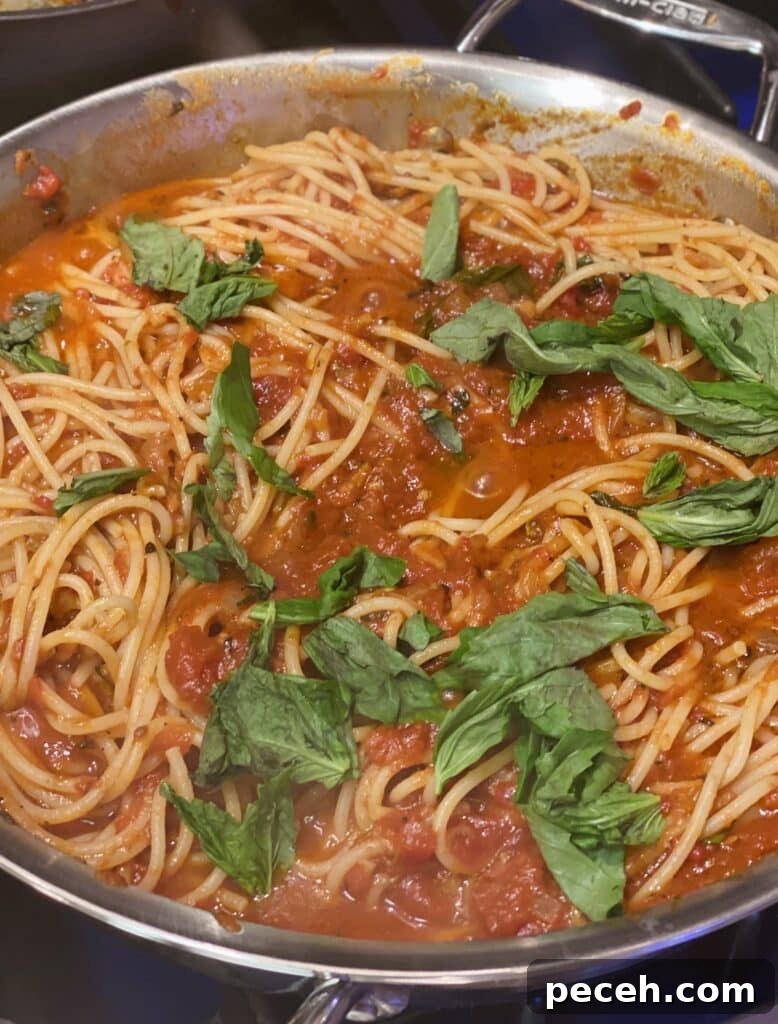
Serving suggestions and storage information
This sugo is versatile: use it for pasta, as the base for eggplant or chicken parm, as a topping for meatball subs, to make baked ziti or lasagna, or simply as a dip for crusty bread.
Store leftovers in an airtight container in the refrigerator for up to one week. Freeze in airtight containers or freezer bags for 3–6 months. Freezing in 3–4 cup portions is convenient for one pound of pasta.
More homemade Italian favorites
Try this sugo with classic dishes like homemade meatballs, pasta e piselli, pasta with chickpeas, greens and beans, or pasta with broccoli.
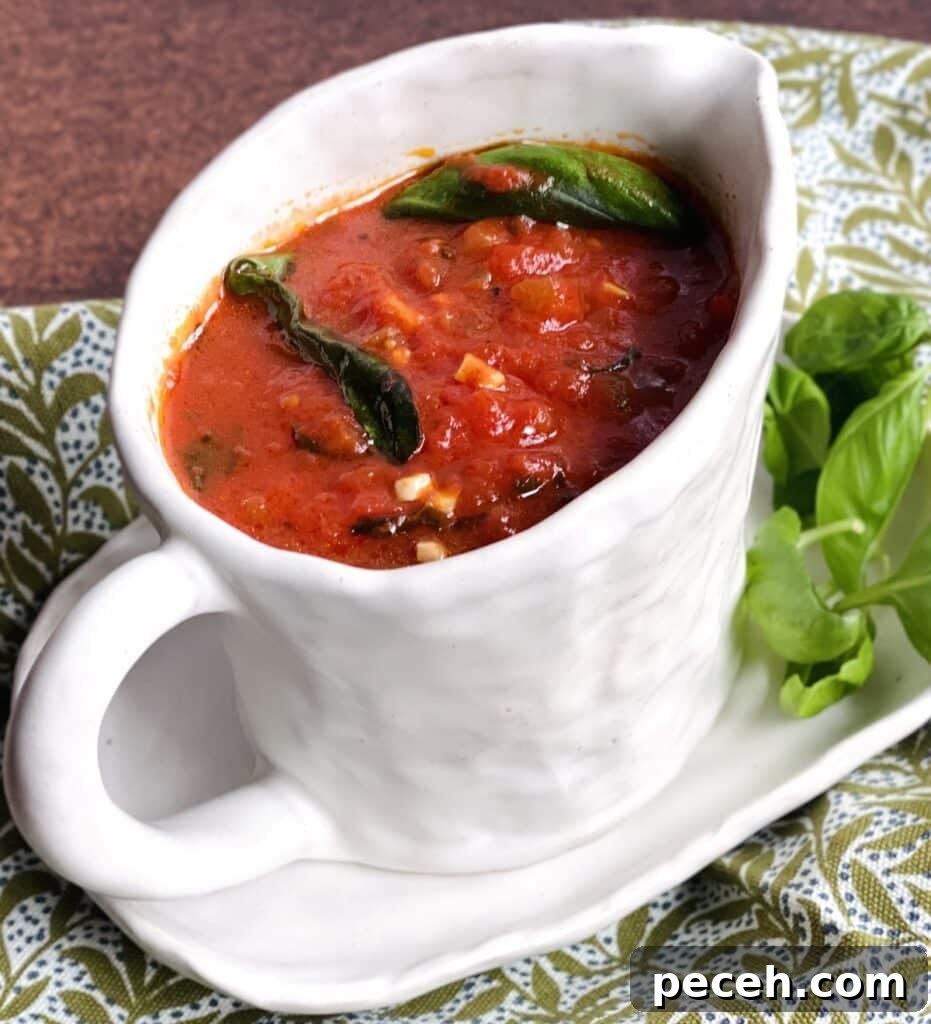
Authentic Sugo Recipe without Meat (Italian Tomato Basil Sauce)
An easy, foolproof tomato and basil sauce that’s perfect for pasta and many other dishes.
Equipment
- Heavy-bottomed saucepan or Dutch oven
- Optional: immersion blender
Ingredients
- 1/3 cup extra virgin olive oil
- 2 cups finely chopped yellow onions
- 1/4 cup finely chopped garlic
- 1 cup sliced or hand-torn fresh basil (lightly packed)
- 1/2 tsp crushed red pepper
- 4 (28-ounce) cans whole peeled tomatoes, crushed by hand + 1 can water
- 2 tsp salt (or to taste)
- 1/2 tsp black pepper (or to taste)
- 1 Tbsp dried oregano
- Large handful fresh basil leaves to finish
Instructions
- Heat olive oil in a heavy saucepan over medium. Add chopped onions and sauté until soft, about 5–7 minutes. Cover briefly to speed softening if desired.
- Add garlic and cook until softened and fragrant.
- Stir in the sliced basil and crushed red pepper; cook about two minutes to release the herb’s aroma.
- Add hand-crushed tomatoes, one can of water (if using), salt, black pepper and dried oregano. Bring to a light boil, then lower to a gentle simmer. Partially cover and simmer 45–60 minutes, stirring occasionally, until the sauce thickens and flavors concentrate. Adjust seasoning to taste.
- Remove from heat and stir in the remaining fresh basil. Cool, then refrigerate up to 7 days or freeze 3–6 months.
Notes
- If you don’t have fresh basil, add 2–3 teaspoons dried basil with the oregano, but fresh at the end gives the best flavor.
- For a smoother texture, use passata or crushed tomatoes or blend with an immersion blender.
- This recipe makes about 12–13 cups of sauce; it can be halved or doubled as needed.
- Freeze in portions sized for a pound of pasta for easy thaw-and-serve meals.