Princess Peony: A Timeless Tale of Love and Royal Secrets

Oh March — a month of school breaks, green beer and shamrocks, and the arrival of spring, Passover and Easter. It always seems to pass so quickly; I blinked and realized I was already halfway through. Where does the time go?

It’s hard to believe we’re three months into the year, and even harder to accept how little I’ve baked so far. This is only my third cake of the year. Earlier I made an Orchid Flower Cake for a blog redesign and a Butter Pecan Cake for Valentine’s Day. Aside from a batch of Elephant Cookies, most of my recent posts have been treats I made last year.

There’s a reason for the slowdown — life has been busy behind the scenes. 2013 brought challenges of various kinds, some welcome and some not. I won’t dwell on those now; today I want to talk about peonies and princesses.

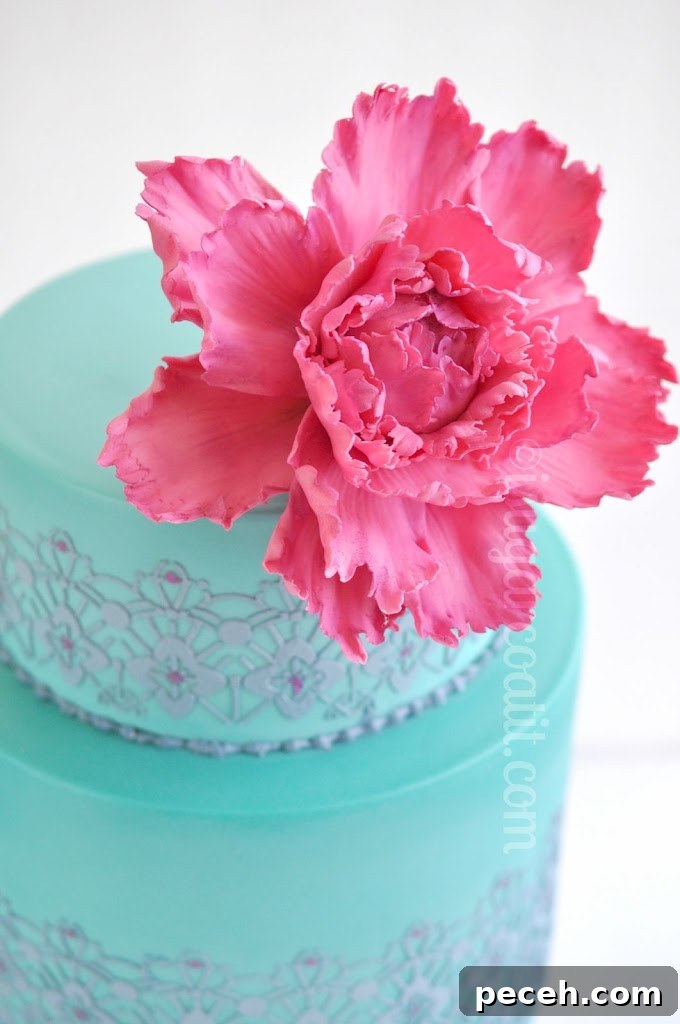
Some of you who follow me on Facebook and Instagram may remember the teaser I posted last weekend of the flower pictured here. It finally joined a stenciled teal cake to celebrate a bride-to-be’s bachelorette party.
Lately I’ve been in a flower-making frenzy. In the early morning hours, when I should be sleeping, I’ve been growing a private sugar garden full of cabbage roses, anemones, dahlias, tulips, carnations, roses, orchids and peonies—each patiently waiting to adorn the next cake. The more flowers I make, the more my patience and appreciation for the craft grow. I truly admire those who have mastered sugar flowers.
I’ve also developed a real fondness for stenciling. I’ve used edible paint, lustre dusts, cocoa, and this was only my third time stenciling with royal icing. A quick check of my photos confirmed I’ve stenciled more cookies than cakes. For this design I used a Victorian crochet lace stencil with gray-tinted royal icing and added pink accents using edible luster dust mixed with a little vodka. My attempt at a piped pearl border didn’t turn out as planned because I forgot to adjust the icing consistency, and it lost shape as it set. I didn’t have time to fix it, unfortunately.
For this cake I used marshmallow fondant to cover both tiers. It’s tastier than store-bought fondant but can be messy and sticky to make, which is why I haven’t made it often. It is more cost effective and worth the effort, so I plan to make it more regularly. If you haven’t tried homemade marshmallow fondant, give it a go — the recipe is included below.

The base tier is an 8″ double-barrel vanilla cake filled with raspberry and white chocolate Swiss meringue buttercream. The top tier is 6″ with the same flavor. Both tiers were covered in white chocolate ganache before applying fondant.
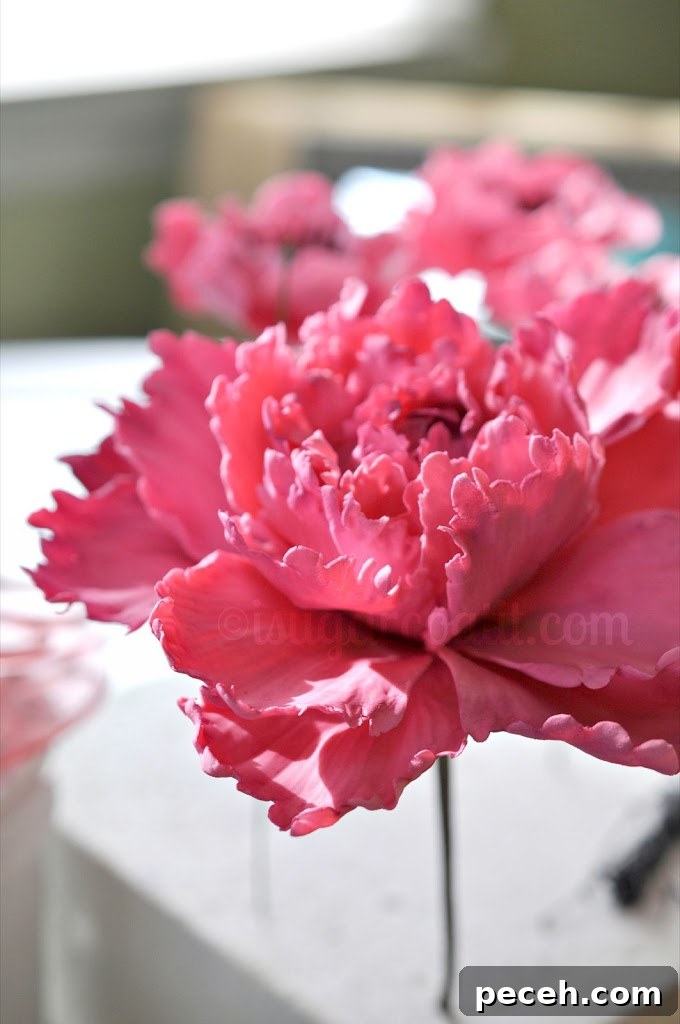
I call her Princess Peony. With a teal and pink exterior and a rich, chocolatey interior, she was made to celebrate the bride-to-be. Best wishes to Mel as she prepares for the next chapter of her life.
Princess Peony - I Sugar Coat It
I Sugar Coat It

Marshmallow Fondant

Print Recipe
Course: Dessert
IngredientsMethodNotes

Ingredients

  • 400 g mini marshmallow
  • 30 ml water
  • 1.5 g salt
  • 1 ml pure lemon extract
  • 30 ml clear corn syrup
  • 5 ml pure vanilla extract
  • 900 g confectioners sugar sifted
  • 118 ml vegetable shortening
  • Gel colours of your choice

Method

  1. Grease a microwave-safe dish and spatula with vegetable shortening. Place marshmallows and water into the dish and microwave on high for one minute, then remove and stir well.
  2. Microwave in 30-second intervals, stirring between intervals, until the marshmallows are completely melted.
  3. Remove from the microwave and add gel colour(s) plus the remaining liquid ingredients (salt, lemon extract, corn syrup, vanilla).
  4. Stir with the spatula to combine, then add about half the sifted confectioners’ sugar and mix until incorporated.
  5. Pour the remaining sugar onto a clean counter and place the fondant mixture on top.
  6. Slowly knead the fondant, working from the outside in, until most of the sugar is incorporated.
  7. Rub your hands with vegetable shortening and continue kneading until the fondant becomes smooth and the confectioners’ sugar is fully incorporated.
  8. Add a little more shortening if needed until the fondant is pliable and smooth.
  9. Coat the fondant with shortening, wrap in two layers of plastic wrap, place in a zip-top bag, and let it rest at room temperature overnight.

Notes

(adapted from Cake Central)