Not to throw my husband under the bus…but I had to get on his case about something the other day. He wasn’t trying to do anything wrong. Our son asked for a cookie during dinner, and Ben told him to eat what’s on his plate first. Of course I couldn’t keep myself from whisper-yelling, “we don’t want to force him to eat it if he doesn’t want it!” Now I don’t even remember whether Teddy got a cookie or not.
So why did I react when Ben told our son to finish his plate?
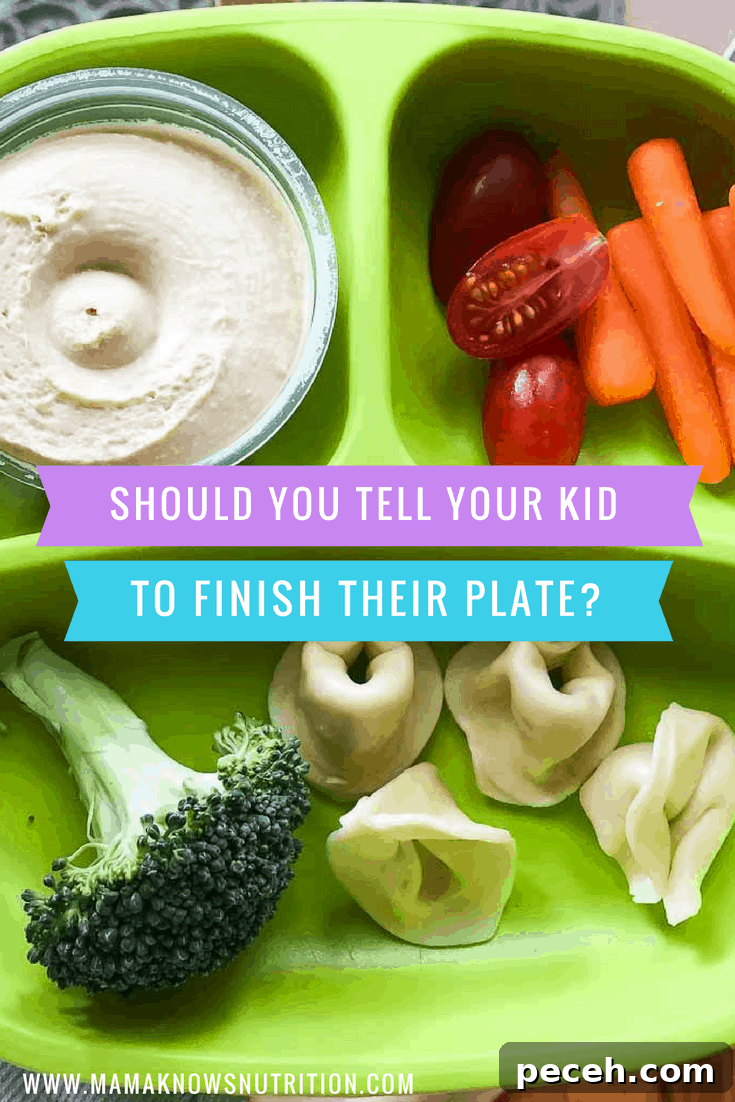
Healthy eating isn’t only about the foods we offer our kids. The eating behaviors they develop are just as important. Many adults who identify as members of the so-called “clean plate club” will finish everything on their plate whether they’re full or not. That habit often traces back to being told as a child to finish meals, or being promised dessert only after cleaning your plate. Those lessons can stick with us for life and be hard to undo.
I know parents mean well when they urge children to finish their food. The intention is to make sure kids get enough nutrition. If your child is picky, underweight, or simply uninterested in food, it’s natural to want them to eat more.
But even though it can feel counterintuitive, it’s usually better not to insist that children finish all the food on their plate. Toddlers and young kids are learning to tune in to their internal hunger and fullness cues. They’re practicing listening to the part of their body that says, “I’m still hungry,” or “that’s enough.” Many adults struggle to stop eating when they’re full because they were taught to ignore those signals early on.
It’s hard to let go, but trusting that your child’s body generally knows how much it needs is important. Think about yourself for a moment: do you eat the exact same amount every day? Some days you’re more active and hungrier, other days less so. Children are the same. They need opportunities to pay attention to their appetite at meals. You can’t truly know how hungry or full they are—learning that is something they must practice for themselves.
If you currently tell your kids to finish their meal, don’t feel guilty. Parents do this out of care and concern because they want their children to get enough to eat. Instead of judging yourself, try stepping back and running a simple experiment: stop prompting them to finish their plate for a few meals and observe what happens. Most likely, you’ll find that your child still gets the nourishment they need over time.
In my next post I’ll address the dessert question: should kids get dessert if they didn’t finish their meal or barely touched it? Is it better to serve dessert alongside the meal or afterward? I’ll share guidance on how to handle treats while still supporting healthy eating habits and appetite awareness.